
雨雪

Search documents
今日初六,返程高峰!南方有暴雨,北方有大风,出行路上请注意安全!
Xin Lang Cai Jing· 2026-02-22 08:42
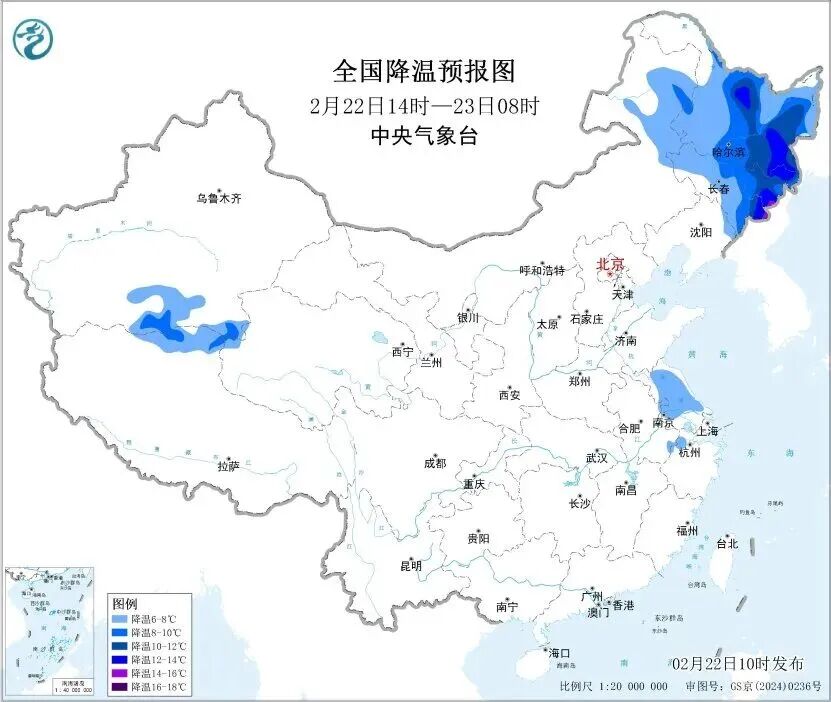
Core Viewpoint - The article discusses the severe weather conditions affecting various regions in China, including strong winds, temperature drops, and heavy rainfall, urging the public to stay informed and take safety precautions during travel. Weather Alerts - The Central Meteorological Observatory issued a blue cold wave warning, predicting temperature drops of 6°C to 10°C in regions such as eastern Inner Mongolia and northeastern Heilongjiang from February 22 to 23, with some areas experiencing drops over 12°C [1][3] - A yellow wind warning was also issued, forecasting wind speeds of 5 to 7 levels, with gusts reaching 8 to 10 levels in parts of Inner Mongolia and northeastern regions [3] - A blue sandstorm warning was released, indicating dust or floating dust conditions in several areas, including eastern and southern Xinjiang, western Inner Mongolia, and parts of Gansu and Shaanxi [4] Rain and Snow Forecast - The Central Meteorological Observatory expects heavy snowfall in northeastern Inner Mongolia and northern Heilongjiang, with snow accumulation of 6 to 10 centimeters, and localized areas exceeding 15 centimeters [6] - Southern regions are anticipated to experience widespread rainfall, with significant downpours in parts of western Jiangnan and eastern Guizhou, accompanied by thunderstorms and hail [6] Public Safety Recommendations - The article emphasizes the importance of monitoring weather updates, especially during the peak travel season, and advises the public to take precautions against severe weather conditions [8] - It highlights the increased braking distance on wet roads, suggesting drivers maintain safe distances and use gentle braking techniques [11] - Recommendations for vehicle preparation include checking tire pressure, brake systems, and battery status, as well as being aware of weather forecasts and traffic conditions [23]

今年以来最强沙尘天气过程正发展
Xin Lang Cai Jing· 2026-02-22 02:32
Group 1 - The strongest sandstorm weather process of the year is currently developing, with multiple weather warnings issued including yellow wind warning, blue sandstorm warning, blue cold wave warning, and blue snowstorm warning [1] - Sand and dust will continue to move southward, affecting regions such as eastern and southern Xinjiang, western Inner Mongolia, northeastern Qinghai, central Gansu, most of Ningxia, and various parts of northern and central China [1] - A large-scale precipitation event is expected in the central and eastern regions over the next two days, with snow primarily in the northeast and heavy rain in many areas along the Yangtze River [1] Group 2 - A significant temperature drop due to the cold wave will cover areas north of the Yangtze River, with more severe drops exceeding 10°C to even 15°C in North China and Northeast China [1] - Travelers are advised to pay attention to weather changes and ensure safety during the holiday return journey [1]
除夕冷空气抵达江南华南,阴雨雪天气请注意出行安全
Xin Lang Cai Jing· 2026-02-16 04:38
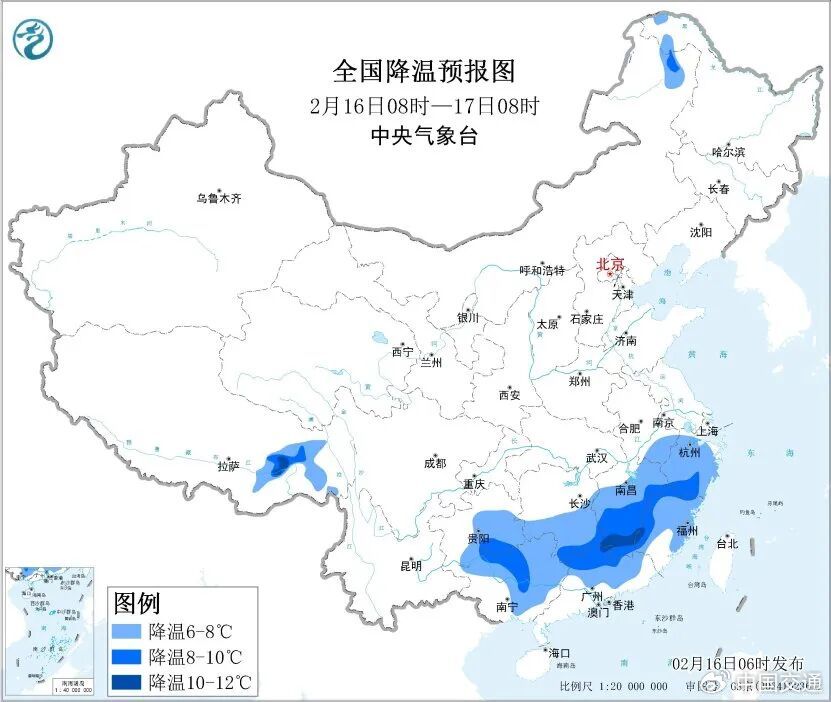
Group 1 - A cold air mass is affecting various regions in China, leading to significant temperature drops and strong winds [1][4] - Areas such as Jiangnan, Huabei, and Huanghuai are expected to experience temperature decreases of 6 to 10 degrees Celsius, with some regions seeing drops exceeding 12 degrees [1] - A blue alert for cold wave and strong winds has been issued by the Central Meteorological Observatory [1][4] Group 2 - Heavy fog is forecasted for the coastal areas of South China, with visibility dropping below 1 kilometer in certain regions [5] - Snow and rain are expected in several provinces, including Henan, Jiangsu, and Xinjiang, with some areas experiencing moderate to heavy snowfall [7] - Public travel advisories have been issued, urging individuals to check weather conditions and adjust travel plans accordingly [7]
两轮冷空气“组团”来袭,江苏部分地区雨雪还要“加戏”
Xin Lang Cai Jing· 2026-01-25 13:03
Core Viewpoint - The article discusses the upcoming cold weather in Jiangsu province, highlighting the impact of two cold air masses expected to bring significant temperature drops and precipitation in the form of rain and snow. Summary by Sections Weather Forecast - From January 25 to 27, a cold air mass will affect central and eastern China, leading to temperature drops of 3 to 6 degrees Celsius, with local decreases exceeding 8 degrees Celsius [1] - The weather in Jiangsu will change from recent warm conditions, with the highest temperatures dropping to below 10 degrees Celsius, particularly around January 26, where temperatures in the southern regions will be around 7 degrees Celsius, nearly halving from January 25 [1] - A second cold air mass is expected to impact Jiangsu from January 29 to 31, with stronger precipitation and more significant temperature drops anticipated due to better moisture conditions [1] Detailed Weather Conditions - **January 25, 20:00 to January 26, 20:00**: Northern regions will experience light rain or rain mixed with snow, while other areas will have light rain. Maximum temperatures will be around 7 degrees Celsius in southern regions and 4-5 degrees Celsius in others, with minimum temperatures around 1 degree Celsius in northern areas [2] - **January 26, 20:00 to January 27, 20:00**: Southern regions will see light rain transitioning to cloudy conditions, while other areas will be mostly cloudy. Maximum temperatures will range from 6-7 degrees Celsius in northern areas to 8-9 degrees Celsius elsewhere, with minimum temperatures dropping to around -3 degrees Celsius in northern areas [3] - **January 27, 20:00 to January 28, 20:00**: The entire province will be cloudy, with maximum temperatures around 7 degrees Celsius in northern and eastern regions and 8-9 degrees Celsius in others. Minimum temperatures will range from -2 to -3 degrees Celsius in northern areas to 2-3 degrees Celsius in southern regions [4]
大风、沙尘、大雪!冷空气来袭,注意→
Xin Lang Cai Jing· 2026-01-10 07:05
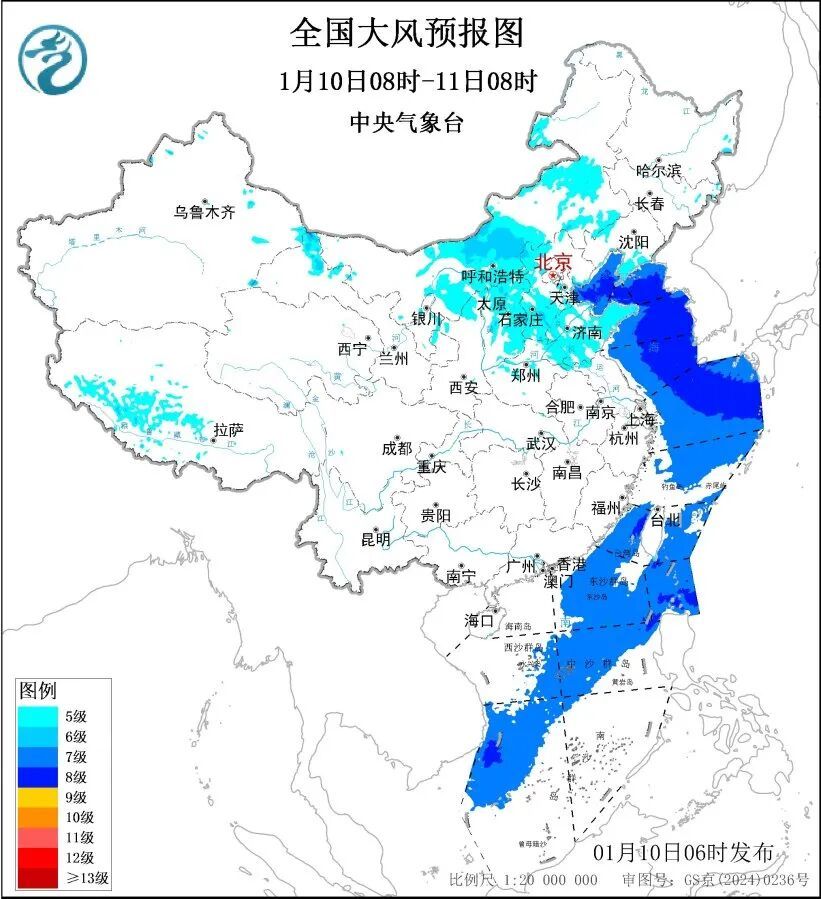
Group 1 - A strong cold air mass is affecting northern China, bringing strong winds, temperature drops, rain, snow, and dust storms [1][2] - From January 10 to 11, temperatures in regions like North China and Huanghuai will drop to recent lows, with a decrease of 6 to 12 degrees Celsius [1][6] - The cold air will move quickly, with temperatures expected to rebound by early next week, reaching recent highs again [1][6] Group 2 - Areas such as western Tibet, northern Gansu, central and eastern Inner Mongolia, and northern Shaanxi are experiencing winds of 5 to 6 levels, with gusts reaching 7 to 9 levels [2][3] - Dust and sand weather is affecting parts of central and southern Henan, southern Shandong, central and northern Anhui, and northern Jiangsu due to dust transmission [2][4] - A blue wind warning has been issued, predicting strong winds in various regions and sea areas, with gusts potentially reaching 10 to 11 levels in some maritime areas [3][4]
内蒙古以晴冷低温天气为主 雨雪大风来袭
Nei Meng Gu Ri Bao· 2026-01-09 09:13
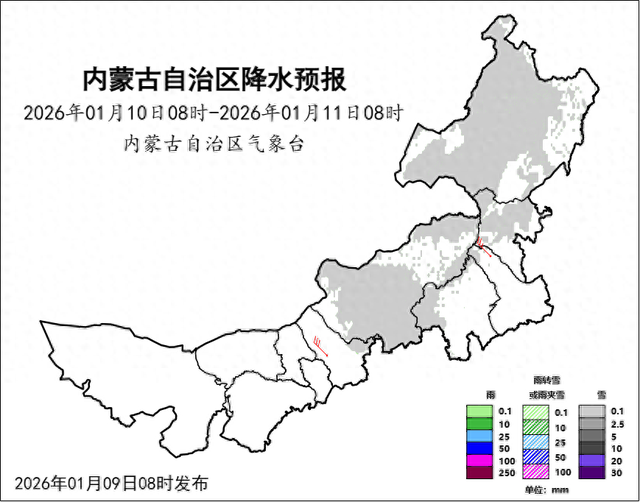
Core Viewpoint - Inner Mongolia is experiencing a significant drop in temperatures due to strong cold air, with some areas seeing temperature decreases of over 10°C, accompanied by strong winds and snow in certain regions [1][3]. Group 1: Temperature Changes - As of January 9, temperatures in Inner Mongolia have dropped noticeably, with most areas experiencing a decrease of 4 to 6°C, and central and western regions seeing drops of 6 to 10°C, with some localities exceeding 10°C [1]. - Specific temperature examples include Xilin Gol City dropping from -19°C to -26°C, and areas like Genhe and Tulihe experiencing temperatures below -35°C [1]. Group 2: Weather Conditions - From January 9 to 10, regions such as northern Ulanqab, western and central Xilin Gol, northern Chifeng, and southwestern Tongliao are expected to experience moderate to heavy snow, while strong winds of 5 to 6 levels, with gusts exceeding 9 levels, will affect most areas [1]. - The weather forecast for January 10 to 11 indicates cloudy conditions with light snow in eastern and northeastern Inner Mongolia, and strong winds of 5 to 6 levels, with local areas experiencing winds of 8 levels or more [3]. - From January 11 to 12, similar weather patterns are expected, with cloudy skies and light to moderate snow in central and eastern regions, along with strong winds [5].
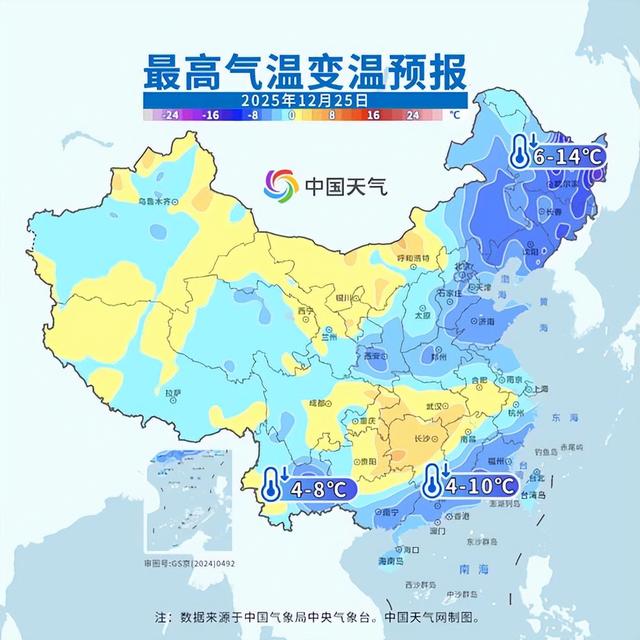
局地降温超14℃!大降温序幕拉开 气温又将大范围创新低
Xin Lang Cai Jing· 2025-12-23 11:52
Group 1 - A new cold air mass is affecting most parts of China, with temperature drops expected to exceed 14℃ in some areas [1] - The temperature drop will be significant, with northern regions experiencing a decrease of 4-8℃, and northeastern areas seeing drops of 8-12℃, with localities exceeding 14℃ [1] - Southern regions will also experience a temperature drop of 4-6℃, with areas like Jiangnan seeing decreases of 6-10℃ [1] Group 2 - The lowest temperatures in the central and eastern regions are expected to occur on the 25th and 26th, with maximum temperatures in northeastern areas dropping below -10℃, and some places in Jilin and Heilongjiang falling below -15℃ [2] - In the southern regions, cities like Fuzhou and Nanning will see maximum temperatures drop to 15℃ or below on the 25th, while Guangzhou's maximum will be around 20℃ [7] Group 3 - Rain and snow will cover a wide area, with northeastern regions primarily experiencing snowfall and other areas seeing rainfall [5] - After the current cold air mass, a new one is expected to move east and south on the 28th and 29th, but it will be less intense, leading to some temperature fluctuations without significantly altering the overall warm pattern [11]
近期多轮冷空气影响山东周末多地或迎降雪
Da Zhong Ri Bao· 2025-12-09 00:56
Core Viewpoint - The article discusses the impact of frequent cold air masses on Shandong province, predicting significant weather changes including rain, snow, strong winds, and temperature drops throughout the week [1] Weather Forecast Summary - From the night of December 8 to the day of December 9, the weather will be mostly clear with temperatures ranging from -2°C to 13°C across different regions [1] - From the night of December 9 to the day of December 10, the weather remains mostly clear with minimum temperatures around 1°C to 4°C and maximum temperatures reaching 10°C to 13°C [1] - From the night of December 10 to the day of December 11, the peninsula region will experience cloudy weather with possible light rain, while other areas will be mostly clear to partly cloudy, with temperatures ranging from -2°C to 10°C [1] - On December 12 to 13, the weather is expected to turn cloudy with snow in certain regions, including light to moderate snow in Heze, Jining, and parts of central and northwestern Shandong [1]
冷空气接连来袭 雨雪寒潮大风即将“上线”
Liao Ning Ri Bao· 2025-11-22 00:39
Core Insights - The provincial meteorological station has issued a special weather report indicating two cold air processes expected on November 24 and from 26 to 27, leading to rain, snow, cold waves, and strong winds across the province [1][2] Weather Impact on Industries - The cold air processes will result in significant weather changes, including small snow or flurries in several regions, with temperatures dropping by 6°C to 8°C, and the lowest temperatures expected to reach -12°C to -10°C in eastern mountainous areas [1] - On November 26, temperatures are expected to rise by 4°C to 8°C during the day, but will drop again by 10°C to 14°C in the central and eastern regions overnight [2] - The strong winds during these cold air processes pose high risks for maritime activities, particularly for large passenger and cargo vessels, and fishing boats, necessitating caution and potential avoidance of affected sailing periods [3] Recommendations for Safety and Operations - Industries such as coastal ports, offshore oil drilling platforms, and coastal aquaculture should closely monitor the impact of strong winds and ensure operational safety [3] - Travelers are advised to be cautious of low visibility and slippery or icy roads due to rain and snow, and to take precautions against cold weather effects [3] - Facilities in agriculture and aquaculture may face adverse effects from the weather, prompting recommendations for windproofing and temperature control measures [3] - Energy supply management is crucial, with suggestions to prepare for coal, electricity, oil, and gas distribution and safety management due to the sudden drop in temperatures [3]