沙尘暴

Search documents
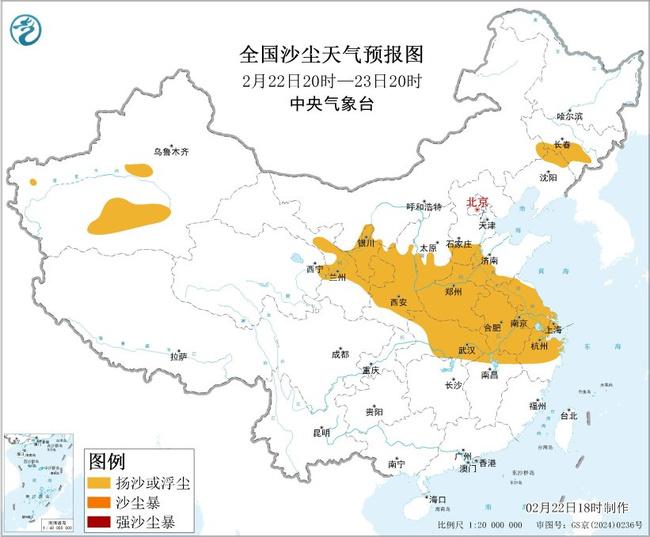
沙尘暴蓝色预警:河南安徽江苏等16省区市部分地区有扬沙或浮尘
Yang Shi Wang· 2026-02-22 11:10
Core Viewpoint - The Central Meteorological Observatory has issued a blue warning for sandstorms due to strong winds from cold air, predicting dust or floating dust weather in various regions from February 22 to February 23 [1]. Group 1: Weather Impact - Affected areas include southern Xinjiang Basin, central and eastern Gansu, Ningxia, northern and central Shaanxi, southern Shanxi, southern Hebei, southern Shandong, Henan, northern Hubei, northern Jiangxi, Anhui, Jiangsu, Shanghai, northern Zhejiang, southern Jilin, and northern Liaoning [1]. Group 2: Defense Guidelines - Recommendations include preparing for wind and sand, closing doors and windows, and using masks or scarves to protect against dust [3]. - It is advised to secure temporary structures and outdoor items that may be affected by the sandstorm [3]. - Drivers should control their speed due to low visibility to ensure safety [3].

今日初六,返程高峰!南方有暴雨,北方有大风,出行路上请注意安全!
Xin Lang Cai Jing· 2026-02-22 08:42
Core Viewpoint - The article discusses the severe weather conditions affecting various regions in China, including strong winds, temperature drops, and heavy rainfall, urging the public to stay informed and take safety precautions during travel. Weather Alerts - The Central Meteorological Observatory issued a blue cold wave warning, predicting temperature drops of 6°C to 10°C in regions such as eastern Inner Mongolia and northeastern Heilongjiang from February 22 to 23, with some areas experiencing drops over 12°C [1][3] - A yellow wind warning was also issued, forecasting wind speeds of 5 to 7 levels, with gusts reaching 8 to 10 levels in parts of Inner Mongolia and northeastern regions [3] - A blue sandstorm warning was released, indicating dust or floating dust conditions in several areas, including eastern and southern Xinjiang, western Inner Mongolia, and parts of Gansu and Shaanxi [4] Rain and Snow Forecast - The Central Meteorological Observatory expects heavy snowfall in northeastern Inner Mongolia and northern Heilongjiang, with snow accumulation of 6 to 10 centimeters, and localized areas exceeding 15 centimeters [6] - Southern regions are anticipated to experience widespread rainfall, with significant downpours in parts of western Jiangnan and eastern Guizhou, accompanied by thunderstorms and hail [6] Public Safety Recommendations - The article emphasizes the importance of monitoring weather updates, especially during the peak travel season, and advises the public to take precautions against severe weather conditions [8] - It highlights the increased braking distance on wet roads, suggesting drivers maintain safe distances and use gentle braking techniques [11] - Recommendations for vehicle preparation include checking tire pressure, brake systems, and battery status, as well as being aware of weather forecasts and traffic conditions [23]
返程天气必看!17省区市有扬沙或浮尘天气,北方迎剧烈降温
Xin Lang Cai Jing· 2026-02-22 07:44
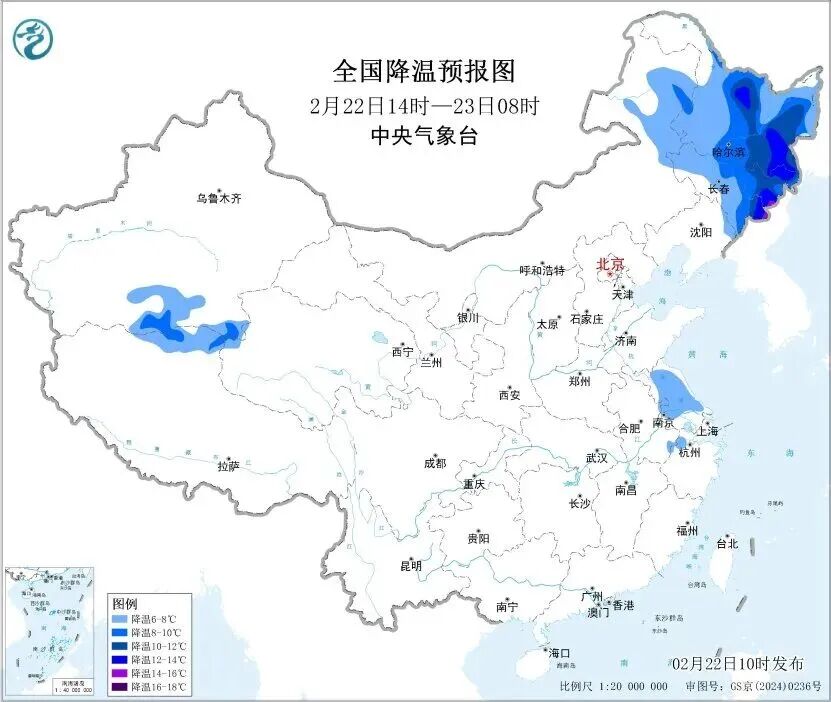
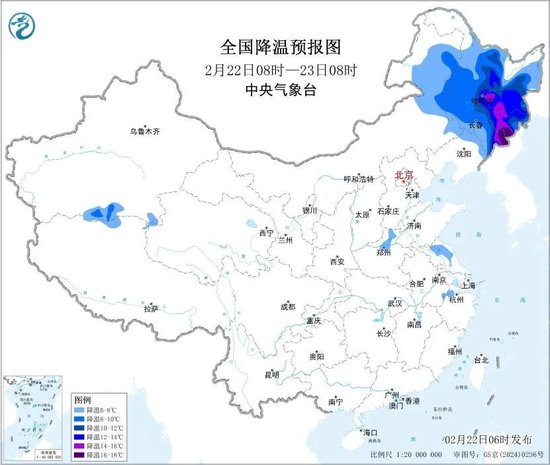
Core Viewpoint - The article discusses significant weather changes in China as the Spring Festival holiday concludes, with a cold wave affecting the northern regions and widespread rainfall in the south, urging the public to pay attention to weather forecasts and travel safely during the peak return period of the Spring Festival [1][9]. Group 1: Northern Region Weather - A cold wave blue alert was issued by the Central Meteorological Observatory, predicting temperature drops of 6 to 10 degrees Celsius in regions such as eastern Inner Mongolia, most of Heilongjiang, Jilin, northeastern Liaoning, and northern Jiangsu from 14:00 on the 22nd to 08:00 on the 23rd [1][9]. - Some areas, particularly southeastern Heilongjiang and northeastern Jilin, may experience temperature drops exceeding 12 degrees Celsius [1][9]. - The 0°C isotherm is expected to move southward to the eastern Huanghuai, southern North China, and central-southern Shaanxi by the 23rd [1][9]. Group 2: Southern Region Weather - The southern regions, previously experiencing warmer temperatures, will see a significant drop in maximum temperatures by around 10 degrees Celsius due to rainy weather, with the Jiangnan area maintaining maximum temperatures around 15 degrees Celsius from the 23rd to the 27th [2][12]. - For example, in Changsha, the maximum temperature is forecasted to decrease from 22 degrees Celsius today to 14 degrees Celsius in two days [2][12]. - The rainy conditions will lead to a damp and chilly feel in the southern regions [2][12]. Group 3: Precipitation and Snowfall - The Central Meteorological Observatory forecasts heavy snowfall in northeastern regions, with areas like northeastern Inner Mongolia, northern Heilongjiang, and high-altitude regions of central Shaanxi expecting significant snow accumulation of 6 to 10 centimeters, with localized areas exceeding 15 centimeters [6][15]. - Additionally, a large-scale rainfall event is anticipated in the southern regions, particularly in central and western Jiangnan and eastern Guizhou, with some areas experiencing heavy to torrential rain, thunderstorms, hail, and short-term heavy precipitation [6][15]. Group 4: Public Advisory - As the Spring Festival travel peak approaches, the public is advised to monitor weather forecasts and warnings closely, and to plan travel accordingly to mitigate the adverse effects of rain and snow on transportation [8][17].
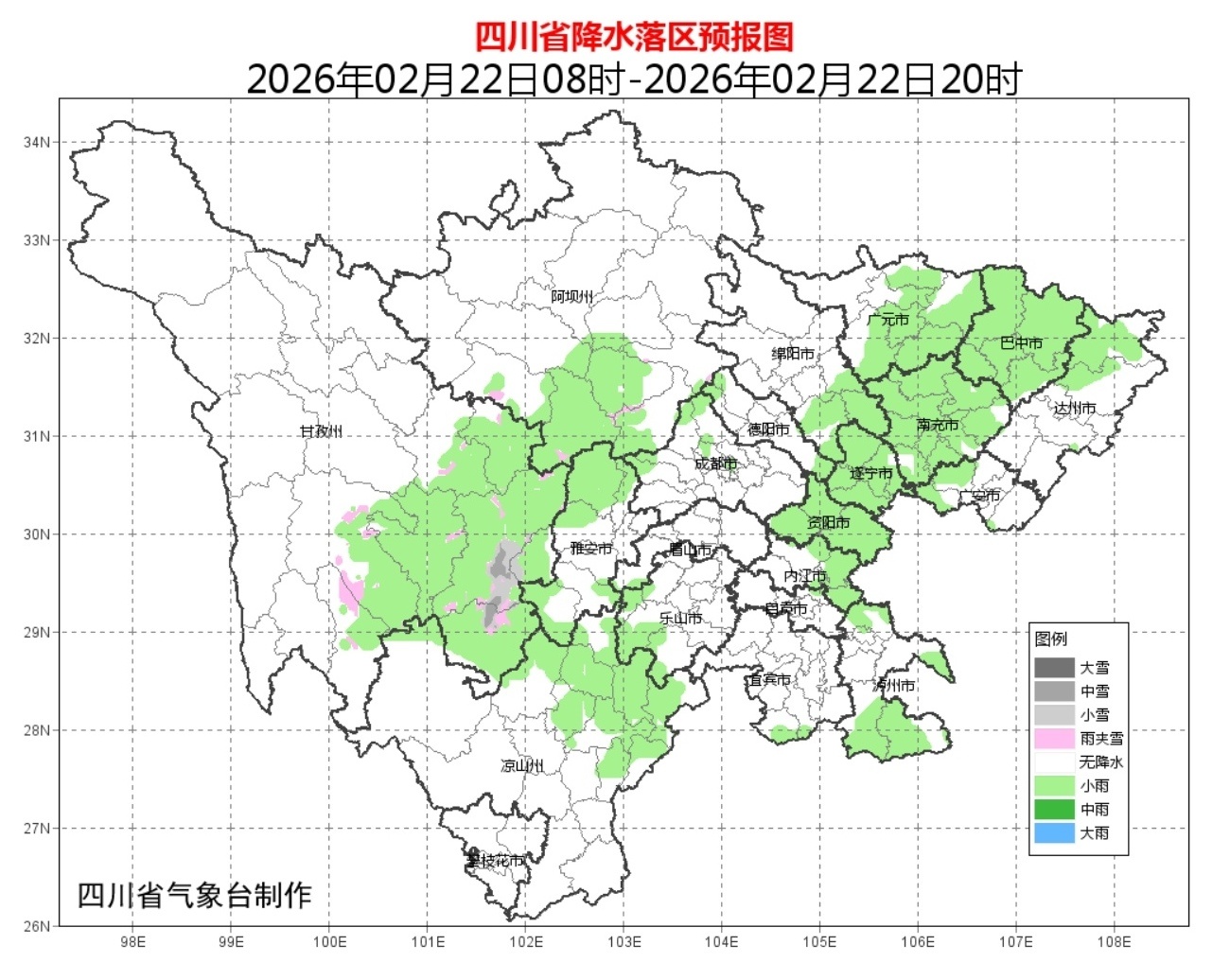
四川天气迎转折!降温降雨又要来了,今天抓紧晒太阳
Xin Lang Cai Jing· 2026-02-22 05:31
Core Viewpoint - A significant weather change is expected in China, particularly in the northwest and parts of Sichuan, with cold air, rain, and snow forecasted starting from February 21 [1][3]. Group 1: Weather Warnings and Forecasts - The Central Meteorological Observatory issued blue warnings for cold waves, snowstorms, and sandstorms, while Sichuan is not included in these warnings, indicating it will not be affected by strong winds or cold air today [1]. - The Sichuan Provincial Meteorological Station predicts that from the evening of February 22 to the daytime of February 23, the region will experience rain and a drop in temperature, with some areas expecting moderate to heavy rain [3]. Group 2: Temperature Changes - On February 21, temperatures in many areas of the basin exceeded 21°C, with some locations like Yibin and Dazhou reaching over 23°C, breaking previous records for February [5]. - By February 23, the expected maximum temperatures in Dazhou, Bazhong, Nanchong, Guang'an, Suining, and Ya'an will drop to 15-17°C, while other basin cities will see highs of 18-20°C [5]. Group 3: Duration of Weather Impact - The cold air's impact on the Sichuan basin is expected to be brief, with a return to cloudy weather by February 24, although some areas in the western plateau and the southern region may still experience rain and snow [5].
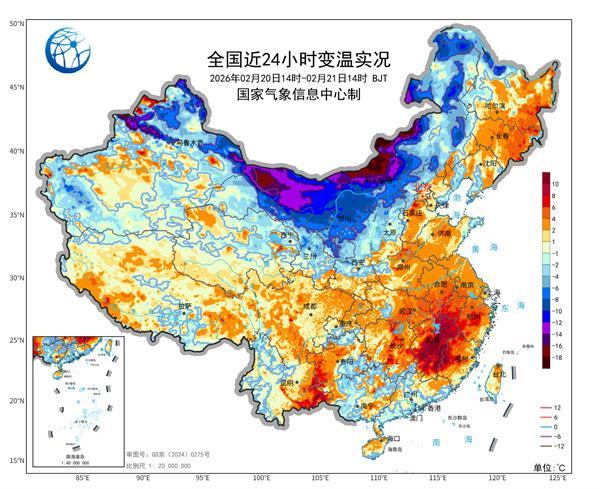
暴雪大风沙尘大范围降雨上线 北方气温“跳水”冷暖快速反转
Xin Lang Cai Jing· 2026-02-21 12:07
Core Viewpoint - A significant weather change is expected after the Spring Festival holiday, with a cold wave, strong winds, sandstorms, and heavy snowfall affecting various regions in China, leading to temperature drops exceeding 10°C in northern areas [1][4][5]. Group 1: Temperature Changes - The cold wave will continue to impact China, with northern regions experiencing temperature drops of 6 to 10°C, and some areas in Inner Mongolia and Northeast China seeing drops of 12 to 14°C [4][5]. - Major cities like Changchun and Shijiazhuang will experience drastic temperature changes, with highs dropping from over 15°C to below freezing [8]. - The southern regions will also see a temperature decrease of around 10°C due to increased rainfall starting from January 22 [8]. Group 2: Weather Warnings - The Central Meteorological Observatory has issued warnings for cold waves, strong winds, sandstorms, and heavy snowfall as the cold air moves eastward [3][4]. - Strong winds are expected in northern regions, with gusts reaching 9 to 10 levels in some areas, contributing to the largest and strongest sandstorm of the year [8][9]. Group 3: Rain and Snow Forecast - Significant rain and snow are anticipated, particularly in Inner Mongolia and Northeast China, with some areas experiencing heavy to extreme snowfall [11]. - A new round of rainfall will begin in southern regions, with potential thunderstorms and severe weather conditions expected on January 23, coinciding with the peak travel period after the holiday [12][13].
三预警齐发 北方多地有大风沙尘暴
Xin Lang Cai Jing· 2026-02-21 06:55
Group 1 - The Central Meteorological Administration has issued yellow warnings for strong winds and sandstorms, as well as a blue warning for cold waves, indicating significant weather impacts across northern regions from now until the 22nd [1] - A four-level emergency response has been activated by the China Meteorological Administration due to major meteorological disasters, including strong winds and sandstorms [1] - The forecast predicts wind speeds of 5 to 7 levels, with gusts reaching 8 to 10 levels, and localized areas may experience winds exceeding 11 levels [1] Group 2 - The cold air mass is expected to cause significant temperature drops, with regions in Xinjiang, Inner Mongolia, and Hebei experiencing temperature declines of 6°C to 10°C, and some areas seeing drops of 10°C to 14°C [1] - The cold wave is described as an all-encompassing air mass, leading to extreme temperature drops, strong winds, and widespread sand, rain, and snow [2] - The intensity and scope of the sandstorm are projected to be the largest seen this year, which will significantly reduce visibility and impact travel during the holiday period [2]
青海甘肃多地沙尘暴部分地区能见度不足百米 大风卷着细沙从路面拂过
Xin Lang Cai Jing· 2026-01-25 04:52
Group 1 - The article reports on sandstorm weather occurring in multiple regions of Qinghai and Gansu, with visibility in some areas dropping below 100 meters [1] - A blue warning signal for sandstorms has been issued by the Lanzhou Meteorological Station, indicating the need for caution regarding the adverse effects of sandstorms on transportation [1] - The Central Meteorological Station forecasts that the areas affected by floating dust will primarily include Gansu, Ningxia, Shaanxi, and Xinjiang [1]
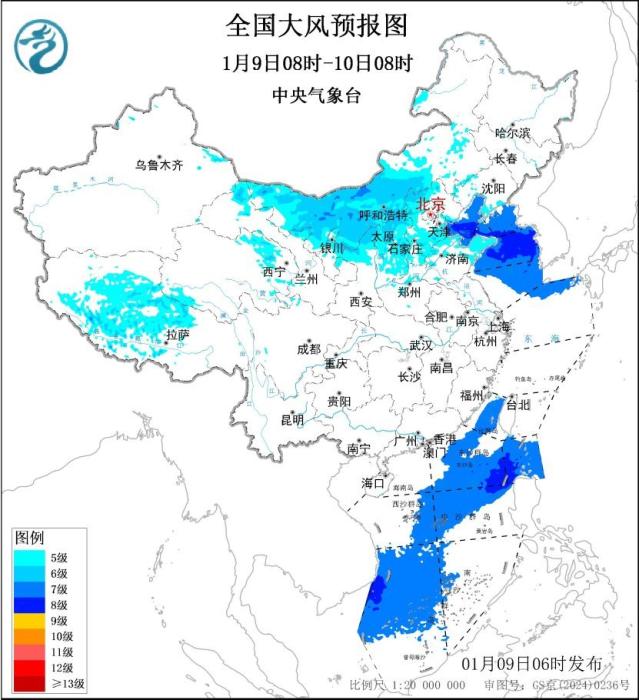
大风沙尘暴双预警发布 公众外出需注意防护
Zhong Guo Xin Wen Wang· 2026-01-09 02:18
Group 1 - The Central Meteorological Administration has issued blue alerts for strong winds and sandstorms due to the influence of strong cold air, expecting significant wind events in northern regions over the next two days [1][2] - Wind speeds of 5 to 6 levels are expected in areas such as central and western Inner Mongolia, northeastern Northwest regions, North China, Shandong Peninsula, and Liaodong Peninsula, with some areas experiencing winds of 7 levels and gusts of 8 to 9 levels [2][4] - In addition to strong winds, areas including western Inner Mongolia, northern Ningxia, central northern Shaanxi, Shanxi, central southern Hebei, Beijing, Tianjin, Henan, northern Shandong, northern Anhui, and central northern Jiangsu are forecasted to experience dust storms or floating dust [4] Group 2 - The weather in northern regions is expected to be complex, with strong winds, temperature drops, sandstorms, and snowfall all occurring simultaneously, prompting public advisories for protective measures when going outdoors [4]
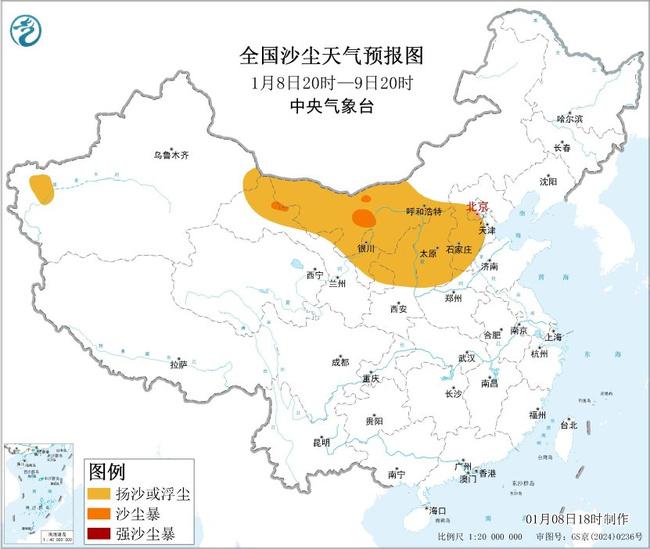
沙尘暴蓝色预警:内蒙古北京河北等7省区市有扬沙或浮尘
Yang Shi Wang· 2026-01-08 11:18
Group 1 - The central meteorological station issued a blue warning for sandstorms, predicting dust or floating dust weather in several regions including western Inner Mongolia, western Gansu, northern Ningxia, northern Shaanxi, central and southern Shanxi, central and southern Hebei, and Beijing from January 8, 20:00 to January 9, 20:00 [1] - Local areas in western Inner Mongolia and western Gansu are expected to experience sandstorms [1] Group 2 - Defensive measures include preparing for wind and sand, closing doors and windows, and carrying dust protection items like masks and scarves to prevent damage to eyes and respiratory systems [3] - It is advised to secure temporary structures and outdoor items that may be affected by the sandstorm [3] - Drivers are recommended to control their speed due to low visibility conditions [3]
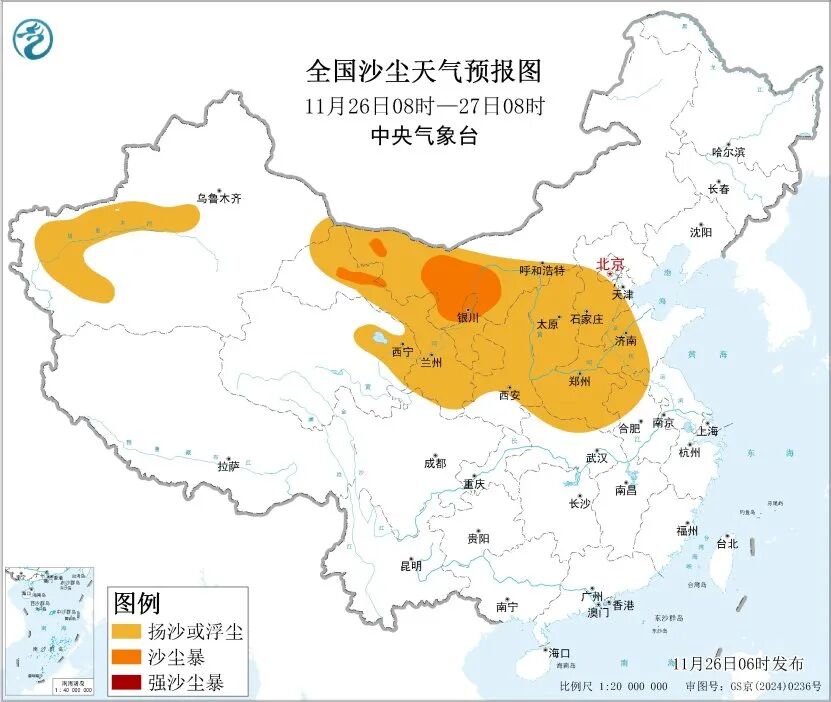
大风!沙尘暴!三股冷空气将来袭!
Yang Shi Wang· 2025-11-26 10:43
Group 1 - The core message indicates that cold air is frequently affecting China, with significant temperature fluctuations expected from late November to early December [1][3] - A series of cold air masses will lead to temperature drops of 4°C to 12°C across various northern regions, with specific areas experiencing rapid temperature changes [3][4] - The Central Meteorological Observatory has issued blue alerts for sandstorms and yellow alerts for strong winds due to the impact of cold air [4][6] Group 2 - Snowfall is expected to increase in Northeast and North China, with some areas experiencing moderate to heavy snow [2][10] - The weather forecast predicts a significant reduction in precipitation in the southwest and northern regions in the coming days [2][10] - Strong winds are anticipated across multiple regions, with wind speeds reaching 5-7 levels and gusts up to 11-12 levels in certain areas [5][7]