大风降温

Search documents
春运返程前,中央气象台连发双预警
Xin Lang Cai Jing· 2026-02-20 10:20
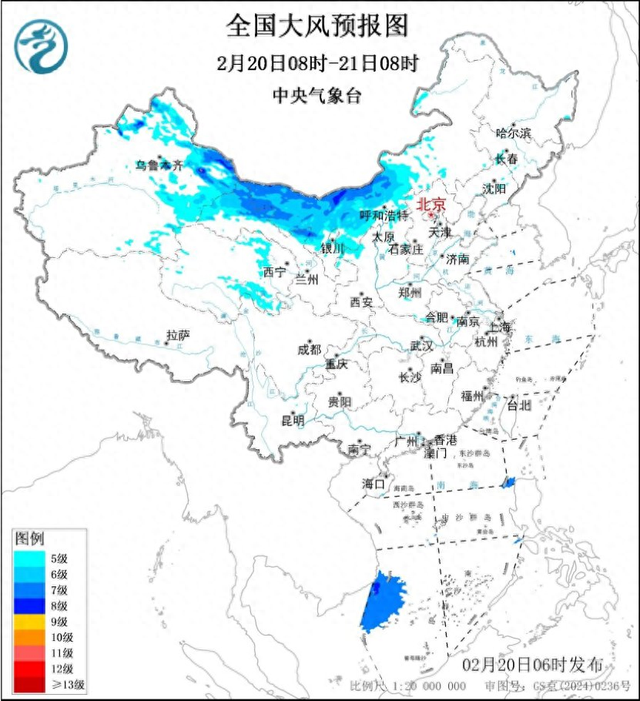
Core Viewpoint - The Central Meteorological Administration of China has issued blue alerts for strong winds and sandstorms due to a strong cold air mass affecting various regions from February 20 to 22, coinciding with the peak of the Spring Festival travel period, necessitating public precautions for outdoor activities [1][2]. Group 1: Weather Alerts - A blue alert for strong winds indicates that from 08:00 on February 20 to 08:00 on February 21, areas in northern and eastern Xinjiang, central and western Inner Mongolia, and parts of Gansu, Ningxia, and Shaanxi will experience winds of 5 to 7 levels, with gusts reaching 8 to 10 levels [1]. - In specific regions such as the mountain passes of Xinjiang and western Inner Mongolia, local wind speeds may reach level 8, with gusts around level 11 [1]. Group 2: Sandstorm Alerts - The blue alert for sandstorms indicates that during the same period, eastern and southern Xinjiang, western Inner Mongolia, western Gansu, and northern Ningxia will experience dust storms, with some areas facing severe sandstorms [2]. Group 3: Precipitation and Health Precautions - Rain and snow are expected to have a limited impact today, primarily affecting northern and eastern Xinjiang, northeastern and central Inner Mongolia, and parts of Tibet, with light to moderate snow or rain-snow mixtures [4]. - Starting February 21, significant snowfall is anticipated in eastern Inner Mongolia and northeastern regions, with increased rainfall in southern areas [4]. - Meteorological experts advise caution regarding firework displays and forest fire sources in regions like Xinjiang, Gansu, Ningxia, and others due to strong winds, and highlight the health risks posed by dust and severe temperature drops [4].

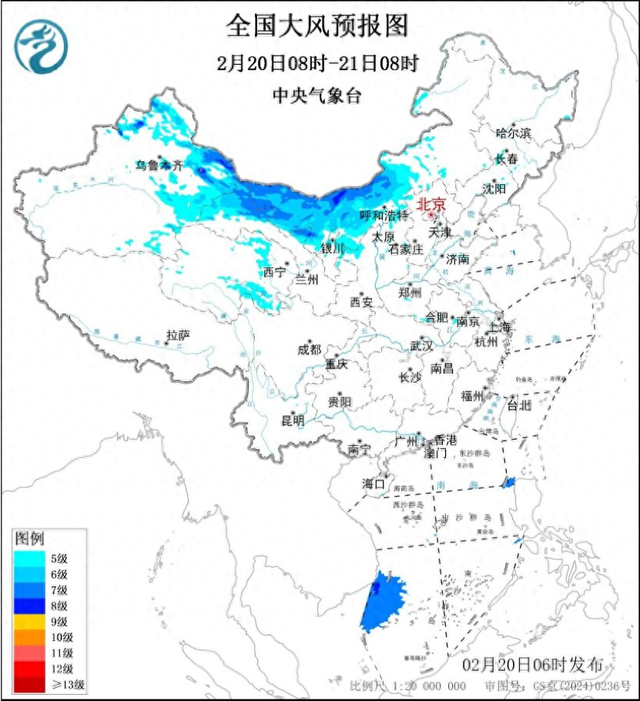
中央气象台连发双预警,春节初四至初六北方大风沙尘来袭
Xin Lang Cai Jing· 2026-02-20 07:17
Group 1 - The Central Meteorological Administration issued blue alerts for strong winds and sandstorms due to a strong cold air mass affecting regions from Jianghuai and northward from February 20 to 22, coinciding with the peak of the Spring Festival travel rush [1][2] - The blue alert for strong winds indicates that from 08:00 on February 20 to 08:00 on February 21, areas in northern and eastern Xinjiang, central and western Inner Mongolia, and parts of Gansu, Ningxia, and Shaanxi will experience winds of 5 to 7 levels, with gusts reaching 8 to 10 levels [1] - The sandstorm blue alert warns that regions including eastern and southern Xinjiang, western Inner Mongolia, and parts of Gansu and Ningxia will experience dust storms, with some areas facing severe sandstorms [2] Group 2 - Rain and snow impacts are expected to be limited, primarily affecting northern and eastern Xinjiang, northeastern and central Inner Mongolia, and parts of Tibet and the western Sichuan Plateau, with light to moderate snow or sleet, and localized heavy snow [4] - Starting February 21, significant snowfall is anticipated in eastern Inner Mongolia and the northeastern region, while increased rainfall is expected in southern areas [4] - Meteorological experts advise caution regarding firework displays and forest fire sources in regions such as Xinjiang, Gansu, Ningxia, and Shaanxi due to strong winds, and highlight health precautions against respiratory diseases caused by dust and severe temperature drops [4]
中央气象台:每 日 天 气 提 示(2026年02月20日)
Xin Lang Cai Jing· 2026-02-20 02:10
Group 1 - The Central Meteorological Administration has issued blue alerts for strong winds and sandstorms due to a strong cold air mass affecting various regions from February 20 to 22 [1][3] - Strong winds are expected in parts of northern and eastern Xinjiang, central and western Inner Mongolia, and other areas, with wind speeds reaching 5-7 levels and gusts up to 11 levels in some localities [1] - Sandstorm conditions are anticipated in eastern and southern Xinjiang, western Inner Mongolia, and other regions, with some areas experiencing sandstorms and localized severe sandstorms [3] Group 2 - Snow and rain are expected to affect limited areas, primarily in northern and eastern Xinjiang, northeastern and central Inner Mongolia, and parts of Tibet, with some regions experiencing moderate to heavy snowfall [4] - Starting tomorrow, significant snowfall is forecasted for eastern Inner Mongolia and northeastern regions, with increased rainfall in southern areas [6] - The public is advised to take precautions against respiratory diseases due to dust storms and severe temperature drops, and to ensure traffic safety during the peak travel season [6]

暴雪+大风!今天起,新一轮寒潮来袭
Xin Lang Cai Jing· 2026-02-05 06:55
Summary of Key Points Core Viewpoint - A significant cold wave is affecting central and eastern China, with temperature drops of 6 to 10 degrees Celsius expected, and localized areas experiencing drops of over 20 degrees Celsius. Heavy snowfall is anticipated in multiple provinces, prompting blue alerts for cold waves and strong winds [1][2][3]. Group 1: Temperature Changes - From February 5 to February 8, temperatures in most central and eastern regions are expected to drop by 6 to 10 degrees Celsius, with some areas in Northeast China and Jiangnan experiencing drops of 12 to 16 degrees Celsius, and localized drops exceeding 20 degrees Celsius [1]. - The lowest temperature line is projected to move south to northern Fujian and northern Hunan by early February 8 [1]. Group 2: Precipitation and Snowfall - From February 5 to February 6, regions including Jiangsu, Anhui, Shanghai, and northern Zhejiang are forecasted to experience rain transitioning to sleet or snow, with some areas expecting heavy snowfall [3]. - A significant weather event involving rain and snow is anticipated from February 9 to February 11 across central and eastern regions [4]. Group 3: Public Safety Recommendations - Public is advised to be cautious of the impacts of strong winds, temperature drops, and rain/snow on transportation safety during the ongoing Spring Festival travel period [5]. - Specific driving recommendations include reducing speed, maintaining safe distances, and using appropriate vehicle lights in low visibility conditions [6][7].
寒潮暴雪来袭 最低温-10℃以下
Da Zhong Ri Bao· 2026-01-18 01:19
Group 1 - The province is experiencing a cold wave, with temperatures expected to drop below -10°C, and significant snowfall and ice are forecasted from the night of January 17 to the night of January 19 [2][3] - The average cumulative precipitation across the province is expected to be between 6 to 12 millimeters, with snow depth ranging from 3 to 8 centimeters, and potentially exceeding 10 centimeters in some areas [2] - The temperature is projected to decrease by 10 to 12°C, with some regions experiencing drops of over 14°C, leading to prolonged low temperatures from January 20 to 24 [2] Group 2 - The provincial disaster reduction office held a video conference to assess the situation and coordinate response efforts, emphasizing the need for enhanced monitoring, information sharing, and preemptive measures [3] - Key areas of focus include schools, medical and elderly care institutions, tourist sites, and construction projects, with a strong emphasis on preventing secondary disasters [3] - Specific measures include snow removal, traffic control, and agricultural guidance to mitigate the impacts of the severe weather [3]
山东将迎2026年第一场大范围寒潮 低温持续一周
Xin Hua Wang· 2026-01-17 02:19
Group 1 - A significant cold wave is affecting Shandong, with temperatures expected to drop by 10-12°C, and in some areas, exceeding 14°C [3][4] - The cold weather will persist for an extended period, with temperatures below -12°C expected from January 21 to 25 [4] - The weather conditions are predicted to lead to substantial snowfall, with accumulations of 3 to 8 centimeters, and in some areas, exceeding 12 centimeters [2][4] Group 2 - The cold wave is accompanied by strong winds, with gusts reaching 7-8 levels in the Bohai Sea and 9-10 levels in certain areas [4] - The rain and snow are expected to improve soil moisture levels and reduce forest fire risks, but will negatively impact transportation, urban operations, and agricultural facilities [4] - The prolonged low temperatures will significantly affect energy supply, public health, and agricultural production [4]
寒潮暴雪将至!山东五预警齐发
Xin Lang Cai Jing· 2026-01-16 18:01
Group 1 - The core weather event affecting Shandong province includes a strong cold air mass leading to a significant drop in temperatures, with forecasts indicating a temperature decrease of 10℃ to 12℃, and in some areas exceeding 14℃ [1][2] - A series of weather warnings have been issued, including a blue snow warning, orange road icing warning, yellow cold wave warning, and yellow low-temperature warning, indicating severe weather conditions expected from January 17 to January 19 [1][2] - The expected minimum temperatures for various regions include -16℃ to -14℃ in the northwest and central mountainous areas, with coastal regions experiencing lows of -8℃ to -6℃, and other areas ranging from -10℃ to -8℃ [1] Group 2 - The precipitation forecast indicates an average accumulation of 8mm to 15mm, with snow depth reaching 3cm to 8cm, and potentially exceeding 12cm in some areas, which may significantly impact transportation due to road icing [2] - The weather conditions are expected to improve soil moisture and reduce forest fire risks, but the prolonged low temperatures and snow accumulation could adversely affect transportation, urban operations, and agricultural facilities [2] - The north winds are anticipated to negatively impact maritime transportation and coastal aquaculture, necessitating enhanced preventive measures [2]
视频丨大风、雨雪天气将至!这些地区需注意出行安全与防寒保暖
Yang Shi Xin Wen Ke Hu Duan· 2026-01-16 02:27
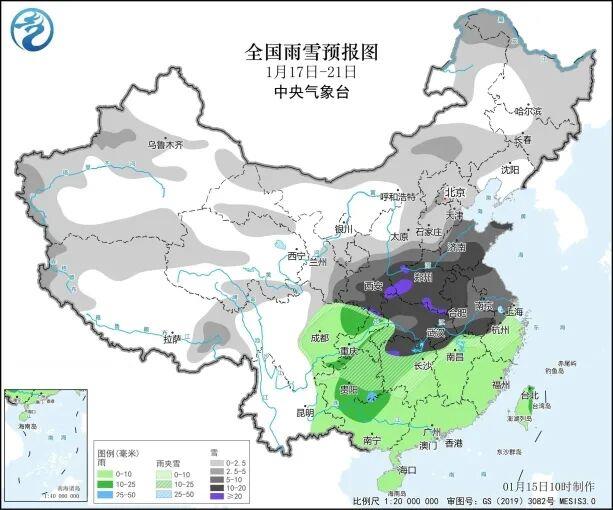
Core Viewpoint - A cold wave is expected to impact most parts of China from January 17 to 21, bringing significant temperature drops and severe weather conditions, particularly in southern regions [1][5]. Group 1: Temperature and Weather Impact - The temperature across most of China is forecasted to drop by 6 to 10 degrees Celsius, with certain areas experiencing drops exceeding 12 degrees Celsius, accompanied by strong winds of 4 to 6 levels, and gusts reaching 7 to 9 levels [1]. - The cold wave will first affect northern regions, including Xinjiang, Gansu, and Inner Mongolia, before moving to central and southern areas by January 20 to 21 [2]. Group 2: Rain and Snow Forecast - A widespread rain and snow event is anticipated in central and eastern China from January 17 to 21, with significant snowfall expected in regions such as the eastern Northwest, southern North China, and parts of the Yangtze River basin [5]. - Accumulated snowfall is projected to reach 12 to 15 millimeters in many areas, with localized regions in the Qinba Mountains potentially exceeding 20 millimeters [5]. Group 3: Weather Warnings and Public Safety - Meteorological experts warn of risks associated with heavy snow and low-temperature rain and ice in several provinces, advising the public to take precautions for travel safety and agricultural protection [8]. - The public is urged to stay informed about weather forecasts and to avoid high-risk travel during the cold wave period [11].
中央气象台:天 气 公 报(2026年01月11日)
Xin Lang Cai Jing· 2026-01-11 00:39
Domestic Weather Conditions - Strong snowfall occurred in Shandong and Jilin, with some areas experiencing heavy snow [2] - Significant temperature drops of 4-8°C were reported in regions including Inner Mongolia, Northeast China, and North China, with localized drops exceeding 10°C [2] Key Weather Forecasts - Over the next three days, temperatures in Inner Mongolia, Northeast China, and Northern Xinjiang are expected to drop by 4-6°C, with localized drops over 8°C, accompanied by winds of 4-6 levels [3] - Snowfall is anticipated in regions such as the northern Shandong Peninsula, eastern Inner Mongolia, and parts of Heilongjiang and Jilin, with localized heavy snow expected [3] Global Weather Conditions - Heavy rainfall was reported in Malaysia, Argentina, and several other countries, with localized areas experiencing torrential rain [4] - Strong snowfall was observed in Central and Eastern Europe, with localized heavy snow in various regions [4] Global Key Weather Forecasts - Continuous heavy rainfall is expected in southern Mozambique and surrounding areas, with cumulative rainfall potentially reaching 50-150 mm, and localized areas exceeding 400 mm [6] - Australia’s northeastern region and parts of Paraguay and Bolivia are forecasted to experience heavy rainfall, with possible severe weather conditions [7] - Strong snowfall is anticipated in Eastern Europe and North America, with temperature drops of 8-12°C and localized drops exceeding 14°C [8]
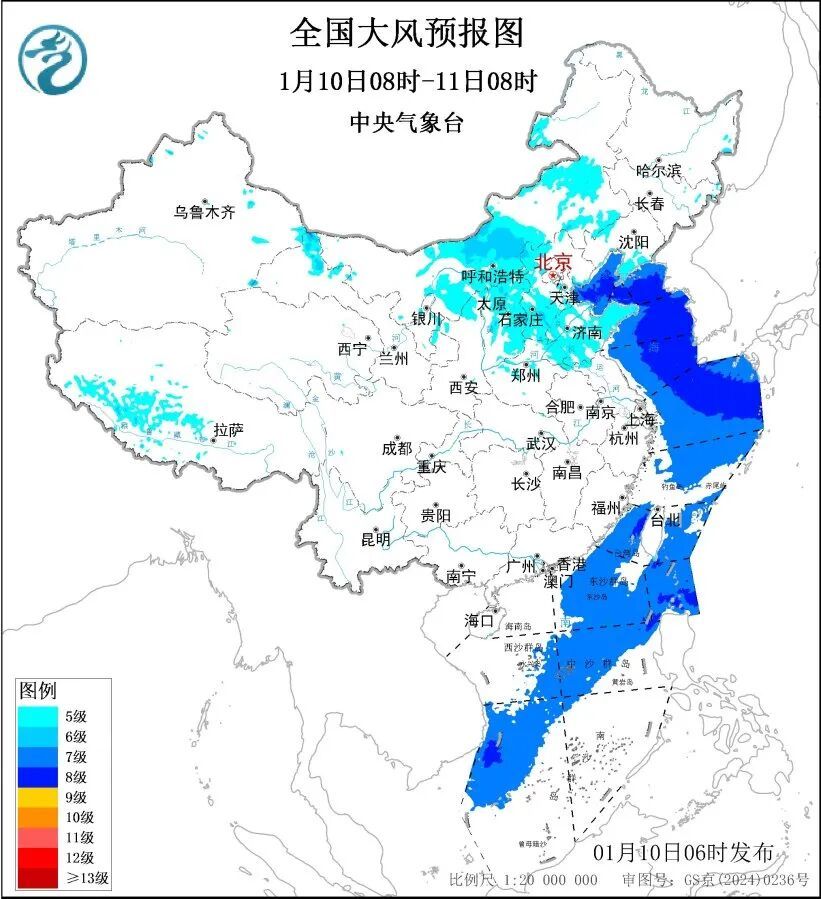
大风、沙尘、大雪!冷空气来袭,注意→
Xin Lang Cai Jing· 2026-01-10 07:05
Group 1 - A strong cold air mass is affecting northern China, bringing strong winds, temperature drops, rain, snow, and dust storms [1][2] - From January 10 to 11, temperatures in regions like North China and Huanghuai will drop to recent lows, with a decrease of 6 to 12 degrees Celsius [1][6] - The cold air will move quickly, with temperatures expected to rebound by early next week, reaching recent highs again [1][6] Group 2 - Areas such as western Tibet, northern Gansu, central and eastern Inner Mongolia, and northern Shaanxi are experiencing winds of 5 to 6 levels, with gusts reaching 7 to 9 levels [2][3] - Dust and sand weather is affecting parts of central and southern Henan, southern Shandong, central and northern Anhui, and northern Jiangsu due to dust transmission [2][4] - A blue wind warning has been issued, predicting strong winds in various regions and sea areas, with gusts potentially reaching 10 to 11 levels in some maritime areas [3][4]