革命思想

Search documents
这座城市,毛泽东主席情有独钟!
Xin Lang Cai Jing· 2026-02-12 23:44
Group 1 - Wuhan is significant in Mao Zedong's life, being a place of emotional connection and revolutionary thought development [1][3] - The city is home to important historical sites related to Mao, including the former residence and the site of the Central Farmers' Movement Training Institute [1][3] - Mao's first visit to Wuhan after the founding of New China occurred in February 1953, marking a notable moment in his relationship with the city [1] Group 2 - Wuhan played a crucial role in the Chinese modernization movement and was the birthplace of the Xinhai Revolution [2] - The city was the site of the August 7th Meeting in 1927, where Mao famously stated, "Political power grows out of the barrel of a gun" [2] - Mao's connection to Hubei and Hunan is emphasized, as he viewed both provinces as closely related culturally [5][8] Group 3 - Mao Zedong had a deep appreciation for Chu culture, particularly for the patriotic poet Qu Yuan, which influenced his literary works [5][7] - The "Li Sao" monument in the Chu Culture Scenic Area reflects Mao's admiration for Qu Yuan, showcasing his connection to the region [7] - Mao's interactions with local workers in Hubei highlighted his sense of kinship with the people of both Hunan and Hubei [8][9] Group 4 - Swimming was one of Mao's lifelong hobbies, and he swam in the Yangtze River during his visits to Wuhan [11] - From 1956 to 1966, Mao swam in the Yangtze River 17 times during his visits to Wuhan, indicating his fondness for the city [11] - Mao's personal and revolutionary journeys are intertwined with the city of Wuhan, making it a significant part of his life [13]

长江书店回来了 98年前《湖南农民运动考察报告》在这里首发
Chang Jiang Ri Bao· 2025-08-08 00:26
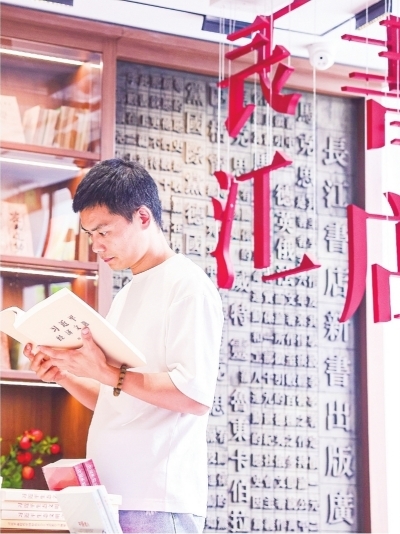
Core Viewpoint - The Changjiang Bookstore, a historical site significant to the Chinese Communist Party, has been renovated and reopened as a "Red Culture Complex" to promote revolutionary culture and historical memory [1]. Group 1: Historical Significance - The Changjiang Bookstore was established in November 1926 as the first bookstore in Wuhan to promote Marxist literature and revolutionary ideas [1]. - It published over 50 revolutionary books and was a key site for disseminating progressive knowledge during the revolutionary period [1]. - The bookstore was popular from its inception, with books transported from Shanghai and Guangzhou selling out within three days, indicating a strong public demand for revolutionary thought [1]. Group 2: Renovation and Features - In 2022, the Jianghan District decided to renovate the original site of the Changjiang Bookstore to preserve red culture and awaken historical memories [1]. - The newly reopened bookstore features a multi-functional space that includes red culture exhibitions, book sales, and cultural creativity [1]. - The bookstore includes various sections such as a display area for Mao Zedong's research, a humanities and social sciences library, and a cultural exchange space with unique quiet reading areas [3].