食品股异动

Search documents
亚太股市,集体下跌!发生了什么
Zhong Guo Zheng Quan Bao· 2026-02-02 09:17
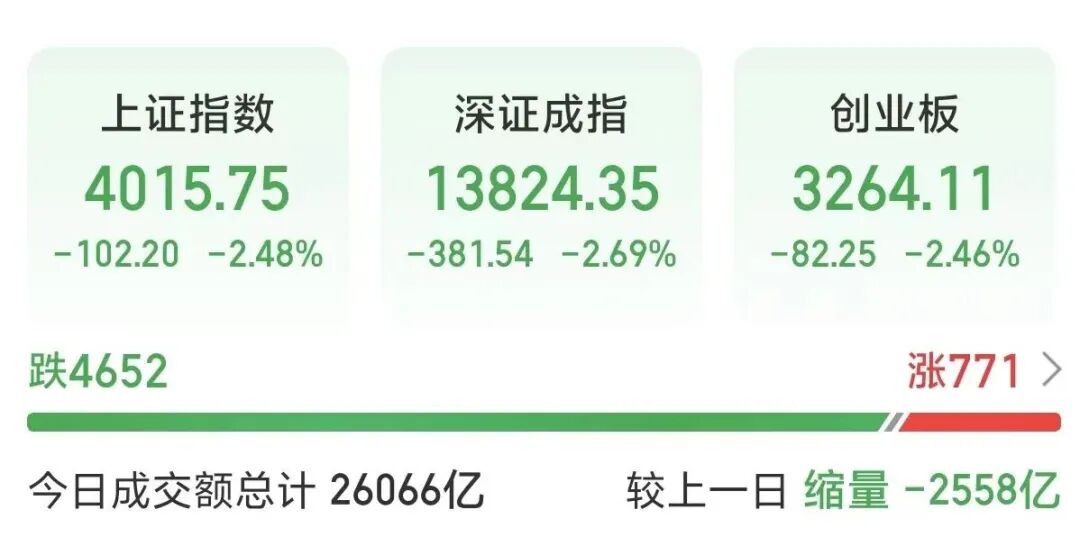
Market Overview - The Asia-Pacific stock markets experienced a widespread decline, with the South Korean Composite Index dropping over 5%, triggering a trading halt for 5 minutes [1][4] - The A-share market saw all three major indices fall by more than 2%, with the Shanghai Composite Index down 2.48%, the Shenzhen Component down 2.69%, and the ChiNext Index down 2.46% [1][4] - The Hang Seng Index and the Hang Seng China Enterprises Index both fell by over 2%, while the Hang Seng Technology Index dropped by 3.36% [1] Sector Performance - The A-share non-ferrous metals sector experienced a significant pullback, with precious and industrial metals leading the declines; stocks like Sichuan Gold and Chifeng Jilong Gold hit the daily limit down [4] - The storage chip sector also saw expanded losses, with stocks such as Capcloud and Wanrun Technology hitting the daily limit down [4] - Other sectors like oil and gas, chemicals, coal, and semiconductors also faced notable declines [4] Commodity Market - Domestic commodity futures closed lower across the board, with major contracts for silver, palladium, platinum, nickel, tin, copper, aluminum, international copper, crude oil, fuel oil, aluminum alloy, and lithium carbonate all hitting the daily limit down [4] Factors Influencing Market Movement - A sudden shift in expectations regarding the Federal Reserve's policy, particularly with the potential nomination of Kevin Walsh as the next Fed Chair, has raised concerns about delayed interest rate cuts and tightening liquidity, impacting global risk asset valuations [6] - Profit concerns in the AI sector have led to a sell-off in technology stocks, with major players like Samsung Electronics and SK Hynix experiencing significant declines of over 6% and 8%, respectively [6] - Pre-holiday risk aversion and reduced trading volume have contributed to market weakness, as investors are inclined to secure profits ahead of the upcoming Spring Festival [6] - Technical adjustments are also at play, as some sectors in the Asia-Pacific region have reached high valuation levels after substantial prior gains [6] Consumer Sector Insights - The rise of healthy snacks and the penetration of online channels are identified as key growth drivers in the market, with projections indicating that the Chinese leisure food industry will reach 1.18 trillion yuan by 2025 and 1.24 trillion yuan by 2027 [10] - Current valuations in the food and beverage sector are at historical lows, suggesting potential investment opportunities as market dynamics shift [10] - Three main investment themes are suggested: focusing on industry leaders with stable demand and strong risk resilience, companies innovating in new products and channels, and segments within the mass consumer goods industry that have reasonable valuations post-adjustment [10]