
高压脊

Search documents
三九将至!一九二九我国多地持续偏暖,明起是否将回归寒冷
Xin Lang Cai Jing· 2026-01-07 11:01
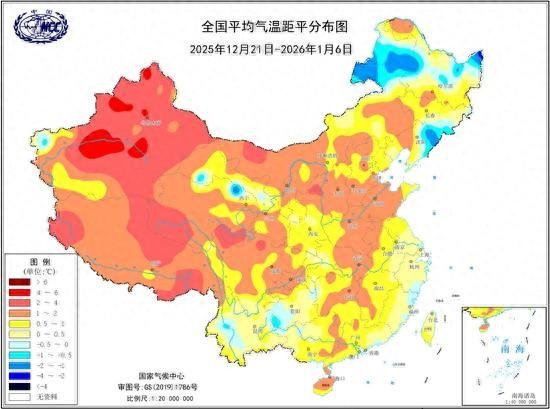
Core Viewpoint - This winter, many regions in China are experiencing unusually warm temperatures during the traditionally cold period of "Yijiu" and "Erjiu," raising questions about whether this trend will continue into the coldest period of "Sanjiao" [1][3]. Group 1: Temperature Trends - During the "Yijiu" period (December 21 to 29, 2025), most areas in China experienced temperatures significantly higher than the historical average, with some regions exceeding by 2°C [3]. - The upcoming "Sanjiao" period is expected to be characterized by a mix of warm and cold temperatures, with some areas in Inner Mongolia and Northeast China experiencing temperature drops exceeding 10°C, while regions from North China to Jiangnan may remain warmer [4][7]. Group 2: Weather Patterns - The current warm weather is attributed to a high-pressure ridge that prevents cold air from accumulating and allows for the warming of air masses, effectively acting as a "thermal blanket" [3]. - The temperature during "Sanjiao" is expected to show significant daily fluctuations, with daytime temperatures in southern regions potentially reaching close to 20°C, while nighttime temperatures may drop significantly, reflecting the traditional cold characteristics of this period [7].

宁夏遭遇异常“暖冬” 12月平均气温达60余年来第4高值
Zhong Guo Xin Wen Wang· 2025-12-25 06:14
Core Viewpoint - Ningxia is experiencing an unusually warm winter, with December average temperatures reaching the fourth highest level in over 60 years, at -2.3°C, which is 2.3°C higher than the normal for this time of year [1] Group 1: Temperature Anomalies - The average temperature in Ningxia for December is reported at -2.3°C, marking it as the fourth highest since 1961 [1] - The region has experienced five cold air activities this December, which brought strong winds, dust storms, and slight cooling, but the cold air was weak, leading to rapid temperature rebounds [1] Group 2: Meteorological Analysis - A strong high-pressure ridge from Xinjiang to Central Asia is identified as the main cause of the temperature anomalies in Ningxia [1] - This high-pressure system has altered the paths of cold air sources, leading to a weaker influence from the main cold air masses, resulting in a pattern of rapid temperature rebounds after brief cooling [1] Group 3: Future Forecast - The Central Meteorological Observatory predicts that despite frequent cold air activities in the coming week, their weak intensity will not change the overall warm pattern [1]