高性能无线连接

Search documents
泰凌微电子(上海)股份有限公司2025年度业绩快报公告
Shang Hai Zheng Quan Bao· 2026-02-27 19:25
Financial Performance Summary - In 2025, the company achieved a revenue of 1,015.52 million RMB, representing a year-on-year growth of 20.32% [2] - Operating profit reached 131.45 million RMB, up 40.98% year-on-year [2] - Total profit amounted to 126.30 million RMB, an increase of 36.85% compared to the previous year [2] - Net profit attributable to shareholders was 128.13 million RMB, reflecting a growth of 31.53% [2] - The net profit after deducting non-recurring gains and losses was 118.74 million RMB, up 30.72% [2] - The net profit attributable to shareholders after excluding share-based payment impacts was 170.22 million RMB, showing a significant increase of 54.45% [2] Business Strategy and Product Development - The company focused on "high-performance wireless connectivity + edge intelligence" strategy, leading to product structure upgrades and enhanced technical capabilities [2] - Traditional IoT business segments, including smart home and retail, contributed approximately 850 million RMB, providing a stable revenue base [3] - The audio product line experienced rapid growth of about 50%, surpassing 100 million RMB in revenue [3] - The gaming peripherals business generated revenue of 25 million RMB, while automotive SOC chip products began mass production, contributing several million RMB [3] - The company launched the TL-EdgeAI platform, showcasing practical capabilities in edge AI applications [3] Profitability and Margin Improvement - The overall gross margin was approximately 50.33%, an increase of 1.99 percentage points from the previous year [4] - The company maintained a steady growth in revenue while improving profitability and the quality of earnings [4] Research and Development Investment - R&D expenses accounted for about 27% of revenue, reflecting an increase from the previous year [6] - The company introduced several advanced products, including wireless gaming chips and high-precision positioning technology [6] - Strategic investments were made in areas such as edge AI computing platforms and next-generation high-performance SoC products [6] Sales and Supply Chain Management - Sales expenses were approximately 7.7% of revenue, totaling 78.31 million RMB, a 12% increase year-on-year [7] - Significant growth was observed in the Japanese and Korean markets, with a complete sales team established in North America [7] - The company has completed overseas supply chain backups to mitigate risks associated with domestic capacity shortages [7] Financial Stability - Total assets grew by 6.22% compared to the previous year, while equity attributable to shareholders increased by 5.26% [8] - The company continues to focus on high-value-added sectors, emphasizing R&D investment and the introduction of high-margin products [8] - The overall financial health remains stable, with a commitment to sustainable high-quality growth [8]

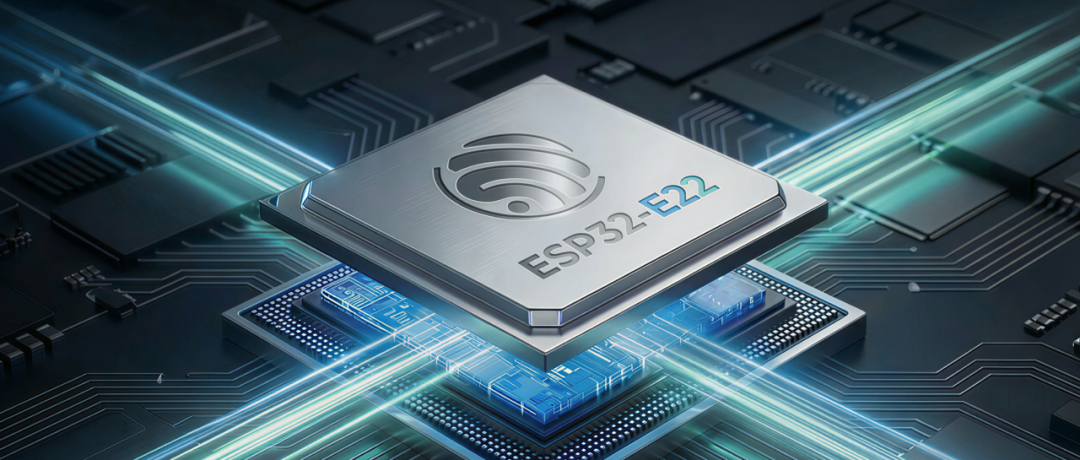
ESP32-E22 发布!乐鑫首款三频 Wi-Fi 6E 高性能协处理器
Xin Lang Cai Jing· 2026-01-19 13:16
Core Viewpoint - Lattice Semiconductor has officially launched the ESP32-E22, marking its entry into the high-performance wireless connectivity sector with the first Wi-Fi 6E SoC, which initiates a new generation of product matrix [2][8] Group 1: Product Features - The ESP32-E22 is a Radio Co-Processor (RCP) that integrates tri-band Wi-Fi 6E and dual-mode Bluetooth, allowing it to fully support the wireless network protocol stack, thereby simplifying system design for developers [2][8] - It is built on Lattice's self-developed RISC-V processor architecture and Wi-Fi 6E protocol stack, providing excellent system flexibility and reliable supply chain assurance, tailored for applications with stringent wireless performance and reliability requirements [2][8] - The chip supports 2.4 GHz, 5 GHz, and 6 GHz tri-band Wi-Fi 6E, featuring 160 MHz bandwidth, 2×2 MU-MIMO, Beamforming, and advanced link layer scheduling mechanisms, ensuring high throughput and low latency even in high-density and interference-prone environments [2][8] Group 2: Bluetooth Integration - In addition to advanced Wi-Fi capabilities, the ESP32-E22 includes a Bluetooth controller that supports both classic Bluetooth (BR/EDR) and low-energy Bluetooth (Bluetooth LE 5.4), enabling seamless interoperability with both traditional and next-generation Bluetooth devices [3][9] - The system incorporates a built-in wireless coexistence algorithm to ensure reliable operation when Wi-Fi and Bluetooth are functioning simultaneously [3][9] Group 3: Technical Specifications - The ESP32-E22 runs a complete Wi-Fi and Bluetooth protocol stack internally, covering key modules such as security, authentication, scanning, roaming, and Bluetooth host functionality, allowing designers to flexibly integrate it with Lattice's own SoC or third-party main processors via high-speed interfaces like PCIe 2.1 and SDIO 3.0 [6][13] - It features a dual-core 500 MHz RISC-V processor, providing sufficient computing power for complex protocol processing and supporting advanced modulation schemes like 1024-QAM, achieving a maximum data rate of 2.4 Gbps under 5 GHz and 160 MHz bandwidth conditions [6][13] Group 4: Application Scenarios - The ESP32-E22 is a highly flexible wireless platform suitable for various applications requiring high bandwidth and low latency, including high-speed streaming, wireless video links, next-generation smart home hubs, smart appliances, industrial automation, network bridging solutions, and AR/VR accessories with strict low-latency communication requirements [7][14] - By integrating tri-band Wi-Fi 6E, classic Bluetooth, and Bluetooth LE 5.4 into a single SoC, the ESP32-E22 demonstrates Lattice's ongoing investment in high performance and flexible integration, providing developers with a secure and scalable wireless connectivity foundation to accelerate the deployment of next-generation consumer and industrial products [7][14]