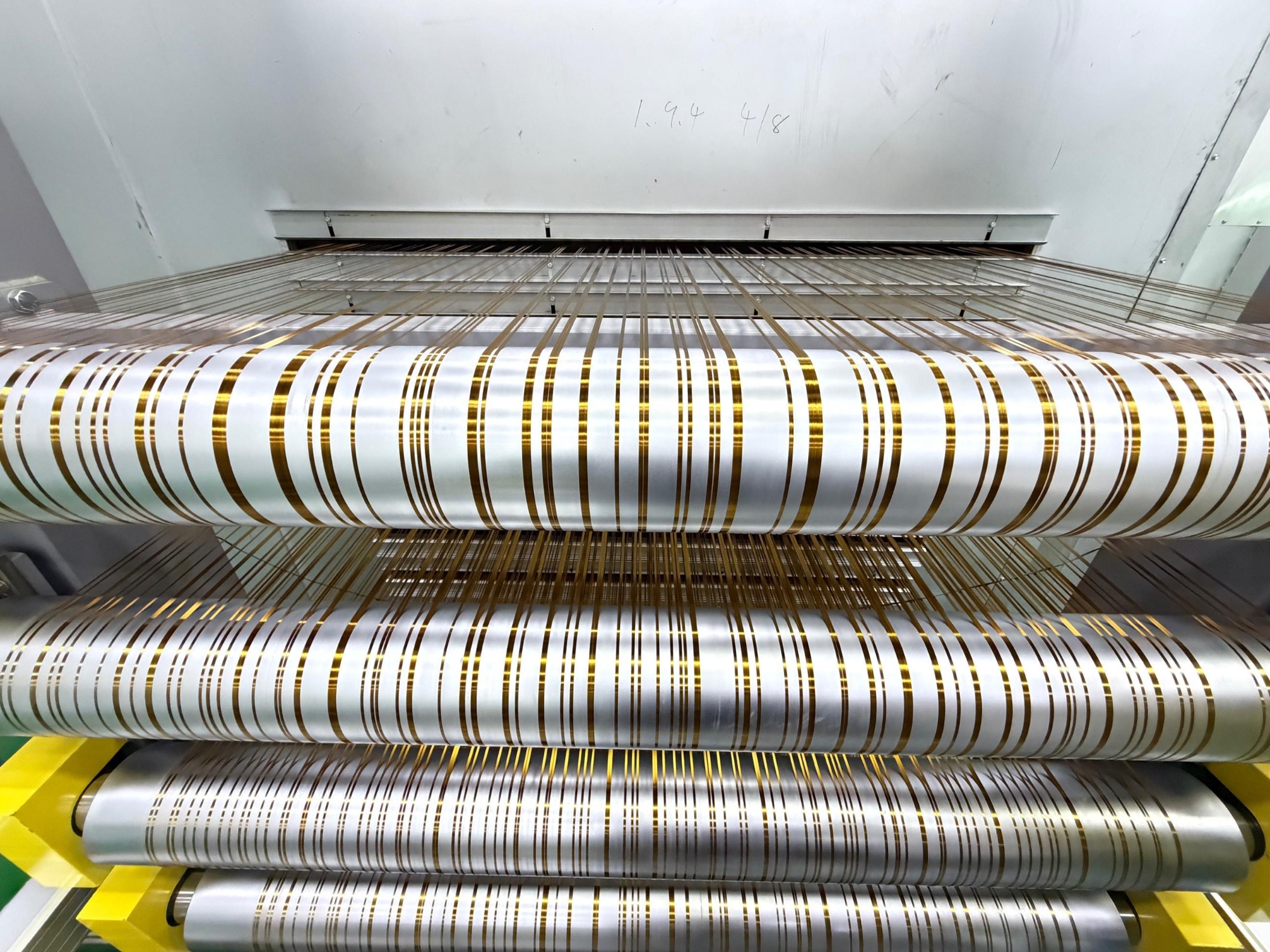
高性能碳纤维规模化量产

Search documents
培育新质生产力在行动|“新材料之王”从实验室迈上生产线
Ke Ji Ri Bao· 2026-01-16 06:36
Core Viewpoint - The production of T1000-grade carbon fiber in Shanxi, China, marks a significant breakthrough in high-performance materials, previously dominated by foreign countries, enabling advancements in various strategic sectors [1][2]. Group 1: Production and Technology - The T1000-grade carbon fiber, known for its strength exceeding that of steel by 5 to 7 times, is produced using a unique process that includes a proprietary raw material formula and dry-wet spinning technology, addressing the issue of brittleness [2][3]. - The production line, established by the Shanxi Coal Chemical Research Institute and Shanxi Huayang Carbon Material Technology Co., has achieved stable mass production, transitioning from laboratory success to industrial-scale output [1][4]. Group 2: Performance Characteristics - The newly developed T1000-grade carbon fiber exhibits exceptional properties, including corrosion resistance and stability at extreme temperatures, capable of withstanding up to 1000 degrees Celsius and maintaining performance at -180 degrees Celsius [3]. - In tensile strength tests, the carbon fiber can endure approximately 200 kilograms of force per meter, equivalent to the weight of three adult males, showcasing its superior strength [2]. Group 3: Challenges and Solutions - The transition from pilot production to stable mass production posed significant engineering challenges, particularly in maintaining production stability, as even minor fluctuations could lead to product defects [4][5]. - A critical issue was identified during the production process related to a poorly selected flow control valve, which was resolved, leading to improved stability in production [4]. Group 4: Future Prospects - The successful mass production of T1000-grade carbon fiber signifies a shift from "catching up" to "keeping pace" in the high-performance materials sector, with applications anticipated in defense, aerospace, rail transportation, and renewable energy [5]. - The research team aims to develop even higher strength T1200-grade carbon fiber and expand its industrial applications, further enhancing the material's impact in various fields [5].
“新材料之王”从实验室迈上生产线
Ke Ji Ri Bao· 2026-01-16 03:31
Core Viewpoint - The successful mass production of T1000-grade carbon fiber in China marks a significant breakthrough in high-performance materials, previously dominated by foreign countries, and is expected to have far-reaching implications for various strategic industries [1][5]. Group 1: Production Process - The T1000-grade carbon fiber is produced through a sophisticated process involving the polymerization of acrylonitrile into a gel-like solution, followed by extrusion through a spinneret with thousands of micropores, and subsequent oxidation and carbonization [1]. - The production line, established by the Chinese Academy of Sciences and Shanxi Huayang Carbon Material Technology Co., has achieved qualified product output by September 2025 and officially commenced production in November 2025 [1][5]. Group 2: Material Properties - T1000-grade carbon fiber boasts a carbon content exceeding 90%, with a strength 5-7 times that of steel, and is recognized as a strategic material essential for high-end equipment in aerospace and defense [2]. - The newly developed carbon fiber exhibits exceptional properties, including corrosion resistance and stability at extreme temperatures, capable of withstanding up to 1000 degrees Celsius and maintaining performance at -180 degrees Celsius [3]. Group 3: Challenges and Solutions - Transitioning from laboratory success to stable mass production posed significant engineering challenges, particularly in maintaining production stability due to the higher strength requirements of T1000-grade compared to T800-grade [4]. - The team identified and resolved a critical issue related to a poorly selected flow control valve, which had caused fluctuations in production conditions, ultimately achieving consistent product quality after extensive troubleshooting [4]. Group 4: Future Prospects - The successful mass production of T1000-grade carbon fiber signifies a shift from "catching up" to "keeping pace" in the industry, with applications anticipated in national defense, aerospace, rail transportation, and renewable energy sectors [5]. - The research team aims to develop even higher strength T1200-grade carbon fiber and expand its industrial applications, further enhancing the material's impact across various fields [5].
从实验室到生产线:国产高性能碳纤维开启产业新篇章
Ke Ji Ri Bao· 2026-01-15 02:21
Core Viewpoint - The production of domestically manufactured T1000-grade carbon fiber in Shanxi, China, marks a significant breakthrough in high-performance materials, previously dominated by foreign entities [1][3]. Group 1: Production Process - The T1000-grade carbon fiber is produced through a sophisticated process involving the polymerization of acrylonitrile into a gel-like solution, followed by extrusion and various processing stages, resulting in a high-quality final product [1]. - The production line, established by the Chinese Academy of Sciences and Huayang Carbon Material Technology Co., has achieved key milestones, with qualified products produced by September 2025 and official production commencing in November 2025 [1]. Group 2: Technical Advancements - T1000-grade carbon fiber boasts a carbon content exceeding 90%, with a strength 5 to 7 times that of steel, making it essential for high-end applications in aerospace and other strategic sectors [3]. - The new carbon fiber exhibits superior properties, including corrosion resistance and stability at extreme temperatures, capable of withstanding up to 1000 degrees Celsius and maintaining performance at -180 degrees Celsius [4]. Group 3: Challenges and Solutions - Transitioning from laboratory success to stable mass production posed significant engineering challenges, particularly in maintaining production stability, as the T1000's strength exceeds that of T800 by 10%-20% [6]. - A critical issue was identified during production stability tests, where a misselected flow control valve caused fluctuations in the production environment, which was resolved by replacing the faulty component [6]. Group 4: Future Prospects - The successful mass production of T1000-grade carbon fiber signifies a shift from "catching up" to "keeping pace" in the industry, with applications anticipated in national defense, aerospace, rail transportation, and renewable energy sectors [7]. - The research team aims to develop even higher strength T1200-grade carbon fiber and expand its industrial applications, enhancing the material's impact across various fields [7].