
碳纤维

Search documents
光威复材20230331
2026-04-01 09:59
Summary of the Conference Call for Guangwei Composites (光威复材) Industry Overview - The company operates in the composite materials industry, focusing on carbon fiber products for aerospace, energy, and new materials sectors. The business structure is evolving towards a more diversified portfolio, with significant growth in energy new materials and aerospace applications. Key Points and Arguments Business Structure Optimization - By 2026, the revenue contribution from the fiber segment is expected to decrease to 51%, while the energy new materials (carbon beam) segment is projected to grow by 75.84%, increasing its revenue share to 33% [2][4][5]. Product Iteration and Applications - The T800G model has become a core growth driver due to its mass production. The T1,000 model meets performance standards for commercial aerospace applications, and the T1,100 model has achieved a production capacity of 100 tons, with small-scale applications starting in 2024 [2][4][5]. Commercial Aerospace Layout - The company anticipates aerospace revenue of 340 million yuan in 2025, with approximately 190 million yuan from satellite-related businesses. It supplies carbon fiber raw materials and composite components for rocket recovery [2][4][19]. Challenges in Baotou Project - The Baotou project is expected to incur a loss of 176 million yuan in 2025, with depreciation and amortization reaching 160 million yuan. The project faces challenges due to industry overcapacity and low-price competition, making it difficult to achieve breakeven in the short term [2][4][9][16]. Cost and Price Trends - The rise in acrylonitrile prices has a minimal impact on small tow products, as material costs account for about 17.5% of total costs. New military product models have locked in prices through three-year contracts, while older models adopt a "volume for price" strategy [2][11][15]. Future Growth Points - The domestic aircraft manufacturing sector is expected to drive demand for T300 and T800 products. The company plans to control new investments in 2026 and 2027, focusing on optimizing high-value product lines [3][21]. Financial Performance - In 2025, the company achieved revenue of 2.86 billion yuan, a year-on-year increase of 16.7%. However, net profit attributable to shareholders decreased by 18.59% to 603 million yuan, indicating a stable overall operation but challenges in profitability [4][16]. Market Dynamics - The carbon fiber industry is experiencing a shift from addressing supply issues to focusing on high-performance products. Domestic companies are capable of producing T1,200 and higher performance products, emphasizing the need for customized production [20][21]. Strategic Partnerships - The joint venture with Shanggong Shenbei aims to enhance the supply chain for civil aircraft components, focusing on domestic material substitution and production validation [18][21]. Challenges and Risks - The company faces significant pressure from depreciation costs and market competition. The Baotou project’s profitability is contingent on securing sales volume and controlling costs, with a challenging market landscape due to overcapacity [16][21]. Emerging Market Opportunities - The company is targeting growth in wind power, commercial aerospace, and low-altitude economy sectors, while also exploring opportunities in sports and leisure markets [21][22]. Investment Strategy - Future investments will be strategically paced based on market demand and sales growth, with a focus on high-end product lines to optimize the product structure [22][23]. Additional Important Information - The company’s carbon beam business primarily serves overseas clients, with minimal domestic sales [8]. - The aerospace business is expected to grow, with satellite-related revenue showing significant increases [19]. - The competitive landscape is characterized by aggressive pricing strategies, impacting overall profitability [15][17]. This summary encapsulates the key insights from the conference call, highlighting the company's strategic direction, financial performance, and market challenges.

中复神鹰(688295):销量高增,利润扭亏
Changjiang Securities· 2026-03-31 23:30
Investment Rating - The investment rating for the company is "Buy" and is maintained [9]. Core Insights - The company reported a revenue of approximately 2.19 billion yuan for 2025, representing a year-on-year growth of 41%. The net profit attributable to shareholders was about 100 million yuan, a significant increase of 177% year-on-year, with a non-recurring net profit growth of 137% [2][6]. - In Q4 2025, the revenue reached approximately 660 million yuan, marking a 50% year-on-year increase, while the net profit attributable to shareholders was around 30 million yuan, up 129% year-on-year, and the non-recurring net profit increased by 117% [2][6]. - The company achieved a substantial increase in carbon fiber sales, totaling approximately 25,054 tons, which is a 55% year-on-year growth. The average price per ton decreased by 9% to about 87,000 yuan due to changes in product mix and increased supply in lower-priced sectors [12]. - The gross margin for the carbon fiber business improved to approximately 17%, up 3 percentage points year-on-year, driven by reduced production costs and increased capacity utilization [12]. - The company is expected to see continued growth, with a projected net profit of 220 million yuan in 2026 and 400 million yuan in 2027, corresponding to valuation multiples of 230 and 129 times, respectively [12]. Summary by Relevant Sections Financial Performance - 2025 total revenue: 2.19 billion yuan, up 41% year-on-year - 2025 net profit: 100 million yuan, up 177% year-on-year - Q4 2025 revenue: 660 million yuan, up 50% year-on-year - Q4 2025 net profit: 30 million yuan, up 129% year-on-year [2][6]. Sales and Market Position - Carbon fiber sales volume: 25,054 tons, up 55% year-on-year - Average selling price: 87,000 yuan/ton, down 9% year-on-year - Market share in key sectors: over 75% in pressure vessels, over 45% in sports and leisure, and nearly 20% in wind energy [12]. Cost Management and Profitability - Gross margin: 17%, up 3 percentage points year-on-year - Reduction in production costs: from 82,000 yuan/ton to 72,000 yuan/ton - Significant decrease in total expenses by 21% [12].

中复神鹰,碳纤维卖断货!
DT新材料· 2026-03-26 04:49
Core Viewpoint - The carbon fiber industry is experiencing significant growth, with Zhongfu Shenying leading the way through increased sales, technological advancements, and strong market demand, particularly in wind energy and emerging sectors [1][2][3]. Financial Performance - Zhongfu Shenying announced a projected revenue of 2.194 billion yuan for 2025, representing a 40.87% increase year-on-year, nearing the historical peak of 2.259 billion yuan in 2023 [2][6]. - The net profit attributable to shareholders is expected to reach 96.18 million yuan, marking a turnaround from losses in the previous year [2][6]. - The company plans to distribute a cash dividend of 0.33 yuan per share, totaling 29.7 million yuan [2]. Sales and Production - The company reported a carbon fiber production of 22,488.86 tons and sales of 25,054.28 tons, reflecting a year-on-year increase of 54.52% [3][6]. - The annual production and sales rate exceeded 110%, driven by demand in the wind power sector and emerging markets such as low-altitude economy and hydrogen storage [3][7]. Market Position - Zhongfu Shenying has established three major production bases and leads the domestic market in high-performance carbon fiber production, with a projected market share of over 75% in pressure vessels and over 45% in the sports and leisure sector by 2025 [4][5]. - The company is rapidly increasing its market share in the wind power sector, approaching 20% [4]. Technological Advancements - The company has developed T1200 grade ultra-high-strength carbon fiber with a laboratory-level tensile strength of 8056 MPa and achieved engineering preparation with a strength of 7718 MPa [8]. - Innovations include the development of various high-modulus carbon fibers and low-cost solutions for high-end sports and leisure applications [8][9]. Strategic Partnerships - Zhongfu Shenying has secured partnerships with leading clients such as Goldwind Technology and Longi Green Energy, enhancing its supply chain and market reach [7]. - The company is focusing on building a collaborative ecosystem with key industry partners to meet customized and large-scale market demands [7]. Stock Market Performance - The stock price of Zhongfu Shenying has doubled in March, reaching a market capitalization of 57.3 billion yuan by March 25, 2026 [5].


碳纤维,低空经济与商业航天轻量化革命丨热门赛道
创业邦· 2026-03-20 00:16
Industry Overview - Carbon fiber is a high-performance fiber material primarily composed of carbon, known for its lightweight, high strength, high modulus, corrosion resistance, and high-temperature resistance, making it essential in aerospace, new energy vehicles, sports equipment, and high-end industrial components [5][6] - The Chinese government has implemented multiple policies since 2019 to support the development of the carbon fiber and composite materials industry, emphasizing the need to enhance research and application levels and stabilize supply chains in key areas [6][10] Market Dynamics - Compared to traditional metals like steel and aluminum, carbon fiber offers superior specific strength and modulus, is lighter, and has better fatigue and corrosion resistance [8] - The carbon fiber industry chain consists of upstream (raw materials and key production equipment), midstream (carbon fiber production and intermediate processing), and downstream (application and composite material production) segments, forming a complete ecosystem [11][12] Investment Trends - From 2020 to 2025, the number of financing events in the carbon fiber sector has shown a fluctuating upward trend, increasing from 37 events in 2020 to a peak of 51 events in 2025, indicating strong capital market interest driven by high-demand applications in new energy and aerospace [12] Key Companies - Xibaike Technology, established in August 2023, focuses on the development and assembly of aerospace carbon fiber composite structural components, achieving a 30% reduction in costs and halving delivery times [14] - Chuangke Intelligent Equipment Technology, founded in March 2025, specializes in high-efficiency, low-cost composite material intelligent forming equipment, targeting the aerospace and new energy vehicle sectors [17] - Jiaxing Lingke Material Technology, established in February 2018, develops high-performance thermoplastic composite materials and has recently completed a new round of financing to expand its production capabilities [21][22] Recent Innovations - In March 2026, China announced the launch of the SYT80 (T1200 grade) ultra-high-strength carbon fiber, marking a significant advancement in the field with a tensile strength exceeding 8000 MPa [26] - In November 2025, the first T1000 grade carbon fiber project in Shanxi was completed, producing fibers with a tensile strength exceeding 6400 MPa, suitable for various applications [27][28] - In January 2025, the world's first carbon fiber subway train was launched, achieving a 25% weight reduction and a 7% decrease in operational energy consumption compared to traditional metal trains [31]
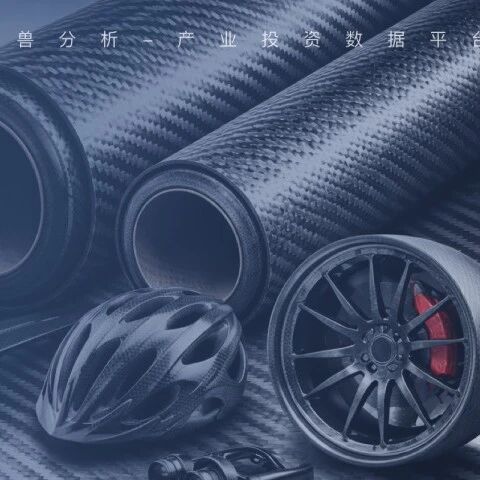
材料“新贵”,这波红利要紧紧抓住
格隆汇APP· 2026-03-18 10:30
Core Viewpoint - The domestic carbon fiber industry is experiencing a dual drive of technological breakthroughs and market expansion, enhancing its global influence by 2026 [5] Group 1: Industry Development - The high-end carbon fiber market, previously dominated by Japanese companies, has seen domestic firms achieve key breakthroughs, with traditional applications continuing to grow and emerging sectors becoming significant growth engines [6][7] - By the end of 2023, companies like Zhongfu Shenying have achieved large-scale supply of T1000-grade carbon fiber, and by March 2026, T1200-grade carbon fiber will be mass-produced, breaking Japan's monopoly in the high-end carbon fiber sector [9][10] - The domestic carbon fiber industry is entering a period of dual opportunities for technological upgrades and market expansion, driven by raw material price fluctuations, overseas order releases, and export policy adjustments [7] Group 2: Demand Reconstruction - The application scenarios for domestic carbon fiber are continuously expanding, with high-performance carbon fiber (T800 and above) expected to grow at an annual rate of 20%-30%, becoming the core growth line for the industry [12] - The domestic carbon fiber market is projected to reach 8.5 million tons by 2026, with a significant reduction in import dependency [14] - The demand for carbon fiber in traditional sectors like wind power is increasing, with projections of 4-4.5 million tons by 2026, accounting for nearly 50% of domestic usage [15] Group 3: Supply Structure - The domestic carbon fiber industry is led by companies such as Jilin Chemical Fiber, Zhongfu Shenying, and Guangwei Composites, with cost control capabilities being a core competitive factor [19] - Jilin Chemical Fiber has a cost advantage with a full cost of approximately 72,000 yuan/ton, leading in the wind power sector [20] - Different companies are adopting various production processes, with Zhongfu Shenying focusing on dry-jet wet spinning and Jilin Chemical Fiber on wet spinning, catering to different market segments [21] Group 4: Price Expectations - The carbon fiber industry has undergone two rounds of price increases since December 2025, with Jilin Chemical Fiber leading the way [23] - The core drivers for price increases include rising costs of key raw materials and a tightening supply of high-quality production capacity [25][26] - Future price trends are expected to stabilize with a controlled fluctuation, as the industry shifts from low-price competition to value competition [28] Group 5: Future Trends and Investment Opportunities - The international competitiveness of domestic carbon fiber is expected to strengthen, with exports projected to reach 15,000 tons by 2025, primarily in wind power and specific military sectors [30] - The industry is entering a golden period characterized by high-quality development, accelerated domestic substitution, and global expansion [31] - Investment opportunities are identified in leading companies with cost and scale advantages, as well as high-tech firms focusing on high-end carbon fiber products [32]


碳纤维技术突破与涨价
2026-03-18 02:31
Summary of Carbon Fiber Industry Conference Call Industry Overview - The conference call focused on the carbon fiber industry, particularly highlighting the advancements made by domestic companies in China, such as Zhongfu Shenying and Jilin Chemical Fiber, in producing high-performance carbon fibers like T1,200 grade, which has broken the long-standing monopoly of Japan's Toray [1][2]. Key Points and Arguments Breakthroughs in Technology - Zhongfu Shenying announced the mass production of T1,200 grade carbon fiber, marking a significant milestone in China's ability to compete with international leaders [2]. - The T1,200 grade carbon fiber has a strength exceeding 8,000 MPa, indicating that domestic products can now match the performance of top-tier international products [2]. Market Demand and Projections - By 2025, China's carbon fiber consumption is projected to reach 75,000 tons, with wind energy demand doubling to 35,000 tons and aerospace applications increasing to 7,500 tons [1]. - The demand for T800 and above grade carbon fibers is expected to grow at an annual rate of 20%-30%, driven by applications in satellite technology and humanoid robots [1]. Competitive Landscape - The competition in the carbon fiber industry is shifting from scale to structure, with a focus on quality and application [1]. - Jilin Chemical Fiber has achieved the lowest production costs globally, with a total cost of approximately 72,000 yuan per ton, allowing for competitive pricing in the wind energy sector [1][15]. Supply Chain and Production Capacity - Major players in the domestic market include Jilin Chemical Fiber, Zhongfu Shenying, and Jiangsu Hengshen, with a combined production capacity of over 150,000 tons by 2025 [6][7]. - The production methods vary, with Jilin Chemical Fiber primarily using wet spinning and Zhongfu Shenying employing dry-jet wet spinning, each having its advantages in cost and product quality [6][7]. Price Trends and Market Dynamics - The carbon fiber industry has experienced multiple price increases since December 2025, driven by rising raw material costs and changes in supply-demand dynamics [8][9]. - The price of carbon fiber is expected to continue rising due to increased demand from the wind energy sector and geopolitical factors affecting raw material prices [11][12]. Future Outlook - The carbon fiber market is anticipated to grow significantly, with projections of reaching 85,000 tons by 2026, supported by a stable demand growth rate of 10%-15% annually [14]. - The industry is moving towards high-quality development, with a focus on reducing production costs and improving product quality to maintain competitiveness against international players [10][18]. Additional Important Insights - The cancellation of export tax rebates and stricter export audits starting in April 2026 will likely redirect production capacity towards the domestic market, stabilizing prices [12]. - Emerging applications in robotics, low-altitude economy, and new energy vehicles are expected to drive future demand for carbon fiber, with significant potential in the automotive sector if cost and performance criteria are met [13][18]. - China's carbon fiber industry is positioned to gain a larger share of the global market, with expectations of increased export volumes and a shift towards becoming a market leader [17][19].
——建筑材料行业周报(26/03/09-26/03/15):上游原材料压力或导致细分板块修复斜率分化-20260316
Hua Yuan Zheng Quan· 2026-03-16 14:02
Investment Rating - Investment rating: Positive (maintained) [4] Core Viewpoints - The construction materials industry is expected to see a recovery in the real estate sector, with a potential bottoming out of the market. The report highlights two key judgments: 1) The fundamental bottom of the real estate market is likely to appear; 2) Outstanding listed companies may recover ahead of the industry due to their alpha advantages [5] - The report indicates that the pressure from rising upstream raw material prices may lead to differentiated recovery slopes across various segments of the construction materials industry. Companies in advantageous positions may increase prices and enhance profits, while those in less favorable positions may face accelerated market exit due to cost pressures [5] - The underground pipeline network is identified as a key area for urban renewal, with significant investment potential projected during the 14th Five-Year Plan period, reaching an average annual investment of 1 trillion yuan, which is over three times that of 2024 [5] Summary by Sections 1. Sector Tracking - The construction materials index decreased by 1.3% during the week, while the Shanghai Composite Index fell by 0.7% and the Shenzhen Component Index rose by 0.8% [9] - Notable stock performances included Yangzi New Materials (+12.2%) and Jingxue Energy Saving (+9.2%), while Qinglong Pipeline (-9.9%) and Puren (-9.3%) saw significant declines [9] 2. Data Tracking 2.1 Cement - The average price of 42.5 cement nationwide is 337.0 yuan/ton, down 1.0 yuan/ton month-on-month and down 59.7 yuan/ton year-on-year. The cement inventory ratio is 62.4%, down 0.4 percentage points month-on-month and up 8.0 percentage points year-on-year [16] - The cement shipment rate is 24.9%, up 9.7 percentage points month-on-month and down 18.5 percentage points year-on-year [16] 2.2 Float Glass - The average price of 5mm float glass is 1269.0 yuan/ton, up 15.0 yuan/ton month-on-month and down 177.8 yuan/ton year-on-year. The total inventory of key production enterprises in 13 provinces is 69.72 million heavy boxes, up 5.1% month-on-month and up 13.0% year-on-year [33] 2.3 Photovoltaic Glass - The average price of 2.0mm coated photovoltaic glass is 10.2 yuan/square meter, down 0.2 yuan/square meter month-on-month and down 3.6% year-on-year. The average price of 3.2mm coated photovoltaic glass is 17.2 yuan/square meter, down 0.1 yuan/square meter month-on-month and down 5.1% year-on-year [38] 2.4 Glass Fiber - The average price of alkali-free glass fiber yarn is 4615.0 yuan/ton, unchanged month-on-month and down 105.0 yuan/ton year-on-year. The average price of electronic yarn is 11000.0 yuan/ton, unchanged month-on-month and up 2050.0 yuan/ton year-on-year [46] 2.5 Carbon Fiber - The average price of large tow carbon fiber is 73.0 yuan/kg, up 0.5 yuan/kg month-on-month and year-on-year. The average price of small tow carbon fiber is 95.0 yuan/kg, unchanged month-on-month and year-on-year [50]
T1200量产:中国碳纤维,从技术突围到全球领跑的决胜局
材料汇· 2026-03-16 13:40
Core Viewpoint - The mass production of T1200 carbon fiber by Zhongfu Shenying marks a significant milestone for China's new materials industry, transitioning from a "follower" to a "leader" in global carbon fiber technology [4][29]. Group 1: Product Breakthrough - The T1200 carbon fiber has a tensile strength of 8000 MPa and a tensile modulus of 324 GPa, achieving stable mass production at a scale of hundreds of tons [6][9]. - This breakthrough signifies not just a technical achievement but also the overcoming of engineering barriers that have historically limited China's high-end carbon fiber production [9][10]. Group 2: Industry Context - The carbon fiber industry has been dominated by a few companies, particularly Japan's Toray and the U.S.'s Hexcel, which have long held the core technologies and production capacities [7][8]. - The T1200's production allows China to fully cover the spectrum of high-end carbon fiber technology, freeing the country from reliance on foreign suppliers for critical materials in high-end manufacturing [10][11]. Group 3: Competitive Landscape - The future of China's carbon fiber industry will depend on four key competitive arenas: scaling production capacity, obtaining certification for high-end markets, controlling costs, and defining market demand [12][14][15]. - Achieving stable production at the thousand-ton level is crucial for breaking the monopoly of foreign companies and gaining pricing power in the global market [14][21]. Group 4: Market Opportunities - The T1200 carbon fiber is priced approximately 60% lower than comparable products from Toray, providing a strong competitive edge in commercial applications [19][21]. - Emerging markets such as eVTOL, humanoid robots, and offshore wind energy present significant opportunities for carbon fiber applications, with demand expected to grow rapidly [21][24]. Group 5: Strategic Implications - The transition from merely matching overseas standards to defining global standards is essential for China's carbon fiber enterprises to become industry leaders [22][24]. - The T1200's mass production serves as a model for the entire new materials industry, emphasizing the importance of a comprehensive, self-sufficient supply chain from raw materials to end applications [26][27]. Group 6: Future Outlook - The successful mass production of T1200 is seen as a turning point for China's carbon fiber industry, with the potential for significant market differentiation and growth in the next 3-5 years [29][30]. - Companies that can establish a robust, scalable production capability and navigate the certification processes will likely emerge as global leaders in the high-end carbon fiber market [29].
化工行业近期观点汇报
2026-04-13 06:12
Summary of Key Points from Conference Call Records Industry Overview - **Chemicals Industry**: The conference call primarily discusses the chemicals industry, focusing on the impact of geopolitical tensions on oil prices and the subsequent effects on various chemical sectors, including coal-based and gas-based chemicals, pesticides, fertilizers, vitamins, and amino acids [1][2][3]. Core Insights and Arguments - **Oil Price Dynamics**: The blockade of the Strait of Hormuz poses a risk to 20%-25% of global oil supply, leading to significant production cuts expected in 2026. If conflicts cease, oil prices may stabilize at a higher level than pre-conflict, benefiting the price differentials in coal and gas-based chemicals [1][2][3]. - **Coal-based Olefins**: When oil prices exceed $80 per barrel, a $10 increase in oil prices can enhance cost advantages by 8%-12% and increase profits by 15%-20%. Leading companies like Baofeng Energy and Hualu Hengsheng are expected to benefit from low costs and high operating rates [1][4]. - **Gas-based Chemicals**: The gas-based route, particularly for ethane, is expected to benefit significantly due to controlled raw material costs and rising prices for end products like ethylene and propylene. The price differential between ethane cracking and naphtha cracking has expanded to 4,000 RMB/ton, with projected profits for 2026 expected to reach 7.5-10 billion RMB [1][5]. - **Pesticides and Fertilizers**: The pesticide and fertilizer sectors are experiencing simultaneous increases in volume and price due to overseas restocking demands and rising agricultural product prices. The geopolitical situation threatens 10% of global potash production, while sulfur price increases support phosphate costs, benefiting phosphate exports [1][12]. - **Vitamins and Amino Acids**: The sector is witnessing a beta market trend, with energy costs and logistics disruptions leading to panic buying overseas. Prices for various vitamins have surged over 20%, benefiting companies like Meihua Biological and New Hope Liuhe [1][10]. Additional Important Insights - **PVC Industry**: The PVC industry is positioned to benefit from rising oil prices and external energy crises, with domestic calcium carbide-based PVC having a cost advantage over ethylene-based PVC. The price differential between the two processes has widened significantly, creating investment opportunities in companies with large capacities [6][7]. - **Inventory Dynamics**: Companies are expected to replenish inventories, leading to short-term demand exceeding normal levels. The supply side is constrained due to production cuts, which will impact 2026 supply significantly [3][8]. - **Investment Recommendations**: Companies with strong international distribution channels and those benefiting from global agricultural trade, such as Runfeng Co. and Andermatt, are recommended. Additionally, domestic leaders like Yangnong Chemical are expected to see price increases in their key products during the peak demand season [9][12]. Conclusion The conference call highlights the significant impact of geopolitical tensions on the chemicals industry, particularly in relation to oil prices and supply chain dynamics. Companies positioned to leverage these changes, especially in coal and gas-based chemicals, pesticides, and vitamins, are likely to see enhanced profitability and investment opportunities in the near future.
AI板块下周或迎来催化上行
Changjiang Securities· 2026-03-15 11:41
- The report highlights the significant performance of the telecommunications sector, which has maintained a horizontal state despite the overall market adjustments[7] - The oil and gas sector showed a noticeable increase this week, influenced by the fluctuating geopolitical situation between the US and Iran[7] - The metal materials and mining sector experienced a significant pullback this week, confirming the double-top pattern previously indicated[7] - The computer sector saw a decline, with a maximum increase of 147.78% from February 6, 2024, to January 14, 2026[7] - The defense and military industry also experienced a notable decrease, with a maximum increase of 172.87% from February 5, 2024, to January 12, 2026[7] - The report suggests that the construction engineering sector has shown a breakout state this week, driven by the concept of computing and electricity collaboration[29] - The AI sector, particularly external AI leaders, may see a catalytic rise next week with the upcoming NVIDIA GTC 2026 event[41] - The telecommunications equipment sector is expected to rise in sync, driven by the technical need to reverse the February decline and reach new highs[44]
