
高超声速飞行

Search documents
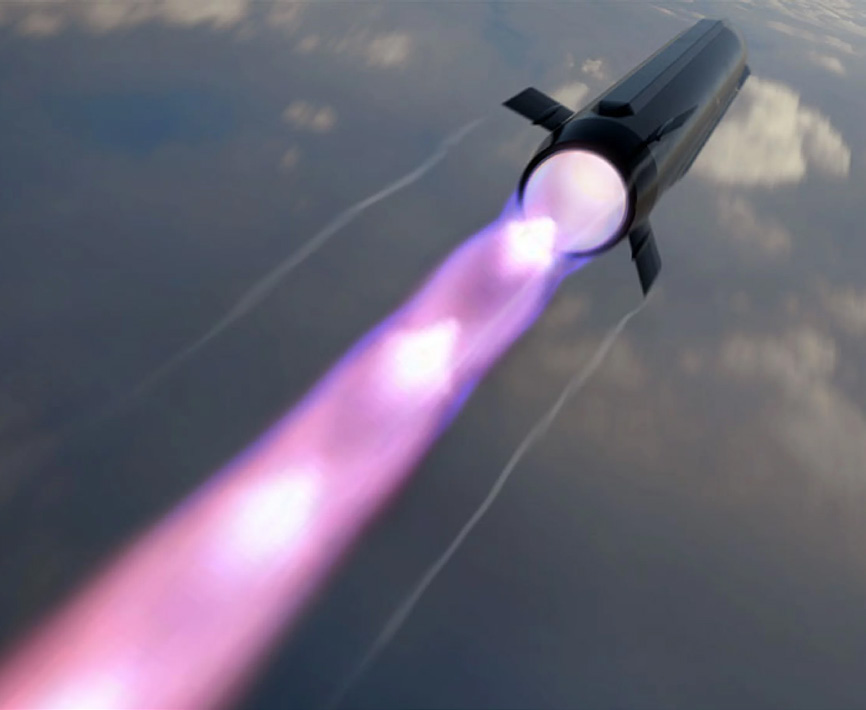
GE与洛马联合演示旋转爆震冲压发动机
Xin Lang Cai Jing· 2026-01-27 03:21
Core Insights - General Electric Aerospace and Lockheed Martin have successfully demonstrated a new type of liquid fuel rotating detonation ramjet engine (RDRJ) aimed at improving the efficiency of hypersonic flight and advancing hypersonic weapon development towards higher efficiency and mass production [2][3] Group 1: Technology Development - The combination of hypersonic flight and rotating detonation technology represents a significant leap in propulsion systems, moving from feasibility validation to engineering optimization [2] - The new engine can achieve speeds exceeding Mach 5, presenting substantial potential in both military and civilian applications, although existing technologies still require improvements, particularly in the efficiency of ramjet-powered hypersonic missiles [2][3] Group 2: Engine Efficiency and Design - The rotating detonation engine is designed to provide acceleration during the early flight phase of missiles by maintaining a supersonic fuel detonation wave within an open cylindrical channel, significantly enhancing energy utilization efficiency by about 25% compared to conventional engines [3][4] - This engine can operate under subsonic conditions and switch between ramjet and scramjet modes at hypersonic speeds, which could reduce the size of required rocket boosters and lead to simpler, lower-cost, and mass-producible hypersonic missiles [3][4] Group 3: Strategic Implications - Lockheed Martin's contribution includes a dual-mode ramjet (DMRJ) design that allows the engine to switch modes across different speed ranges, addressing the long-standing challenge of operational adaptability at various altitudes and Mach numbers [4] - The demonstration reflects a shift in U.S. military strategy in hypersonic weaponry from merely achieving high speeds to balancing speed, range, cost, and scalability, with the rotating detonation ramjet engine and new tactical inlet design seen as key to achieving this balance [4]


“南天门计划”正照进现实
财联社· 2026-01-10 11:06
Core Viewpoint - The "Nantianmen Plan" represents a forward-looking innovative concept in aerospace technology, integrating various advanced technologies into futuristic aircraft designs [17][19][21]. Group 1: Aircraft Concepts - The "Luan Bird" is a 100,000-ton space mother ship, measuring 242 meters in length and 684 meters in wingspan, capable of carrying 88 "Xuan Nu" unmanned aerial vehicles [3]. - The "Xuan Nu" aircraft is designed as an unmanned air superiority fighter, featuring a unique dual-side hollow fuselage and advanced propulsion systems, allowing operations both within and outside the atmosphere [5]. - The "Bai Di" aircraft showcases a stealthy design with variable wing configurations, enabling it to switch between manned and unmanned flight modes and adapt its mission profile through modular payloads [7][9]. Group 2: New Platforms - The "Zi Huo" vertical takeoff and landing platform was unveiled at the Tianjin International Helicopter Expo, featuring a striking purple metallic finish and advanced design elements [11][12]. - The "Zi Huo" platform is capable of speeds between 700 to 800 kilometers per hour and is designed for operation in low gravity and thin atmosphere environments, demonstrating versatility for various missions [14][15]. Group 3: Technological Integration - Experts emphasize that the challenge lies not in the feasibility of these technologies but in determining which will be realized first, highlighting the innovative nature of the "Nantianmen Plan" [17][19]. - The plan integrates cutting-edge technologies such as hypersonic flight, dual-mode propulsion, stealth materials, and AI-driven decision-making, aiming to enhance national aerospace security [21].

“南天门计划”正照进现实!专家:技术实现只是时间问题
Yang Shi Xin Wen· 2026-01-09 05:20
Core Insights - The "South Gate Plan" is a forward-looking innovation initiative that aims to integrate advanced technologies into military applications, with experts suggesting that the realization of these technologies is merely a matter of time [6] Group 1: Key Technologies and Concepts - The "Luan Bird," a 100,000-ton space aircraft carrier, features a length of 242 meters and a wingspan of 684 meters, capable of carrying 88 "Xuan Nu" unmanned aerial vehicles [2] - The "Bai Di" space fighter has undergone significant upgrades, including improved aerodynamic design and increased internal weapon capacity, making it a key model in the "South Gate Plan" [3] - The "Zi Huo" vertical takeoff and landing platform showcases a futuristic design and is capable of speeds between 700 to 800 kilometers per hour, adaptable to various environments [4] Group 2: Future Implications and Expert Opinions - Military experts emphasize that the technologies within the "South Gate Plan," such as hypersonic flight and AI-enabled decision-making, represent a significant leap towards future aerospace and defense capabilities [6] - The integration of these advanced technologies is seen as essential for maintaining national security in the aerospace domain, with the focus on which technologies will be realized first and when [6] - The designs within the "South Gate Plan" reflect a blend of imaginative concepts and practical applications, indicating a shift towards more advanced military capabilities [5]