魏晋风流

Search documents
一场“奋掷麈尾”的清谈
Xin Lang Cai Jing· 2026-01-01 18:45
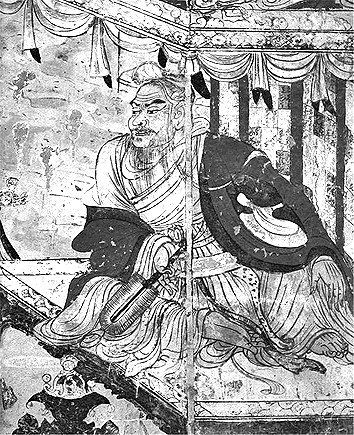
Core Viewpoint - The article discusses the cultural significance of the "麈尾" (feather duster) in the context of Wei-Jin scholars' intellectual exchanges, highlighting its role as a symbol of social status and a tool for elegant discourse, while also illustrating how these exchanges could devolve into heated arguments, as exemplified by the incident between Sun Sheng and Yin Hao [4][5][6]. Group 1: Cultural Significance of 麈尾 - 麈尾 emerged as a symbol of social status among the Wei-Jin elite, representing the refined demeanor of scholars engaged in intellectual discussions [6]. - The use of 麈尾 in scholarly debates became a trend during the Wei-Jin period, indicating a shift towards more expressive and personal forms of discourse [4]. - The incident involving Sun Sheng and Yin Hao illustrates how the 麈尾, while a tool for elegance, could also lead to a loss of decorum during intense debates [5][7]. Group 2: Intellectual Exchange and Social Dynamics - The article emphasizes that 清谈 (literary discussions) were a significant aspect of Wei-Jin culture, where scholars engaged in spirited debates, often using 麈尾 as a prop to enhance their rhetorical style [4][6]. - The heated exchange between Sun Sheng and Yin Hao reflects the tension between maintaining social decorum and expressing personal emotions, showcasing the duality of the Wei-Jin intellectual environment [7][8]. - The behavior of scholars during these discussions, including the act of "奋掷麈尾" (throwing the 麈尾), signifies a moment of emotional release that challenges the established norms of their social class [8].

温州墨池寻迹
Xin Lang Cai Jing· 2025-12-26 16:58
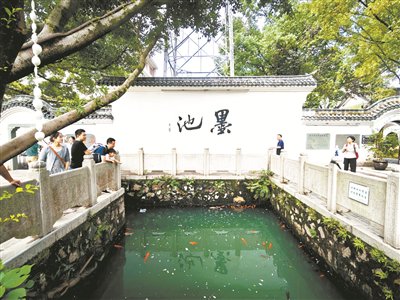
Group 1 - The article highlights the historical significance of the "墨池" (Mo Chi), associated with the famous calligrapher Wang Xizhi, who practiced calligraphy there during the Eastern Jin Dynasty [3][4]. - The Mo Chi is located in a park that serves as a tranquil space amidst the bustling city, reflecting the cultural heritage of Wenzhou [3][4]. - Wang Xizhi, known as the "Sage of Calligraphy," has a profound influence on Chinese calligraphy, and his legacy is celebrated in the region [3][4]. Group 2 - The park also features historical sites such as the "玉介园" (Yu Jie Yuan) and "瓯隐园" (Ou Yin Yuan), which are remnants of private gardens from the Ming Dynasty, showcasing the area's rich cultural history [4][5]. - The article describes the natural beauty of the park, including a notable banyan tree that symbolizes resilience and growth, contributing to the park's appeal [4]. - The connection between Wang Xizhi and another literary figure, Xie Lingyun, is emphasized, highlighting their shared legacy in Wenzhou's history [4].