鱼类多样性

Search documents
青藏高原发现鲤科新化石 揭示1500万年前鱼类多样性高于现代
Xin Lang Cai Jing· 2026-02-24 14:10
Core Insights - The research on fish fossils from the Qinghai-Tibet Plateau reveals significant findings regarding the diversity of fish species in East Asia, particularly during the Miocene epoch, indicating that the region had a higher diversity of fish than today [1][3]. Group 1: Research Findings - A Chinese research team has identified two new genera of cyprinid fish from Miocene fossils collected in the Lunpo La Basin, suggesting that these fossils represent distinct types not found in contemporary cyprinids [1][6]. - The fossils were dated to approximately 15 million years and 18-16 million years ago, respectively, with significant morphological differences noted between the newly identified specimens and previously discovered fossils [6][9]. Group 2: Historical Context - The study emphasizes the importance of the Qinghai-Tibet Plateau in understanding the evolution of freshwater fish in East Asia, linking the region's climatic conditions to the diversity of fish species [3][5]. - The research indicates that during the late Neogene to early Miocene, the plateau likely experienced a warm climate conducive to the proliferation of cyprinid fish, contrasting with the harsh conditions present today [9]. Group 3: Implications for Biodiversity - The findings contribute to the understanding of the evolutionary history of cyprinids, which are the largest group of freshwater fish, comprising over 1,800 species [5]. - The study highlights the role of the Qinghai-Tibet Plateau in shaping the distribution and diversity of fish species in East Asia, particularly in relation to climatic events [3][6].

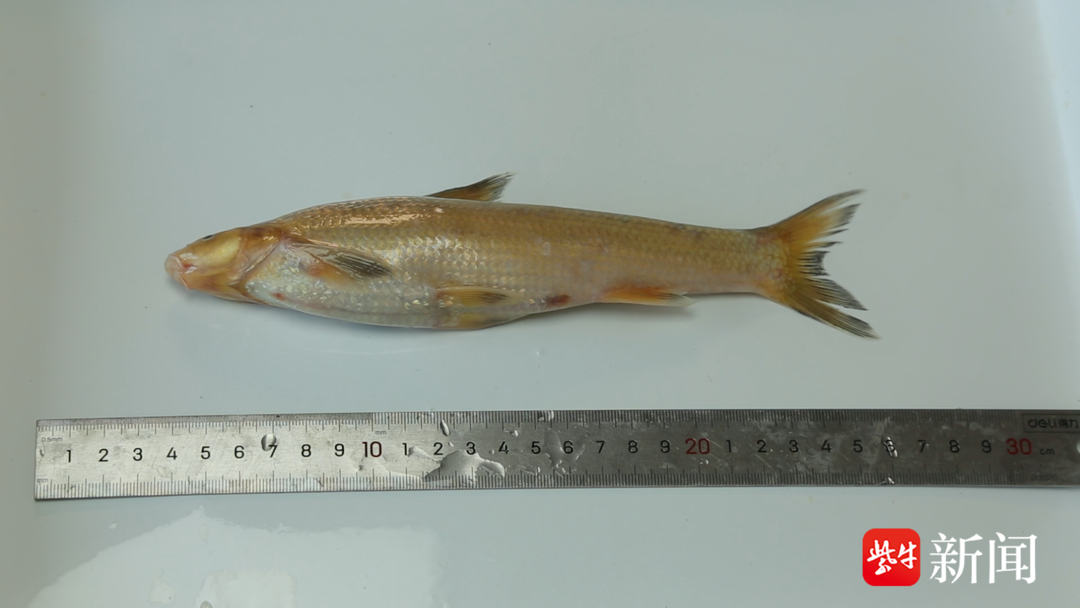
金鱼、银鱼都out啦,江苏宿迁发现铜鱼!很稀有,已多年未见
Qi Lu Wan Bao· 2025-09-05 07:32
Core Insights - The discovery of a rare species, the copper fish, in the Luoma Lake area of Suqian, Jiangsu, indicates a positive trend in the water quality and overall ecology of the region [1][6]. Group 1: Species Discovery - The copper fish, belonging to the Cyprinidae family, is considered a valuable fish species and serves as an "environmental monitor" for aquatic ecosystems [3]. - This is the first recorded sighting of the copper fish in the Luoma Lake area, which highlights the ecological significance of the finding [1][4]. Group 2: Ecological Significance - The presence of the copper fish suggests improvements in the water quality and ecological conditions of Luoma Lake, which has been under ecological protection for the past five years [6]. - The lake has seen an increase in fish species diversity, with 43 fish species and 4 shrimp and crab species monitored since 2024, compared to the pre-protection period [6]. Group 3: Conservation Efforts - The implementation of comprehensive fishing bans and multi-departmental enforcement has contributed to the ecological recovery of Luoma Lake [6]. - Over the past five years, 98.8 million fish and crab species have been released into the lake to enhance biodiversity and improve water quality [6].