鳗苗枯竭

Search documents
中国的鳗,快被日本吃光了?
3 6 Ke· 2025-12-26 03:03
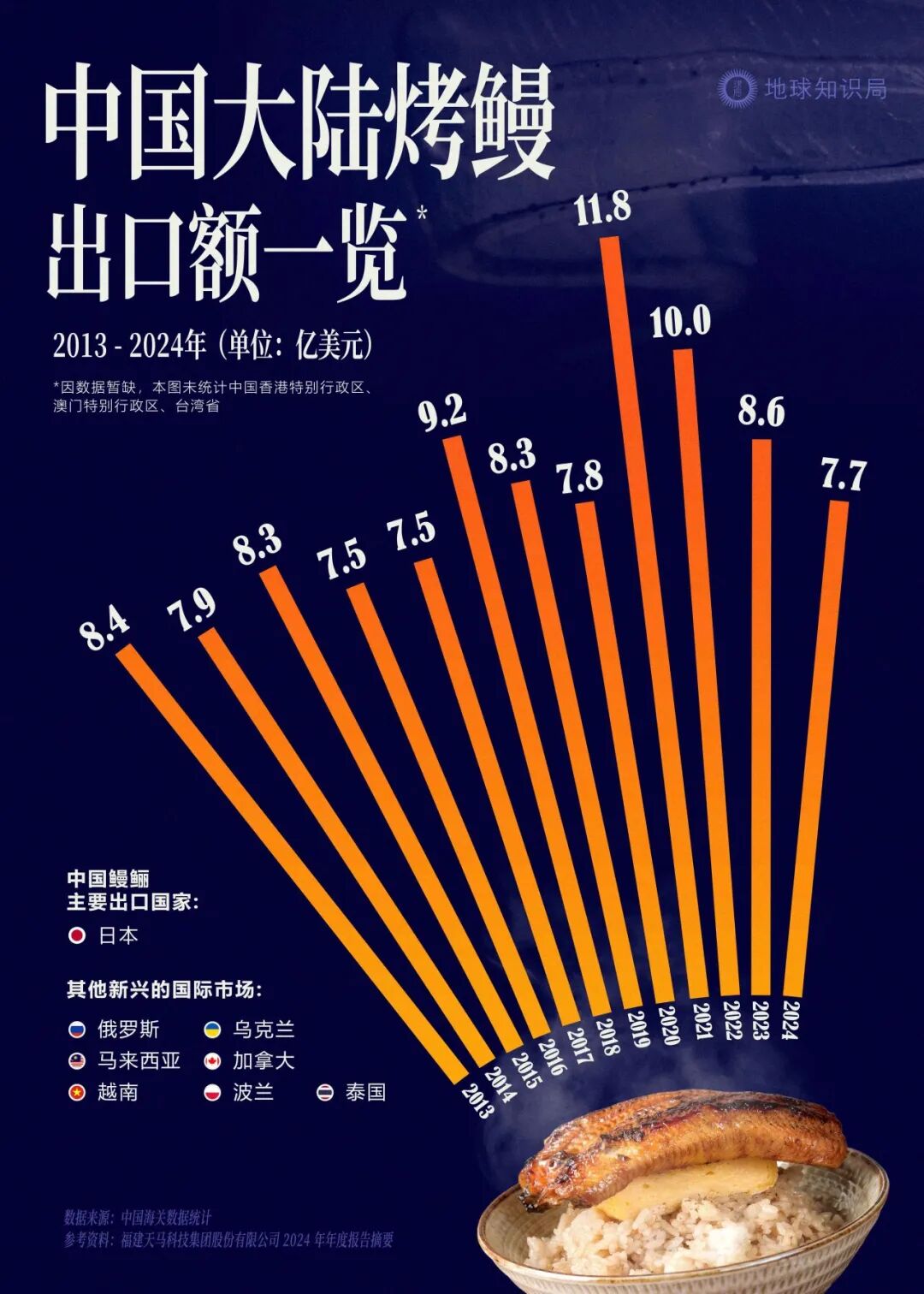
Core Insights - Japan, which constitutes 1.5% of the global population, consumes 70% of the world's eel, leading to a severe depletion of local eel populations [1] - The domestic supply of eel in Japan for 2023 is reported at 57,099 tons, with over two-thirds being imported, primarily from China [1] - China is the world's largest eel farming and exporting country, exporting 64,000 tons in 2022, which meets Japan's demand and allows for additional exports [2] Industry Challenges - Eel farming in China faces significant challenges, particularly in sourcing eel fry, with many farms in Fujian relying on imports from the Americas [5] - The life cycle of eels involves complex metamorphosis stages, making it difficult to breed them artificially, as only the final stage, silver eel, is capable of reproduction [7][8] - The current global eel production relies heavily on wild-caught eel fry, which is becoming increasingly scarce due to overfishing and habitat destruction [15][16] Environmental Impact - The decline in eel populations is alarming, with Japan's wild eel fry catch dropping from 140 tons in 1965 to around 10 tons today, and adult eel catches decreasing from 1,413 tons in 1987 to 71 tons in 2017 [15] - In China, the native eel species is also facing severe depletion, with the local population of Japanese eel near extinction in the Yangtze River estuary [17] - The ecological role of eels is crucial, as their extinction could disrupt food chains and lead to significant environmental degradation [23][24] Economic Implications - The eel farming industry is caught in a vicious cycle where increased catch leads to fewer fry, driving up prices and further incentivizing overfishing [21] - The reliance on wild-caught fry creates a precarious situation for both fishermen and the broader industry, as the depletion of resources threatens livelihoods [22][26]