
水产养殖

Search documents
中金 | 鱼子酱行业:餐桌上的“黑黄金”,供需缺口驱动稳健增长
中金点睛· 2026-03-22 23:35
Core Viewpoint - The global caviar industry has significant growth potential, characterized by a supply-demand imbalance and a high market concentration with strong competitive barriers [1][4]. Industry Overview - Caviar is known for its unique flavor and high nutritional value, often referred to as "black gold." The global caviar market is expected to reach a volume of 729 tons by 2024, with a projected CAGR of 11% over the next five years [4][10]. - The industry is transitioning from wild capture to artificial breeding, with China leading in caviar supply. Traditional markets in Europe, the US, and Russia are expanding, while emerging markets like China are experiencing rapid growth [4][16]. Supply Dynamics - The caviar market is currently in a state of supply-demand imbalance, with supply constrained by the long breeding cycle of sturgeon and high capital requirements. It is anticipated that this supply gap will persist [10][54]. - China's caviar production is expected to grow from 151.2 tons in 2019 to 379.3 tons in 2024, capturing 52% of the global supply. By 2029, production is projected to reach 796.7 tons, representing 64.7% of the global market [16][10]. Competitive Landscape - The global caviar industry is highly concentrated, with a CR3 of 48.5%. Leading companies include China's Sturgeon Technology and Run Zhao Fisheries, with significant market shares [45][46]. - The industry is characterized by long cycles and high barriers to entry, making it difficult for new entrants to gain market share quickly [46][54]. Competitive Factors - The caviar industry relies on technology, resources, and brand strength to create competitive advantages. High technical barriers exist across the entire supply chain, from breeding to processing [48][54]. - The long breeding cycle of sturgeon (7-15 years) and the high capital investment required create significant resource barriers for new entrants [51][54]. Consumer Trends - The demand for caviar is supported by the growth of high-end hotels, restaurants, and luxury cruise markets, which are expanding faster than the overall luxury goods market [28][30]. - Social media trends are reshaping consumer perceptions of caviar, making it more accessible to younger demographics and expanding its consumption scenarios [28][30]. Consumption Channels - The B2B restaurant sector is the primary consumption channel for caviar, accounting for 61% of global sales in 2024. The retail and e-commerce channels are also growing rapidly, with e-commerce expected to see a CAGR of 20% from 2019 to 2024 [32][39]. - In China, the B2B restaurant channel represents 74% of total caviar consumption, indicating a strong reliance on this sector for growth [39][41].


新农事里送“贷”忙——建设银行福建省分行助力绘就智慧春耕新图景
Zhong Guo Jin Rong Xin Xi Wang· 2026-03-19 10:41
Core Viewpoint - The article highlights the integration of technology in agricultural practices across Fujian province, supported by the Construction Bank's financial services aimed at enhancing agricultural productivity and sustainability [1][8]. Group 1: Agricultural Innovations - Mechanized seedling cultivation is being implemented in Longyan, with automated processes ensuring efficiency in rice seedling production [2][9]. - The use of smart feeding systems in deep-sea aquaculture is exemplified by the "Qian Dong Series" platform, which produces approximately 200 tons of high-quality fish annually [7][13]. Group 2: Financial Support for Agriculture - Construction Bank's Fujian branch has provided over 10 billion yuan in inclusive agricultural loans to 16,000 agricultural entities this year, focusing on key areas such as machinery upgrades and agricultural inputs [1][8]. - The bank has introduced various loan products like "Yunong Quick Loan" and "Agricultural Merchant Loan," facilitating online applications and approvals to meet the urgent financial needs of farmers [2][10]. Group 3: Case Studies of Financial Impact - A case study from Longyan shows a company receiving a low-interest loan of 2.9 million yuan, enabling timely participation in the spring farming season [2][9]. - In Zhangzhou, a company expanding its wild-simulated golden line lotus cultivation benefited from inclusive loans, allowing for equipment purchases and innovative farming practices [4][11]. Group 4: Technology and Sustainability - The bank's support extends to smart irrigation systems, enhancing water resource utilization in agriculture, as seen in the case of Fujian Tiancheng Baode Intelligent Technology Co., Ltd. [5][12]. - The focus on mechanization and smart farming practices is crucial for stabilizing agricultural production throughout the year [12]. Group 5: Marine Agriculture Financing - The bank has developed specialized products like "Yunong Quick Loan—Aquaculture Loan" to support coastal aquaculture operations, ensuring quick approvals and favorable pricing [8][14]. - Financial services are tailored to support the entire marine industry chain, from seedling cultivation to processing and cold chain logistics [14].

农业行业周报:建议关注养殖股产能去化逻辑的回归和演绎-20260317
Shanxi Securities· 2026-03-17 08:38
Investment Rating - The report maintains an investment rating of "Buy-A" for Haida Group, "Buy-B" for Shennong Development and Wens Foodstuffs, and "Hold-A" for Guai Bao Pet and Zhongchong Shares [8]. Core Insights - The report highlights the return of capacity reduction logic in the breeding sector, suggesting that the pig farming industry may face pressure in the first half of the year, but this period could also serve as a favorable window for capacity reduction [2][4]. - The report indicates that the overall pig price has decreased, leading to an expansion of losses in pig farming profits. As of March 13, the average price of external three yuan pigs in Sichuan, Guangdong, and Henan was 10.25, 10.96, and 10.13 yuan/kg, respectively, with an average pork price of 16.17 yuan/kg, down 4.99% from the previous week [3][24]. - The feed industry is experiencing a shift from product competition to value chain competition, with market share concentrating among leading companies with advantages in research and development, scale, and service [3]. Summary by Sections 1. Market Performance - During the week of March 9 to March 15, the Shanghai and Shenzhen 300 Index rose by 0.19%, while the agriculture sector increased by 1.01%, ranking sixth among sectors. The top-performing sub-industries included grain and oil processing, food and feed additives, and pig farming [2][15]. 2. Pig Farming - The report notes a significant decline in pig farming profits, with self-breeding losses reaching -283.15 yuan per head, a decrease of approximately 45.17 yuan from the previous week. The profit from purchasing piglets was -118.18 yuan per head, down about 59.29 yuan [3][24]. 3. Poultry Farming - The price of white feather chickens has slightly rebounded, with a weekly price of 7.21 yuan/kg, while the profit from raising meat chickens has decreased to 0.11 yuan per chicken, down 38.89% from the previous week [44]. 4. Feed Processing - The average price of feed for fattening pigs has increased to 3.38 yuan/kg, while the average price for chicken feed is 3.55 yuan/kg, both showing a week-on-week increase [49]. 5. Aquaculture - The report states that the price of sea cucumbers remains stable at 110 yuan/kg, while the price of shrimp is 280 yuan/kg. Freshwater fish prices, such as grass carp and crucian carp, have seen slight declines [56]. 6. Planting and Grain Processing - The report indicates a notable increase in grain prices, with corn at 2446.86 yuan/ton (+1.20%), soybeans at 4277.37 yuan/ton (+5.04%), and wheat at 2577.61 yuan/ton (+1.40%) [65].



A股跌幅扩大,农业股逆势上涨,港股智谱飙涨8%
21世纪经济报道· 2026-03-16 01:57
Market Overview - The Asia-Pacific market showed mixed results, with the Nikkei 225 index down by 0.45% at 53,568 points, while the Korean Composite Index rose approximately 0.5% to 5,513 points [1] - All three major A-share indices declined, with the Shanghai Composite Index down 0.81%, the Shenzhen Component Index down 1.13%, and the ChiNext Index down 0.68%. The Sci-Tech Innovation Index fell by 1.53% [1] Sector Performance - The agricultural planting sector saw a short-term surge, with companies like Agricultural Development Industry hitting the daily limit, and others such as Yasheng Group and Denghai Seeds also experiencing gains [4] - The deep-sea economy sector opened strongly, with Dongfang Ocean hitting the daily limit, and companies like Zhongke Haixun and Shenkai Co. showing significant increases [4] - The cross-border payment sector was active, with Zhongyou Capital and Hailian Jinhui hitting the daily limit, and other companies like Sifang Precision and Yuyin Co. also performing well [4] - The fertilizer sector rose, with companies like Chitianhua and Lutianhua hitting the daily limit, while others like Jinzhengda and Liuguo Chemical also saw notable gains [4] - International gold and silver prices plummeted, with gold quickly dropping below $5,000, negatively impacting the precious metals sector, leading to declines in companies like Zhaojin Gold and Shandong Gold [4] Hong Kong Market - In the Hong Kong market, the Hang Seng Index opened down 0.12%, while the Hang Seng Technology Index rose by 0.21%. The OpenClaw sector showed strength, with companies like Zhipu rising over 8% [6]

农业行业周报:猪价淡季回调,或加速生猪行业去产能-20260310
Shanxi Securities· 2026-03-10 08:58
Investment Rating - The report maintains an investment rating of "Buy-A" for Haida Group, "Buy-B" for Shengnong Development and Wens Foodstuff, and "Hold-A" for Guobao Pet and Zhongchong Shares [3]. Core Insights - The agricultural sector has shown resilience with a 2.12% increase in the agricultural sector index, ranking 4th among sectors, despite the Shanghai Composite Index declining by 1.07% [5][16]. - The pig farming industry is experiencing a seasonal price decline, leading to increased losses in pig farming, with average prices for external three-way pigs in Sichuan, Guangdong, and Henan at 10.35, 10.96, and 10.43 yuan/kg respectively, reflecting a week-on-week decrease of 3.27%, 4.78%, and 4.57% [5][24]. - The feed industry is shifting from product competition to value chain competition, favoring leading companies with R&D and scale advantages, with Haida Group expected to benefit from this trend [6]. Summary by Sections 1. Agricultural Sector Performance - The agricultural sector index increased by 2.12%, with the top-performing sub-industries being seeds, food and feed additives, other planting industries, pig farming, and poultry feed [5][16]. - The top ten companies in the sector saw significant gains, with Yasheng Group leading at 39.04% [16]. 2. Pig Farming - The average price of pigs has decreased, leading to expanded losses in pig farming, with self-breeding profits at -237.98 yuan/head, down approximately 78.33 yuan from the previous week [5][24]. - The report suggests that the pig farming industry may see a significant capacity reduction this year, with companies like Wens Foodstuff, Shennong Group, and Juxing Agriculture being highlighted for their potential resilience [7]. 3. Poultry Farming - The price of white feather chickens has decreased to 7.20 yuan/kg, with a significant drop in profitability to 0.18 yuan/chicken, down 55% week-on-week [40]. 4. Feed Processing - The average price of meat chicken feed has increased slightly to 3.5 yuan/kg, while pig feed prices remained stable at 3.37 yuan/kg [45]. 5. Aquaculture - Prices for sea cucumbers and shrimp have remained stable, while freshwater fish prices have shown slight declines [50]. 6. Planting and Grain Processing - Grain prices have generally increased, with corn at 2417.84 yuan/ton (+1.13%) and soybean at 4072.11 yuan/ton (unchanged) [55].
农林牧渔行业双周报(2026、2、20-2026、3、5):生猪价格回落强化产能去化预期-20260306
Dongguan Securities· 2026-03-06 09:26
Investment Rating - The report maintains an "Overweight" rating for the agriculture, forestry, animal husbandry, and fishery industry [40] Core Insights - The SW agriculture, forestry, animal husbandry, and fishery industry outperformed the CSI 300 index, rising by 2.41% from February 24 to March 5, 2026, exceeding the index by approximately 2.69 percentage points [11] - The report highlights that about half of the sub-sectors recorded positive returns, with planting, breeding, and agricultural product processing increasing by 7.9%, 2.89%, and 0.06% respectively, while feed, animal health, and fishery sectors saw declines of 0.66%, 2.85%, and 5.35% [12][13] - The overall price of live pigs has decreased, leading to a negative shift in breeding profitability, which is expected to drive further capacity reduction [40] Industry Data Summary - **Pig Farming**: The average price of external three-breed pigs fell from 12.58 CNY/kg to 10.48 CNY/kg between February 20 and March 5, 2026. The cost of corn rose to 2413.73 CNY/ton, while soybean meal slightly decreased to 3126 CNY/ton. As of March 6, 2026, the profit from self-bred pigs was -237.98 CNY/head, and from purchased piglets was -58.89 CNY/head, indicating a decline in profitability [21][23][26] - **Poultry Farming**: The average price of meat chicken and egg chicken chicks increased to 2.85 CNY/chick and 3.5 CNY/chick respectively. The average price of white feather meat chickens was 7.2 CNY/kg, with a profit of 0.18 CNY/chick, showing a slight recovery in profitability [28][31] - **Aquaculture**: The average wholesale price for crucian carp and carp rose to 19.88 CNY/kg and 14.83 CNY/kg respectively as of March 5, 2026 [32] Industry News - The Ministry of Agriculture and Rural Affairs is focusing on modernizing distant ocean fisheries, emphasizing compliance with international regulations and enhancing international cooperation [34][36] Company Insights - **Muyuansheng**: In February 2026, the company sold 4.603 million pigs, with a sales revenue of 6.405 billion CNY, reflecting a year-on-year decline of 23.98% [37] - **Wens Foodstuff Group**: The company reported sales of 84.7651 million meat chickens in February 2026, generating 2.336 billion CNY in revenue, with a year-on-year increase in sales of white feather chicks [39]
西部证券晨会纪要-20260305
Western Securities· 2026-03-05 00:54
Group 1: Core Conclusions - The report highlights Shunlong Technology as a leading global caviar producer with strong profitability and deep barriers to entry [1][4][5] - The company has established a significant market presence, producing China's first farmed caviar and achieving global sales leadership by 2015 [5][6] - Revenue and net profit for 2024 are projected to be 669 million and 308 million CNY, respectively, reflecting growth rates of 16% and 14% [1][5] Group 2: Industry Insights - The caviar market is characterized by high supply entry barriers and clear demand growth trends, with a projected global market size of 826.1 tons by 2025, growing at 13.3% [4][5] - The report estimates that by 2025, China, the EU, and Russia will account for 55%, 30%, and 8% of global caviar production, respectively [4] - The acceptance of domestic caviar in overseas markets is increasing, contributing to sustained demand growth [4][6] Group 3: Company Operations - Shunlong Technology operates eight breeding bases with a designed breeding capacity of 14,900 tons and a utilization rate of 90.9%, leading the world in sturgeon reserves [6] - The company has improved breeding efficiency significantly, increasing the spawning rate from 8% in 2006 to 18% currently, which is above the industry average [6] - The product matrix is diversified, with over 100 long-term partnerships established internationally, and a focus on high-end dining channels to penetrate emerging markets [6][7] Group 4: Financial Projections - The company is expected to maintain a gross margin of 71.3% and a net margin of 57.1% in the first half of 2025, indicating stable profitability [5] - The report anticipates a compound annual growth rate (CAGR) of 18% for revenue and 24% for net profit from 2021 to 2024 [1][5] - The funds raised from the upcoming Hong Kong stock issuance will primarily be used for capacity expansion, brand marketing, and technological upgrades [7]
鲟龙科技新股梳理:全球鱼子酱龙头,盈利优质壁垒深厚-20260304
Western Securities· 2026-03-04 11:11
Investment Rating - The report indicates a positive investment outlook for the caviar industry, highlighting strong growth potential and competitive advantages of the leading company, Sturgeon Technology [1][4]. Core Insights - The caviar market is characterized by high entry barriers and clear demand growth trends, with supply recovery and increasing acceptance of domestic caviar in overseas markets [1][17]. - Sturgeon Technology has established itself as a leader in the caviar market, with significant production capacity and a strong brand presence [2][19]. - The company is experiencing rapid revenue growth, with projected revenues of 669 million CNY and net profits of 308 million CNY for 2024, reflecting a CAGR of 18% and 24% respectively from 2021 to 2024 [2][51]. Summary by Sections Industry Overview - Caviar is a high-value product with a long production cycle, driven by its nutritional value and scarcity [13]. - Global caviar supply is recovering, with China becoming a major producer, expected to account for 55% of global production by 2025 [17][19]. - The demand for caviar is steadily increasing, particularly in emerging markets, with China showing significant growth potential [31]. Company Profile - Sturgeon Technology has a strong research background and has been a pioneer in the caviar industry since producing China's first farmed caviar in 2006 [2][41]. - The company has a diversified product matrix and has established long-term partnerships with over 100 overseas clients [3][19]. - Financially, the company has shown stable growth, with a gross margin of 71.3% and a net margin of 57.1% in the first half of 2025 [2][51]. Competitive Advantage - Sturgeon Technology benefits from a well-distributed production base, leading to the highest global output of sturgeon [3][19]. - The company has a strong sales network, with a focus on high-end markets and a growing presence in both domestic and international channels [3][66]. - The company’s strategic investments in technology and brand marketing are aimed at enhancing its market position and expanding its global reach [4][74].
近万吨新疆三文鱼,都去哪儿了?
虎嗅APP· 2026-03-04 10:00
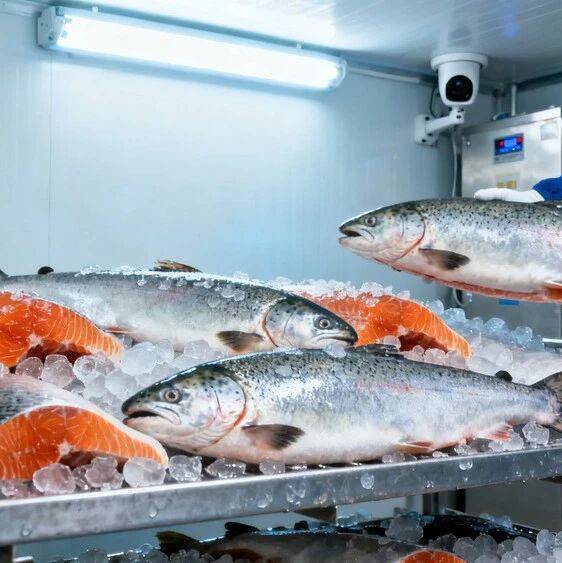
Core Viewpoint - The article discusses the surprising emergence of salmon farming in Xinjiang, China, which has been ongoing for nearly a decade, yet remains largely invisible to consumers despite significant production growth and government support [3][4][12]. Group 1: Industry Background - Salmon is one of the fastest-growing imported seafood products in China, with the country being the sixth largest salmon market globally, consuming twice as much as Japan, the second-largest market in Asia [6][7]. - The consumer demographic for salmon is expanding, now including children and the elderly, while consumption is also spreading from first-tier cities to lower-tier cities [7]. - The reliance on imported salmon has exposed structural risks, especially highlighted during disruptions in the cold chain logistics around 2020 [7][9]. Group 2: Production and Supply Chain - Xinjiang is identified as a prime region for salmon farming due to its cold water resources, which are essential for salmon growth, with the region's production expected to approach 10,000 tons by 2025 [10][4]. - The current salmon produced in Xinjiang is primarily rainbow trout, which has undergone significant breeding improvements, and the supply chain efficiency is enhanced by reduced transportation times compared to imported salmon [10][11]. - The cost of domestically produced rainbow trout is estimated to be at least one-third lower than imported salmon, providing a competitive edge in terms of freshness and price [10][11]. Group 3: Market Challenges - Despite the advantages, domestically produced salmon remains largely absent from mainstream retail shelves, with consumers primarily recognizing imported salmon due to extensive marketing efforts over the past two decades [14][16]. - The lack of consumer awareness and acceptance of domestic rainbow trout is compounded by naming conventions and concerns over potential parasites, which have not been effectively addressed through public education or marketing [17][19]. - The distribution of domestic rainbow trout is primarily through wholesale markets, with mainstream restaurants still favoring imported salmon, indicating a significant gap in consumer acceptance [20][21]. Group 4: Future Prospects - The potential for growth in domestic salmon production is limited by water resource availability, as regions suitable for farming are constrained by competing demands for drinking and irrigation water [23][24]. - Current projections suggest that by 2026, Xinjiang's salmon production may reach 11,200 tons, but without a significant shift in consumer awareness, substantial growth is unlikely [24]. - There is a need for a public discourse to address consumer concerns about domestic salmon, which could facilitate market entry and acceptance, but the responsibility for this lies primarily with local governments and producers [24][28].
农业行业周报:猪价淡季回调,或加速生猪行业去产能-20260304
Shanxi Securities· 2026-03-04 08:33
Investment Rating - The report maintains an investment rating of "Buy-A" for Haida Group, "Buy-B" for Shengnong Development and Wens Foodstuff, and "Increase-A" for Guobao Pet and Zhongchong Shares [2]. Core Insights - The agricultural sector has shown a 4.01% increase in the recent week, outperforming the Shanghai and Shenzhen 300 index, which rose by 1.08%. The sector ranks 14th among all industries [3][15]. - The pig price has recently decreased, leading to losses in self-breeding pig farming. The average prices for external three yuan pigs in Sichuan, Guangdong, and Henan are 10.7, 11.51, and 10.93 yuan/kg, respectively, with declines of 5.73%, 3.76%, and 12.07% [4][21]. - The feed industry is experiencing a shift from product competition to value chain competition, with market share concentrating among leading companies with R&D advantages and scale [4]. Summary by Sections 1. Agricultural Sector Performance - The agricultural sector's performance for the week of February 24 to March 1 shows a 4.01% increase, with the top-performing sub-industries being other planting, seeds, fruit and vegetable processing, meat chicken farming, and food and feed additives [3][15]. 2. Pig Farming - The average pig price has decreased, resulting in a loss of 159.65 yuan per head for self-breeding farms, a decline of approximately 61.33 yuan per head. The average pork price is 17.54 yuan/kg, down 3.52% [4][21]. - The report suggests that the pig farming industry may face pressure in the first half of the year, but it also presents a good window for capacity reduction [5]. 3. Poultry Farming - The price of white feather chickens has decreased to 7.47 yuan/kg, with a slight increase in chicken chick prices to 2.87 yuan/chick, up 19.58%. The profit from raising meat chickens is 0.40 yuan/chick, an increase of 0.60 yuan [39]. 4. Feed Processing - The average price of fattening pig feed remains stable at 3.37 yuan/kg, while meat chicken and egg-laying chicken feed prices are 3.45 yuan/kg and 2.80 yuan/kg, respectively, showing no change [46]. 5. Aquaculture - The price of sea cucumbers is 110 yuan/kg, down 15.38%, and shrimp is priced at 300 yuan/kg, down 6.25%. Freshwater fish prices, such as bass and grass carp, have shown slight increases [51]. 6. Planting and Grain Processing - The prices of major grains are mixed, with corn at 2390.78 yuan/ton (up 0.78%), soybeans at 4072.11 yuan/ton (unchanged), and wheat at 2534.89 yuan/ton (up 0.16%) [61].