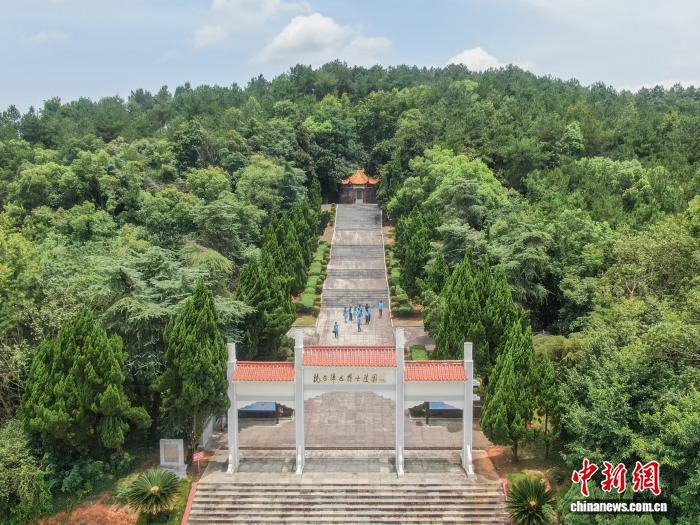
黄埔精神

Search documents
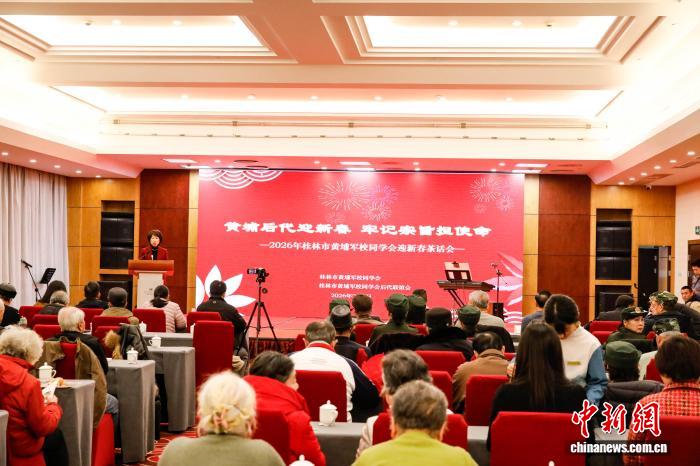
(新春走基层)桂林黄埔后人共话传承 黄埔精神连接两岸情
Zhong Guo Xin Wen Wang· 2026-02-04 14:02
Core Viewpoint - The event held by the Guilin Huangpu Military Academy Alumni Association emphasizes the importance of inheriting the "patriotic and revolutionary" spirit of Huangpu, aiming to strengthen connections between the two sides of the Taiwan Strait and promote national unity [1][2][4]. Group 1: Event Overview - The 2026 New Year tea party organized by the Guilin Huangpu Military Academy Alumni Association featured various cultural performances, creating a festive atmosphere to remember the history of their ancestors [1]. - The event highlighted the theme of inheritance and memory, with speeches emphasizing the historical significance of Huangpu Military Academy as a monument of cooperation between the Kuomintang and the Communist Party [2]. Group 2: Contributions and Achievements - A significant achievement mentioned was the completion of the "Roster of Huangpu Military Academy Students from Guangxi," which fills a gap in the research of Huangpu's history in Guangxi [2]. - The association's president, Wu Ganglin, stated that they have been dedicated to promoting Huangpu spirit, connecting alumni, and fostering cross-strait exchanges and cooperation over the past year [4]. Group 3: Future Aspirations - Participants expressed optimism about future cross-strait exchanges, with plans to deepen cooperation and enhance national identity among compatriots [4]. - The event also served as a platform for honoring veterans and promoting patriotism, with activities including visits to memorials and educational initiatives for younger generations [4].

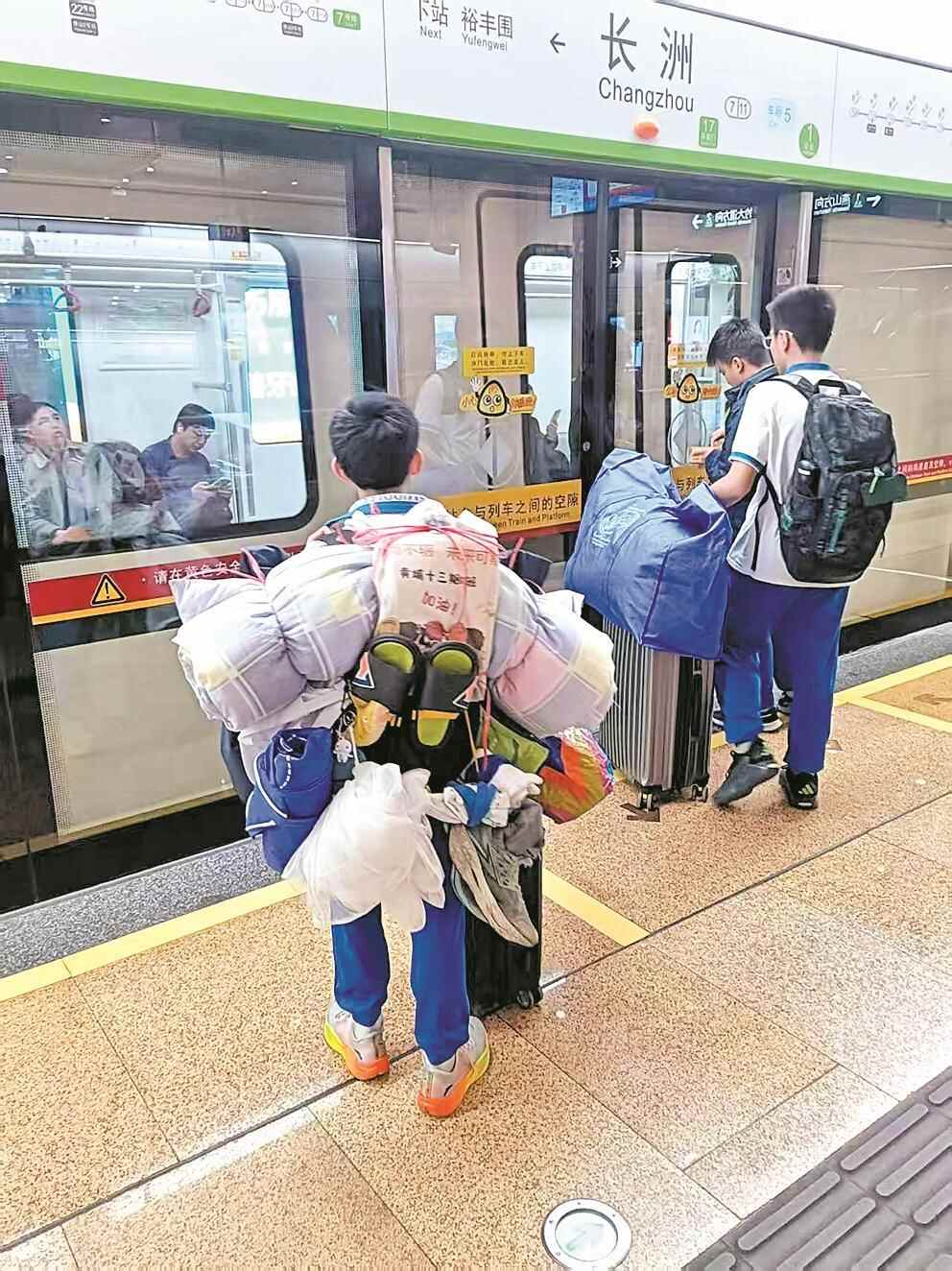
广州黄埔“最强背影小孩哥”火了!其家长接受羊城晚报记者采访:让孩子自立自强是送他最好的礼物
Xin Lang Cai Jing· 2026-02-02 00:28
Core Viewpoint - A video of a young boy, He Zhirui, carrying his luggage alone on Guangzhou Metro Line 7 has gained significant attention, showcasing his independence and the values instilled by his family and school [2][3]. Group 1: Family Values - He Zhirui's mother, Ms. Guo, emphasizes the importance of cultivating independence in children, believing it equips them to face life's challenges with confidence [3][5]. - The boy's preparation included practicing packing his belongings and communicating his desire to travel alone, reflecting a proactive approach to independence [4]. Group 2: Educational Influence - He Zhirui's former teacher, Wang Haili, notes his consistent progress and involvement in sports, highlighting the school's role in fostering teamwork and resilience [6]. - The school’s artistic initiatives, such as participating in a musical at Peking University, contributed to his well-rounded development, demonstrating the importance of extracurricular activities [7]. Group 3: Cultural and Historical Context - The influence of "Huangpu Spirit," characterized by optimism, hard work, and pragmatism, is evident in He Zhirui's attitude towards challenges, as his mother attributes this to their family traditions and historical education [8][7]. - Ms. Guo believes that the combination of family guidance, school education, and cultural heritage creates a holistic educational experience, culminating in the boy's confident demeanor [8].
黄埔后代:赓续黄埔精神 促进祖国统一
Xin Lang Cai Jing· 2026-01-14 14:28
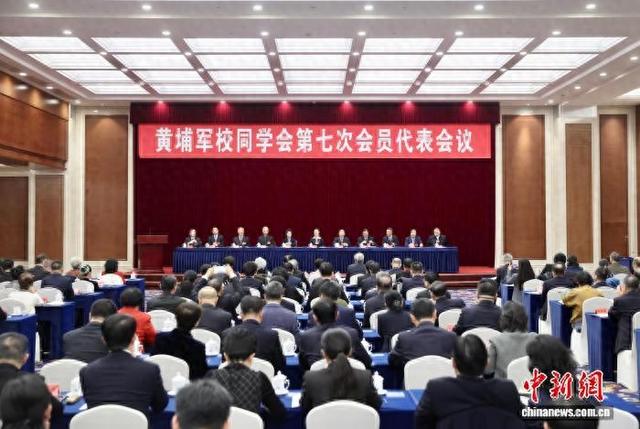
Group 1 - The core message emphasizes the commitment of the Huangpu Military Academy descendants to promote national unity and oppose "Taiwan independence" [1][2] - The seventh member representative meeting of the Huangpu Military Academy Alumni Association was held in Beijing, where descendants expressed their determination to inherit the Huangpu spirit and work towards the complete unification of the country [1] - The meeting highlighted the historical significance of the Huangpu Military Academy, founded in 1924, and its role in the struggle for national independence and revitalization [1][2] Group 2 - The new board of directors will continue to uphold the leadership of the Communist Party of China and implement the spirit of Xi Jinping's message on the centenary of the Huangpu Military Academy [2] - The descendants of Huangpu alumni are increasingly becoming the main force in passing down the Huangpu spirit, fostering connections based on shared patriotic values and historical memories [2][3] - There are plans for commemorative activities in 2024 and 2025 to celebrate the centenary of the Huangpu Military Academy and the 80th anniversary of Taiwan's recovery, aiming to enhance cooperation between the two sides [2][3]
黄埔军校同学会第七次会员代表会议在北京召开
Xin Lang Cai Jing· 2026-01-14 12:27
Group 1 - The meeting emphasized the importance of the Huangpu Military Academy Alumni Association's mission and responsibilities in the new journey, highlighting the need to adhere to the founding purpose and political mission [2] - The meeting focused on the implementation of the spirit of General Secretary Xi Jinping's important congratulatory letter and the overall strategy for resolving the Taiwan issue in the new era [2] - The new council and leadership positions were elected during the meeting, including the president, vice presidents, honorary president, secretary general, and heads of specialized committees [2] Group 2 - Approximately 150 representatives attended the meeting, including officials from the Central United Front Work Department and secretaries from various provincial Huangpu Military Academy Alumni Associations [2] - The meeting aimed to strengthen ideological guidance and organizational construction, emphasizing the need to contribute to the great rejuvenation of the Chinese nation and the promotion of national reunification [2]
共担民族大义 共促祖国统一
Ren Min Ri Bao Hai Wai Ban· 2025-11-10 22:46
Core Viewpoint - The 18th Huangpu Forum emphasizes the importance of national unity and the historical significance of Taiwan's return to China, urging participants to uphold the Huangpu spirit and oppose "Taiwan independence" [1][4][6]. Group 1: Historical Significance - The forum commemorates the 80th anniversary of the victory in the Anti-Japanese War and Taiwan's liberation, highlighting the collective memory of the Chinese people and the importance of not forgetting this history [2][3]. - The victory in the Anti-Japanese War and Taiwan's return to China is seen as a significant achievement for the Chinese nation, marking the end of foreign invasion and colonial rule [3][4]. Group 2: Call for Unity - Participants call for unity among Huangpu alumni and their families to promote national reunification and safeguard the shared heritage of the Chinese nation [7][8]. - The forum encourages the younger generation to embrace the Huangpu spirit and work towards the peaceful development and complete reunification of China [8]. Group 3: Cultural and Educational Initiatives - There is a strong emphasis on educating the younger generation in Taiwan about their historical ties to the mainland and fostering a sense of national identity [6][7]. - The need for various initiatives to counteract the influence of "cultural Taiwan independence" and to promote a unified understanding of history is highlighted [6].
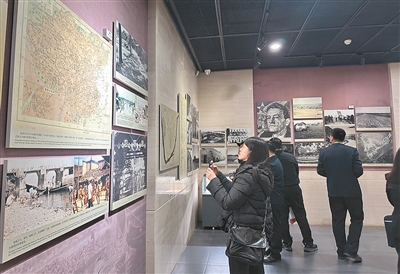
省黄埔军校同学会纪念中国人民抗日战争暨世界反法西斯战争胜利80周年座谈会召开
Liao Ning Ri Bao· 2025-09-16 01:23
Core Viewpoint - The meeting commemorating the 80th anniversary of the victory in the Chinese People's Anti-Japanese War and the World Anti-Fascist War emphasized the historical significance of this victory and China's commitment to a peaceful development path, which will contribute to national rejuvenation and modernization efforts [1] Group 1 - The meeting highlighted the importance of Xi Jinping's speech, which articulated the historical significance of the Anti-Japanese War victory and China's determination to pursue a peaceful development path [1] - The attendees were encouraged to deeply understand and implement the spirit of Xi Jinping's important speech, recognizing the Chinese Communist Party's pivotal role in the victory of the Anti-Japanese War [1] - The meeting called for the inheritance and promotion of the great spirit of resistance, emphasizing patriotism and the revolutionary spirit of the Huangpu Military Academy [1] Group 2 - The meeting was attended by over 60 participants, including members of the Provincial Huangpu Military Academy Alumni Association and officials from the Provincial United Front Work Department [1] - Member representatives spoke at the meeting, contributing to the discussion on patriotism and social development [1]
(抗战胜利80周年)江西黄埔后代及海外侨胞共寻抗战记忆
Zhong Guo Xin Wen Wang· 2025-09-02 10:36
Core Viewpoint - The event commemorates the 80th anniversary of the victory in the Chinese People's War of Resistance against Japanese Aggression and the World Anti-Fascist War, highlighting the significance of the Battle of Shanggao and honoring the sacrifices of soldiers [1][3]. Group 1: Historical Context - The Battle of Shanggao in March 1941 was a significant military engagement where Chinese forces employed the "magnet tactic," resulting in over 15,000 Japanese casualties and marking a notable victory in the war [3]. - The Shanggao Martyrs' Cemetery, where over 9,000 fallen soldiers are interred, serves as a memorial site for those who fought in the battle [1][3]. Group 2: Participation and Remembrance - Descendants of Huangpu military academy alumni and overseas Chinese gathered at the cemetery to pay respects, laying wreaths in memory of their ancestors who participated in the battle [3][4]. - The event included remarks from descendants emphasizing the importance of continuing the legacy of patriotism and revolution, as well as fostering cross-strait exchanges [4]. Group 3: Cultural Significance - The overseas Chinese community expressed a strong desire to understand the history of the Shanggao battle, with initiatives to preserve these memories through dedicated columns in their publications [4].