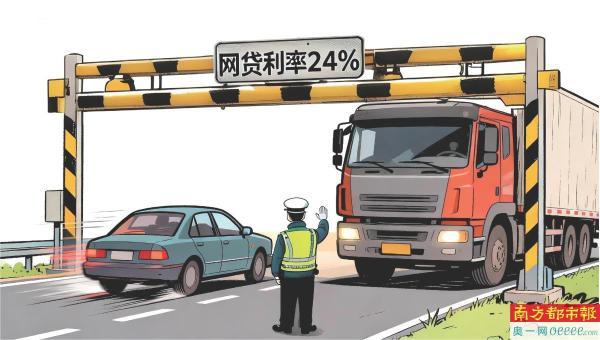
24%利率红线

Search documents
解码助贷新规下的生存与增长
Nan Fang Du Shi Bao· 2026-01-08 23:12
Core Insights - The Chinese consumer finance industry is transitioning from extensive growth to high-quality development as of 2025, marked by the implementation of the "Internet Lending Business Management Measures" on October 1, 2025, which introduces a 24% annualized financing cost cap and a lending "white list" system [2][10] Group 1: Lending "White List" - The new lending regulations have restructured the cooperation ecosystem within the consumer finance industry, mandating banks to manage partnerships through a white list, prohibiting collaboration with non-listed entities [2][3] - Major internet platforms and leading licensed financial institutions are prioritized in the white list, aligning with the new regulatory requirements [2] Group 2: 24% Interest Rate Cap - The new regulations fundamentally alter the industry's profit logic by imposing a hidden constraint on comprehensive financing costs, which must now include all fees, such as credit enhancement service fees, in the calculation [4][5] - The previous practice of splitting loan costs to circumvent the 24% cap has been effectively terminated, as all fees must now be clearly stated in contracts and included in the total financing cost [5] Group 3: Non-Performing Asset Disposal - The pace of non-performing asset disposal in the consumer finance sector has accelerated, with a trend towards "unlitigated sales" becoming the mainstream method for asset management [6] - New rules regarding the disclosure of starting prices for asset sales aim to eliminate price anchoring effects, encouraging buyers to focus on the underlying asset data [6] Group 4: Executive Changes - Significant executive turnover has occurred across the consumer finance industry, with at least 25 licensed consumer finance companies experiencing leadership changes, reflecting the industry's transformation and regulatory environment [7] - Key drivers for these changes include shareholder adjustments, the need for specialized talent due to regulatory upgrades, and normal personnel transitions [7] Group 5: Capital Increases - A wave of capital increases has been observed in the consumer finance sector, driven by regulatory pressures and intense market competition, with several companies raising significant funds to meet new capital requirements [8][9] - The capital influx is seen as a positive indicator of institutional confidence in the industry's future, beyond just compliance with regulations [9] Group 6: "Self-Operated + Technology" - The implementation of the new lending regulations signifies a shift towards regulated development, with a focus on balancing compliance and innovation [9] - Companies are encouraged to adopt a "self-operated + technology" model to enhance operational efficiency and risk management through technology integration [9]


2025消费金融|六大关键词 解码助贷新规下的生存与增长
Nan Fang Du Shi Bao· 2026-01-08 06:05
Core Insights - The Chinese consumer finance industry is at a critical turning point towards high-quality development as of 2025, marked by the implementation of the "Internet Loan Management Measures" on October 1, which introduces a 24% annualized financing cost cap and a "white list" system for loan partners [1][2] Group 1: Regulatory Changes - The "white list" system has restructured the cooperation ecosystem within the consumer finance industry, shifting banks from a broad partnership approach to a more selective one [2][3] - As of October 31, 2025, 119 financial institutions had disclosed their loan partner "white lists," including various types of banks and financial companies, indicating rapid adoption of this regulatory framework [2] Group 2: Profitability and Cost Structure - The new regulations have fundamentally altered the industry's profitability logic by imposing a hidden constraint on comprehensive financing costs, which must now include all fees and comply with a 24% cap [4][5] - The previous practice of splitting fees to circumvent interest rate limits has been eliminated, putting pressure on institutions that relied on high-interest business models [5] Group 3: Asset Management Innovations - The consumer finance industry has accelerated the pace of non-performing asset disposal, with a significant increase in companies opting for "unlitigated sales" as a new standard for asset management [6][7] - By June 28, 2025, 15 consumer finance companies had listed 110 non-performing loan projects, with a total asset package value of approximately 30.48 billion yuan, reflecting a more than 200% increase compared to the previous year [6] Group 4: Leadership Changes - The industry has experienced a significant turnover in executive leadership, with at least 25 licensed consumer finance companies undergoing management changes in 2025, affecting over 30 key positions [8][9] - This wave of leadership changes is driven by shareholder adjustments, the need for specialized talent, and normal personnel transitions [8] Group 5: Capital Increases - A notable trend in 2025 is the surge in capital increases among consumer finance companies, driven by regulatory pressures and competitive market conditions [10][11] - Several institutions have initiated capital increases to meet new regulatory requirements, with the minimum registered capital for consumer finance companies raised to 10 billion yuan [10] Group 6: Strategic Focus on Technology - The implementation of the new regulations has prompted the industry to seek a balance between compliance and innovation, emphasizing the need for a "self-operated + technology" approach to enhance operational efficiency and risk management [12][13] - Companies are increasingly investing in technology to optimize risk control models and improve operational efficiency while focusing on localized service ecosystems [12]
六大关键词,解码助贷新规下的生存与增长
Nan Fang Du Shi Bao· 2026-01-08 04:47
Core Insights - The Chinese consumer finance industry is at a critical turning point towards high-quality development as of 2025, marked by the implementation of the "Internet Loan Management Measures" on October 1, which introduces a 24% annualized financing cost cap and a "white list" system for loan assistance [1][2] Group 1: Regulatory Changes - The "white list" system has restructured the cooperation ecology within the consumer finance industry, shifting banks from a broad cooperation approach to a more selective one [2][3] - As of October 31, 2025, 119 financial institutions had disclosed their loan assistance "white lists," including various types of banks and financial companies, indicating rapid adoption of the new regulatory framework [2] Group 2: Profitability and Cost Structure - The new regulations have fundamentally altered the industry's profitability logic by imposing a hidden constraint on comprehensive financing costs, which must now include all fees and comply with a 24% cap [4][5] - The previous practice of splitting fees to circumvent interest rate limits has been eliminated, putting pressure on institutions that relied on high-interest business models [5] Group 3: Asset Management Innovations - The trend of "selling without litigation" has become mainstream for managing non-performing assets, with a significant increase in the number of consumer finance companies actively listing bad debt for sale [6][7] - The shift towards quicker asset disposal methods is driven by regulatory encouragement for market-based asset management [7] Group 4: Leadership Changes - A significant turnover in executive leadership has occurred across the consumer finance sector, with at least 25 companies experiencing changes in key positions, reflecting the industry's adaptation to new regulatory and market conditions [8][9] - The new leadership is increasingly composed of professionals with backgrounds in finance and technology, which is seen as essential for enhancing risk management and innovation capabilities [9] Group 5: Capital Increases - A wave of capital increases has been observed in the consumer finance industry, driven by regulatory pressures and competitive market conditions, with several companies raising significant funds to meet new capital requirements [10][11] - Despite the regulatory push, the underlying optimism about the industry's future is evident, as companies seek to strengthen their compliance and operational capabilities [11] Group 6: Strategic Focus on Technology - The implementation of the new regulations has prompted the industry to balance compliance with innovation, emphasizing the need for a "self-operated + technology" approach to enhance operational efficiency and risk management [12][13] - Companies are increasingly investing in technology to optimize risk control and improve service delivery to underserved customer segments [12][13]
助贷新规今起实施 利率24%成红线
Nan Fang Du Shi Bao· 2025-09-30 23:16
Core Viewpoint - The implementation of the new regulations on internet lending, effective from October 1, 2025, will enforce stricter compliance with existing financial regulations, particularly regarding interest rates, which are now capped at 24% for internet loans [2][4][5]. Group 1: Regulatory Changes - The new regulations clarify that internet lending falls under the category of internet loans and must adhere to the "Interim Measures for the Administration of Internet Loans by Commercial Banks" [2][5]. - Courts have begun recognizing the financial institution status of online lending platforms, particularly small loan companies, and are applying a 24% interest rate as a standard for determining penalties and overdue interest [4][5]. Group 2: Market Dynamics - Major online lending platforms still offer products with interest rates as high as 36%, creating a dilemma on how to transition to the new 24% standard [6][8]. - The number of third-party cooperation partners for leading private banks, such as WeBank, has significantly increased, indicating a growing network in the internet lending space [3]. Group 3: Legal Precedents - Recent court rulings have started to favor the 24% interest rate cap, as seen in cases where loans with rates exceeding this limit were adjusted downwards [5][7]. - The legal framework has evolved to discourage high-interest lending practices, with courts now less likely to support agreements that exceed the 24% threshold [4][5]. Group 4: Consumer Complaints - Users have reported complaints regarding high effective interest rates, with some platforms still charging rates close to 36%, despite claims of compliance with regulations [6][7]. - Complaints have highlighted issues with transparency in loan agreements, where users were not adequately informed about the actual interest rates and additional fees [7][8]. Group 5: Operational Challenges - Platforms face critical decisions on whether to retain high-interest products or reduce rates to comply with the new regulations, which may impact their profitability [8]. - The new regulations also emphasize the need for banks to manage post-loan collection practices more effectively, particularly in preventing illegal collection methods [8].