3D打印行业生态

Search documents
拓竹“战群狼” 百亿3D打印赛道大战
2 1 Shi Ji Jing Ji Bao Dao· 2026-01-23 08:07
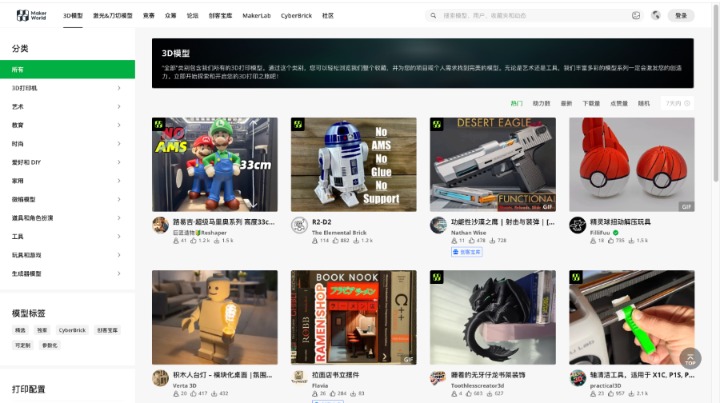
Core Viewpoint - The consumer-grade 3D printing industry is approaching a pivotal moment, often referred to as the "iPhone moment," indicating significant growth and transformation in the market [1]. Market Performance - The A-share 3D printing index has seen an impressive year-to-date increase of 82.11%, with nearly 70% of companies reporting positive net profit growth in the first three quarters [2]. - The global consumer-grade 3D printing market is projected to grow from $1.5 billion in 2020 to $4.1 billion by 2024, with an annual compound growth rate of approximately 28% [11]. Competitive Landscape - The competitive environment is intensifying, with major players like DJI, Meituan, and Hillhouse Capital entering the market, while established companies like Creality are pursuing IPOs [3][6]. - Bambu Lab, once a dominant player, is now facing significant competition, with multiple companies vying for market share and investment [3][4]. Investment Trends - Since 2025, there have been 72 investment events in the 3D printing sector, with 52 companies receiving funding, primarily concentrated in the domestic market [6]. - Notable investments include DJI's multi-million dollar investment in Elegoo, highlighting the potential for growth in consumer-grade 3D printing technology [6]. Company Developments - Elegoo, a key player in the market, has achieved a compound annual growth rate of over 40% in the past three years, with projected revenues of 1.6 billion yuan in 2024 and 2.5 billion yuan in 2025 [7]. - Snapmaker has also gained attention, raising over $20 million on Kickstarter for its innovative 3D printer, which boasts significant efficiency improvements [7][8]. Ecosystem and Community - Bambu Lab's success is attributed not only to hardware performance but also to its robust community and content ecosystem, exemplified by its Maker World platform, which has nearly 10 million active users [12][13]. - The shift towards a closed ecosystem has sparked debates within the industry regarding the balance between open-source and proprietary models [15]. Future Outlook - The entry of large players like DJI is expected to accelerate industry consolidation and competition, making the landscape more complex and dynamic [17]. - The ongoing development of AI technologies is anticipated to lower barriers to entry in 3D modeling, facilitating a broader participation in the 3D printing ecosystem [16].