4 - bit革命

Search documents
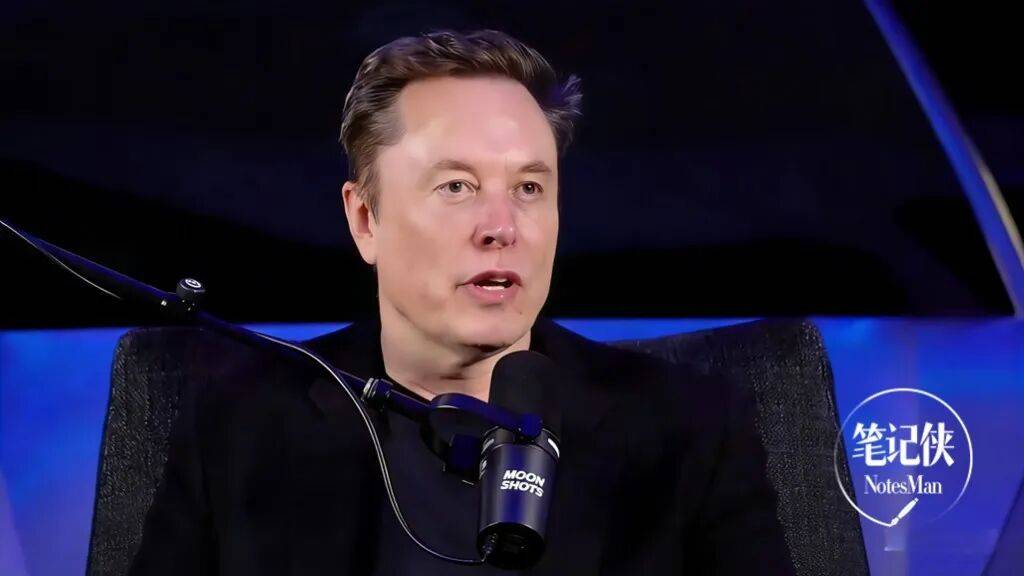
马斯克最新访谈:哲学、AI科技、经济与政治
Sou Hu Cai Jing· 2026-01-10 14:16
Group 1 - The core viewpoint of the article is that AI is rapidly advancing and will significantly impact the workforce and society, leading to a future where human roles may change dramatically as AI capabilities grow [4][6][20]. - AI is now capable of performing over half of white-collar jobs, and this trend is accelerating, making it essential for companies to adapt or risk falling behind [7][8][10]. - The future will see unprecedented production efficiency and a decrease in costs due to AI and robotics, potentially leading to a scenario of material abundance and high income for all [11]. Group 2 - The ability to control and utilize energy will be the true measure of a civilization's progress, with future currency being based on power (watts) [13][14]. - Solar energy is highlighted as the most significant resource, with the potential to capture a fraction of its output vastly exceeding current global energy production [15][18]. - The U.S. must significantly increase its solar energy capacity, with ambitious plans involving AI satellite clusters to achieve this goal [18][19]. Group 3 - The emergence of Artificial General Intelligence (AGI) is anticipated by 2026, with AI intelligence expected to surpass human intelligence by 2030 [21][22]. - AI will begin to design its own chips, leading to a self-improvement cycle that could revolutionize technology [23]. - A significant leap in computational power is expected through a shift to lower precision calculations, which could enhance performance dramatically [23]. Group 4 - Humanity's role is viewed as a "biological guide program" for digital superintelligence, with the potential for human intelligence to become negligible in the face of advanced AI [25][27]. - To ensure the development of beneficial AI, three principles are proposed: the pursuit of truth, maintaining curiosity, and having an aesthetic sense [28][29][30]. - The future may consist of multiple AI entities rather than a single dominant superintelligence, leading to a decentralized landscape [31]. Group 5 - The article concludes with a vision of a future where material abundance and intelligent governance by AI allow humans to pursue their dreams freely [34][36]. - It raises critical questions about the meaning of work and human value in a world where machines handle most production and services [37][38].

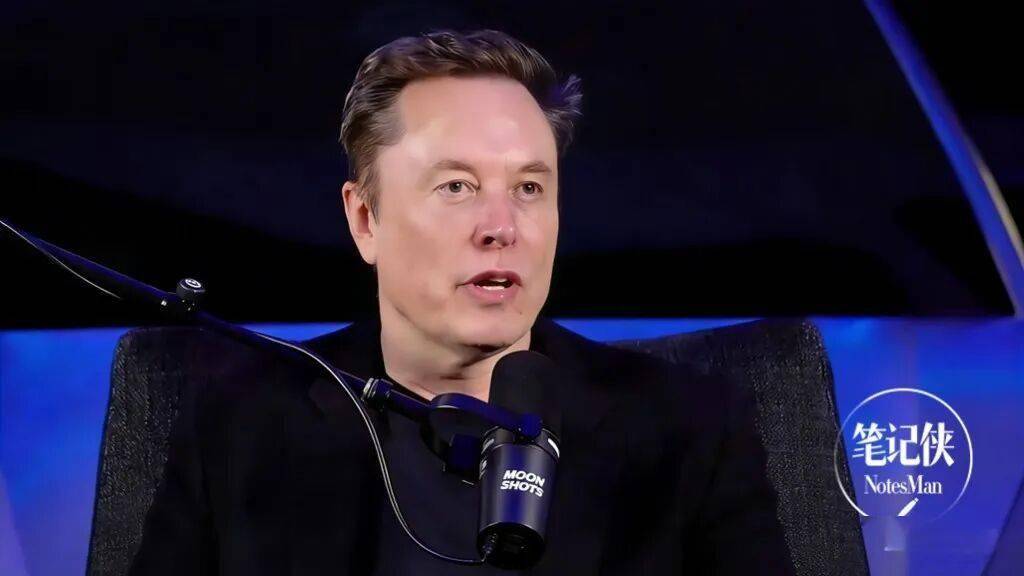
马斯克最新访谈:2026,必须面对的关键时刻!
Sou Hu Cai Jing· 2026-01-09 15:22
Group 1 - AI is capable of performing over half of white-collar jobs, accelerating the process and making it irreversible [4][7][8] - The future will see unprecedented production efficiency and a significant drop in costs, leading to material abundance and high income for all [11] - The future challenges will shift from survival to creating new challenges in a world of abundance [11] Group 2 - The true measure of a civilization's progress is its ability to control and utilize energy, with future currency being based on power (watts) [13][14] - Solar energy is emphasized as the most efficient and abundant energy source, with current production at 1,500 gigawatts annually [18] - A significant increase in solar energy capacity is proposed, utilizing AI satellite clusters for efficient energy capture [18][19] Group 3 - The emergence of Artificial General Intelligence (AGI) is expected by 2026, with AI intelligence surpassing human intelligence by 2030 [21][22] - AI will begin designing its own chips, leading to a self-improvement cycle and significant advancements in computational efficiency [23] - The potential for a 4-bit revolution in computing could lead to performance leaps by simplifying calculations [23] Group 4 - Humanity's role is seen as a "biological guide program" for digital superintelligence, with humans acting as a catalyst for silicon-based intelligence [25][26] - Ensuring the development of "good" AI involves three principles: pursuing truth, maintaining curiosity, and having an aesthetic sense [28][29][30] - The future may consist of multiple AI entities rather than a single superintelligence, due to physical limitations in real-time synchronization [31] Group 5 - The ideal future envisioned includes a world of material abundance governed by intelligent AI, allowing humans to pursue their dreams freely [34][36] - The discussion highlights the need for reflection on the meaning of work and human value in a future dominated by machines [37] - The future is shaped by four key areas: philosophy, AI technology, economy, and politics, which are interconnected and drive progress [39][40]