通用人工智能(AGI)

Search documents
AI下一个超级风口?世界模型融资盛宴正酣,资本押注万亿级物理AI赛道
证券时报· 2026-04-01 00:17
Core Viewpoint - The rise of "world models" is seen as a key to overcoming the limitations of current AI, enabling a deeper understanding of the physical world and paving the way for Artificial General Intelligence (AGI) [1][3][6]. Group 1: World Models and AGI - World models allow AI to understand the laws of the physical world, facilitating reasoning and interaction, which is essential for achieving AGI [1][3]. - The development of world models is still in its early stages, and the first company to leverage physical interaction data effectively will gain a competitive edge [1][3][6]. Group 2: Industry Trends and Investments - OpenAI's recent shift to focus on world model research indicates a strategic pivot in the industry towards understanding reality rather than generating it [3][6]. - Significant investments have been made in world model companies, with over $10 billion raised by notable firms this year alone, reflecting a growing consensus that the next battleground for AI lies in the physical world [6][7]. Group 3: Challenges and Opportunities - The current challenge for world models is the scarcity of high-quality physical world data, which limits their widespread adoption [11][13]. - Companies are exploring the integration of world models with existing AI frameworks to enhance capabilities, particularly in complex environments [12][13]. Group 4: Future Outlook - The year 2026 is anticipated to be pivotal for world models, potentially establishing a foundation for AGI and physical AI [11][12]. - The evolution of world models is expected to complement existing models, with a focus on physical intuition and decision-making, while other models handle semantic understanding [13].


谷歌前研究员:仅靠规模化无法实现AGI
阿尔法工场研究院· 2026-03-31 11:18
Core Insights - François Chollet, a prominent figure in AI and the creator of Keras, emphasizes the importance of understanding AI as a tool for empowerment and encourages individuals to leverage AI knowledge to enhance their capabilities and navigate the ongoing transformation in various fields [2]. Group 1: Definition and Goals of AGI - François defines AGI as a system that can understand and master new problems with human-like efficiency and minimal training data, contrasting it with the automation of economic tasks [2]. - He predicts that the realization of AGI will first involve automating most economic work before achieving the more efficient learning definition he proposes [2]. Group 2: Limitations of Current AI Paradigms - The current reliance on deep learning and large language models (LLMs) is effective but not optimal, as it depends heavily on vast amounts of training data for pattern matching [2]. - In fields requiring formal verification of reward signals, such as coding and mathematics, current AI shows strong performance, while in less verifiable areas like writing, progress is slow or stagnant [2]. - François's research lab, NIA, aims to explore a fundamentally different AI research paradigm through program synthesis, focusing on high data efficiency and model optimality [2]. Group 3: Predictions on AGI Technology and Timeline - François believes that the "fluid intelligence engine" for AGI will be a compact codebase, potentially under 10,000 lines, but will require a vast knowledge base to operate effectively [3]. - He forecasts that AGI could be achieved around 2030, coinciding with the release of Arc-AGI versions 6 or 7, based on current progress and investment levels [3]. Group 4: Recommendations for Researchers and Entrepreneurs - François encourages diversification in AI research, suggesting that the current focus on LLMs is counterproductive and advocating for exploration of alternative paths like genetic algorithms and state space models [4]. - He highlights that a successful AI system must be capable of self-improvement and expansion without continuous direct intervention from human engineers, which is a core advantage of deep learning [4].

刚刚,一口气连发3个王炸模型、亮出2026年AGI战略,昆仑万维夯爆了
机器之心· 2026-03-27 13:38
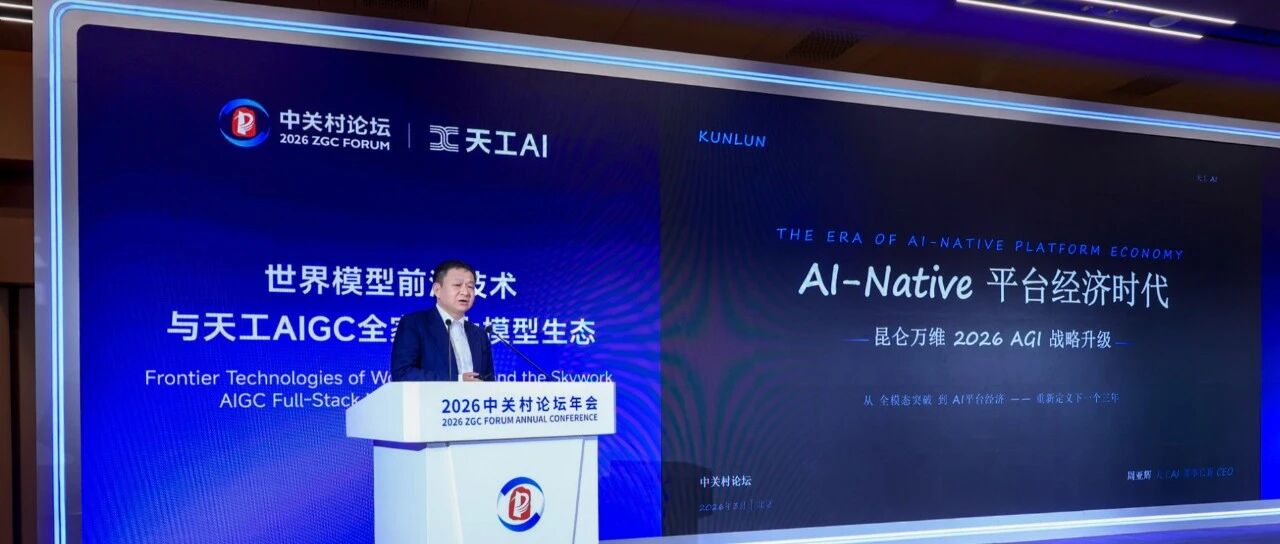
Core Viewpoint - Kunlun Wanwei showcased its latest advancements in artificial general intelligence (AGI) and AI-generated content (AIGC) at the 2026 Zhongguancun Forum, emphasizing its commitment to achieving the ultimate goal of general AI [1][3]. Group 1: New AI Models Released - Kunlun Wanwei's TianGong AI launched three major models: Matrix-Game 3.0, SkyReels V4, and Mureka V9, which enhance AIGC capabilities and advance AI modeling and simulation of the physical world [3][4]. - SkyReels V4 achieved global first place in the "Text to Video with Audio" and "Text to Video without Audio" categories, and second place in the "Image to Video without Audio" category in the Artificial Analysis benchmark [4][6]. Group 2: Matrix-Game 3.0 Features - Matrix-Game 3.0 addresses three critical shortcomings of previous world models: memory retention, long-term operation, and real-time performance, enabling a transition from generating fragments to running entire worlds [17][19]. - The model incorporates a dual pipeline system for data production, utilizing both Unreal Engine synthetic data and real 3A game captures, ensuring comprehensive data acquisition [19][20]. - It employs a collaborative mechanism between computational efficiency and memory capability, achieving real-time generation at 720p resolution while maintaining long-term stability [21][28]. Group 3: SkyReels V4 Enhancements - SkyReels V4 integrates audio and video generation into a unified model, allowing for coherent narrative capabilities similar to human storytelling [33][34]. - The model supports detailed editing and repair capabilities, enabling creators to manage video content more effectively, including element addition, style transfer, and watermark processing [37][39]. - It utilizes a multi-modal semantic reward system to enhance the logical coherence and aesthetic quality of generated content, balancing quality and computational cost [38][39]. Group 4: Mureka V9 Developments - Mureka V9 surpasses its predecessor by organizing music generation closer to real creative processes, focusing on structure, emotional alignment, and iterative refinement [45][46]. - The model transforms music creation into a repeatable and adjustable process, allowing creators to explore multiple versions and make adjustments, thus enhancing the overall creative workflow [46][47]. - Mureka V9 aims to establish a platform for music creation that connects creators and consumers, potentially revolutionizing the music generation landscape [47][55]. Group 5: AGI Strategy and Future Outlook - Kunlun Wanwei's 2026 AGI strategy outlines a clear path towards achieving general AI, focusing on three major models (game, video, and music) and a superintelligent agent for unified task execution [48][51]. - The strategy emphasizes the importance of an open ecosystem that facilitates collaboration between developers and creators, aiming to translate AI capabilities into practical applications across various industries [55][56].

半导体行业双周报:存储价格持续上涨压制消费类电子需求-20260327
Dongguan Securities· 2026-03-27 11:16
Investment Rating - The semiconductor industry is rated as "Neutral" with expectations of performance in line with the market index within ±10% over the next six months [40]. Core Insights - The semiconductor industry index has seen a decline of 5.51% over the past two weeks, underperforming the CSI 300 index by 1.03 percentage points. However, since the beginning of 2026, the semiconductor index has increased by 2.17%, outperforming the CSI 300 index by 5.46 percentage points [5][12]. - The rise in storage prices is negatively impacting the demand for consumer electronics, with smartphone shipments in China showing significant year-on-year declines in recent months [4][32]. - The introduction of Google's TurboQuant algorithm, which significantly reduces memory usage for large language models, has led to stock price adjustments for major storage companies [32]. Industry Overview Semiconductor Industry Review - The semiconductor industry index has experienced fluctuations, with a recent two-week decline of 5.51% [12]. - The index has shown a year-to-date increase of 2.17%, indicating a mixed performance in the market [12]. Industry News and Developments - Several smartphone manufacturers have announced price increases due to rising memory costs, with some models seeing price hikes of up to 1000 yuan [13]. - The Chinese smart glasses market is projected to see a shipment volume of 2.46 million units in 2025, reflecting a year-on-year growth of 87.1% [14]. - The storage chip market is experiencing a super cycle, with price increases affecting the entire consumer electronics supply chain [21]. Company Announcements and Dynamics - Baiwei Storage has signed a $1.5 billion contract for storage wafer procurement, which is expected to stabilize supply and mitigate price fluctuations [23]. - North China Innovation has launched a new generation of 12-inch ICP etching equipment, targeting advanced logic and storage sectors [24]. Semiconductor Industry Data Updates - Global smartphone shipments reached 336 million units in Q4 2025, with a year-on-year growth of 2.28% [25]. - In February 2026, domestic smartphone shipments in China were 16.26 million units, down 12.60% year-on-year [25]. - Domestic new energy vehicle sales in February 2026 were 765,000 units, reflecting a year-on-year decline of 14.2% [27]. - Global semiconductor sales in January 2026 were $82.54 billion, a year-on-year increase of 46.1% [29]. Investment Recommendations - Companies to watch include: - North China Innovation (002371) with a revenue of 27.30 billion yuan in the first three quarters of 2025, up 32.97% year-on-year [34]. - Zhongwei Company (688012) is expected to achieve a net profit of 2.08 billion to 2.18 billion yuan in 2025, reflecting a growth of approximately 28.74% to 34.93% [34]. - Baiwei Storage (688525) anticipates a net profit of 850 million to 1 billion yuan in 2025, representing a growth of 427.19% to 520.22% [34].
中美人工智能(AI)竞争:道路比技术更重要|国际
清华金融评论· 2026-03-27 10:02
Core Viewpoint - The article discusses the evolving landscape of AI competition between China and the United States, emphasizing the need for a comprehensive understanding of their respective development models, strategic choices, and core strengths and weaknesses in the AI sector [5]. Group 1: Comparison of Core Technologies and Infrastructure - The competition in AI between China and the US is analyzed through three main aspects: technology and talent, foundational support, and industrial application [7]. - In terms of AI models, the US currently leads in performance but the gap is narrowing, with Chinese models rapidly catching up [9]. - The US dominates the design and research of advanced chips, while China excels in manufacturing and packaging, with a significant increase in the domestic chip market [11][12]. - The US has a larger scale of computing power and data centers, but China is improving its efficiency and growth rate in computing power [15]. - The US has a higher concentration of top AI talent, but the total number of researchers in both countries is comparable, with China rapidly increasing its talent pool [18]. Group 2: Foundational Support - China holds a dominant position in the rare earth industry, essential for chip manufacturing, while the US relies heavily on imports [22]. - China's electricity supply is robust, significantly surpassing the US in power generation, which supports AI infrastructure [23][24]. Group 3: Industrial Application - The US focuses on high-value enterprise applications, while China emphasizes large-scale deployment in consumer applications and industrial empowerment [27][29]. - China has become the largest holder of AI patents globally, indicating its strong position in various industries [29]. Group 4: Development Paths and Strategies - The US aims for technological breakthroughs, while China focuses on deepening applications, with different approaches to model openness and business models [31][33]. - The US government emphasizes competition in AI, while China's strategy integrates AI development with national economic goals [34][35]. Group 5: Capital Markets and Financing - The US AI sector is primarily driven by private capital, with significant investments in AI technologies, while China's financing is more reliant on government and industrial capital [42][43]. - The US faces risks of capital market bubbles, while China needs to avoid issues of redundant construction in its AI sector [46][48]. Group 6: Future Outlook - The competition between China and the US in AI is expected to intensify, with both countries potentially blurring the lines of their strategic boundaries [49]. - The global market for AI applications is becoming increasingly competitive, with both nations vying for technological output and market presence [50]. Group 7: Recommendations - China should focus on independent innovation while fostering international cooperation, emphasizing the need for breakthroughs in critical technologies and avoiding redundant investments [51][54][55].

全球顶尖大模型一夜惨遭血洗!最难测试人类拿满分,AI第一名得0.2%分
猿大侠· 2026-03-27 04:12
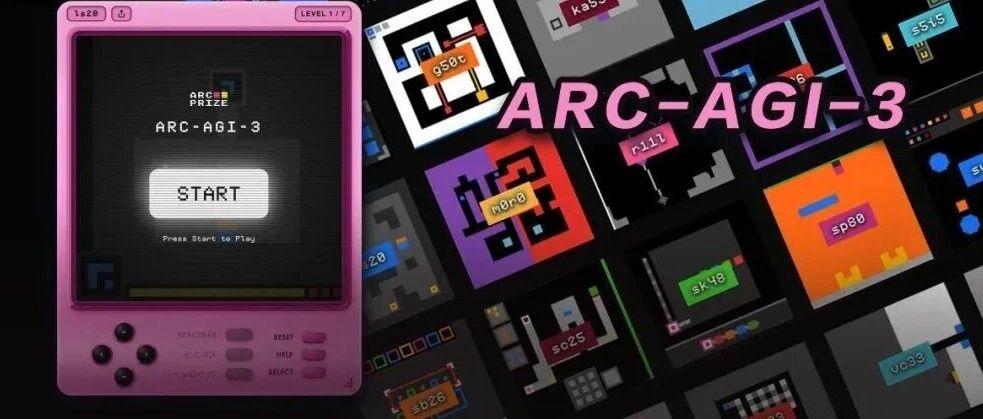
Core Viewpoint - The release of the ARC-AGI-3 test has revealed a significant gap between human intelligence and current AI capabilities, with humans scoring 100% while AI models scored below 1% [3][5][35]. Group 1: ARC-AGI-3 Test Overview - ARC-AGI-3 is a new benchmark test for AI, designed to assess the ability of AI models to interact with complex environments through interactive games [2][19]. - The test consists of over 150 handcrafted interactive game environments with more than 1,000 levels, requiring AI to deduce rules and objectives without any guidance [19][23]. - The scoring system is based on efficiency compared to human performance, marking a departure from traditional AI testing methods [25][28]. Group 2: AI Performance Analysis - The top AI model, Opus 4.6, which previously scored 69.2% in earlier tests, scored only 0.2% in ARC-AGI-3, indicating a drastic decline in performance [5][39]. - The scoring formula penalizes AI for excessive attempts, making it impossible for models to rely on brute force to solve problems [30][32]. - The best-performing AI in the pre-release phase, StochasticGoose, achieved only 12.58%, highlighting the struggle of advanced models in this new testing environment [41][39]. Group 3: Human vs. AI Learning Approaches - Humans excel in the test due to their ability to build mental models, test hypotheses, and adapt quickly, while AI lacks this metacognitive ability [53][50]. - The difference in learning styles is stark: human learning is interactive and hypothesis-driven, whereas AI learning is data-driven and pattern-matching [58][59]. - The ARC-AGI-3 test emphasizes the importance of learning how to learn, which is currently a significant weakness in AI systems [61][59].
平均每天烧掉1500万美元,爆火的Sora“猝死”,存活仅25个月!团队员工不知情,前一晚还在和迪士尼开会
凤凰网财经· 2026-03-26 11:41
Core Viewpoint - OpenAI has abruptly announced the termination of its AI video tool Sora, which had a brief lifespan of 25 months, due to high operational costs, commercialization challenges, and controversies surrounding deepfakes and copyright issues [3][4][8]. Group 1: Business Decisions and Collaborations - OpenAI's decision to shut down Sora came unexpectedly, with even some internal employees unaware of the move until shortly before the announcement [3][9]. - The collaboration with Disney, which was valued at $1 billion over three years, has been canceled as a result of this decision [4][8]. - OpenAI's leadership is shifting focus towards more profitable areas such as robotics and general artificial intelligence (AGI) [8][36]. Group 2: Performance Metrics - Sora was initially a sensation, achieving over 1 million downloads within five days of its launch, but has since seen a significant decline in user engagement, with daily active users stabilizing around 3 million compared to ChatGPT's nearly 900 million weekly active users [10][15][17]. - The app's download numbers dropped by 32% in December and further declined by 45% in January, indicating a troubling trend for user retention [15][19]. Group 3: Financial Implications - OpenAI reportedly spent over $5 billion annually on Sora, equating to approximately $15 million per day, while generating only $2.1 million in revenue [21][22]. - The unsustainable economic model of Sora has been a significant factor in its discontinuation, as the operational costs outweighed the financial returns [19][22][36]. Group 4: Controversies and Challenges - Sora faced ongoing controversies related to deepfakes and copyright infringement, leading to criticism from various stakeholders, including talent agencies and content creators [37][38][39]. - The platform's lack of effective content regulation and potential risks to children have raised significant concerns, prompting calls for stricter oversight [41][42][43].

中国“原生”NEO Lab攻坚世界模型,高瓴、北大系基金联投超千万美元
暗涌Waves· 2026-03-26 00:58
Core Viewpoint - The article discusses the emergence of "Inverse Matrix Technology," which has completed a multi-million dollar funding round to focus on world models and reinforcement learning, aiming to advance towards Artificial General Intelligence (AGI) [2][3]. Group 1: Company Overview - "Inverse Matrix Technology" has raised over ten million dollars in its first funding round, with investors including Hillhouse Capital and Yanyuan Venture Capital [2][3]. - The founding team consists of Ji Jiaming and Chen Boyuan, who have strong academic backgrounds from Peking University and significant achievements in AI research [11][12]. Group 2: Technology Focus - The company aims to develop a flagship model by 2026 that not only achieves visual realism but also understands physical laws and can predict physical outcomes based on action commands [3][16]. - The integration of reinforcement learning with world models is seen as a potential breakthrough for interactive physical world predictions, moving beyond static generation [16][17]. Group 3: Market Context - The global landscape for world models is still chaotic, with various approaches being explored by leading teams, such as spatial intelligence and joint embedding predictive architecture [6][10]. - There is a growing anxiety in the domestic capital market to not miss out on the next billion-dollar opportunity, as seen in the recent surge of interest in world model startups [3][4]. Group 4: Talent and Team Composition - The team at "Inverse Matrix Technology" includes over 30 top talents from Peking University and leading tech companies, with a focus on core technology areas such as world model training and embodied intelligence [12][13]. - The founders have received multiple prestigious awards and recognitions, indicating a high level of academic and research capability [12][13]. Group 5: Future Outlook - The article suggests that "Inverse Matrix Technology" represents a significant opportunity for China to lead in the world model space, potentially redefining the narrative of technological innovation traditionally dominated by Silicon Valley [11][10]. - The investment from Hillhouse Capital reflects confidence in the company's ability to define the next generation of AI paradigms and achieve foundational breakthroughs in world models [17][18].

大疆宣传视频被曝抄袭;泡泡玛特要做家电;经济日报评论员文章:外卖大战该结束了;胖东来员工平均收入9400元丨邦早报
创业邦· 2026-03-26 00:55
Group 1 - The article discusses the end of the "takeout war," emphasizing that price wars in the food delivery industry not only affect restaurant owners but also impact the livelihoods of ordinary people. It advocates for healthy competition based on technological innovation, efficiency improvement, and service optimization rather than capital-intensive cash-burning games [2] - Five express delivery companies, including YTO Express and Jitu Express, have jointly announced a price adjustment due to rising transportation costs from increased oil prices. In Guizhou, the minimum delivery fee has been raised to 1.2 yuan per ticket, with a 0.05 yuan increase per ticket [3] Group 2 - Pinduoduo reported a total revenue of 431.8 billion yuan for the year, marking a 10% year-on-year increase, although net profit declined. This is the first financial report since the implementation of a co-chairman system [3] - Pop Mart International Group projected a revenue of 37.12 billion yuan for 2025, with a year-on-year growth of 184.7%. The company reported significant growth across all major markets, including a 748.4% increase in the Americas [3] - Haidilao announced a revenue of 43.225 billion yuan for 2025, with a 1.1% year-on-year increase. The company's takeaway business revenue grew by 111.9% [3] Group 3 - Momenta, a smart driving solution provider, has secretly submitted its IPO application to the Hong Kong Stock Exchange, with an expected valuation exceeding 100 billion yuan [8] - SpaceX is reportedly planning to raise up to 75 billion dollars in its IPO, with discussions indicating a potential valuation of over 1.75 trillion dollars [12] - Japan's average monthly salary for full-time employees reached 340,600 yen in 2025, marking a 3.1% increase from the previous year, with the gender pay gap narrowing to the smallest level on record [17]

英伟达CEO黄仁勋:AGI时代已经到来,“龙虾开公司”不是梦;腾讯元宝派推出电脑版丨AIGC日报
创业邦· 2026-03-26 00:55
Group 1 - Tencent has launched the desktop version of its AI-native application "Yuanbao," allowing users to share screens and chat in separate windows, with features like multi-device message synchronization and file drag-and-drop [2] - NVIDIA CEO Jensen Huang stated that the era of Artificial General Intelligence (AGI) has arrived, suggesting that companies valued at $1 billion could be operated by AI, although such success may not be sustainable [2] - Kimi Yang Zhilin, CEO of "Yue Zhi An Mian," emphasized that open-source models are becoming the new standard in AI, with a shift towards reinforcement learning and AI-driven research processes, which will accelerate AI development [2] - Xianyu has officially released the Xianyu AI Camera, enabling users to list products with a single photo and AI-assisted pricing within five seconds [2]