
AI与机器人产业

Search documents
百亿私募2025年业绩出炉!东方港湾、日斗投资中长期领衔!幻方位居百亿量化私募第2!
Xin Lang Cai Jing· 2026-01-13 09:43
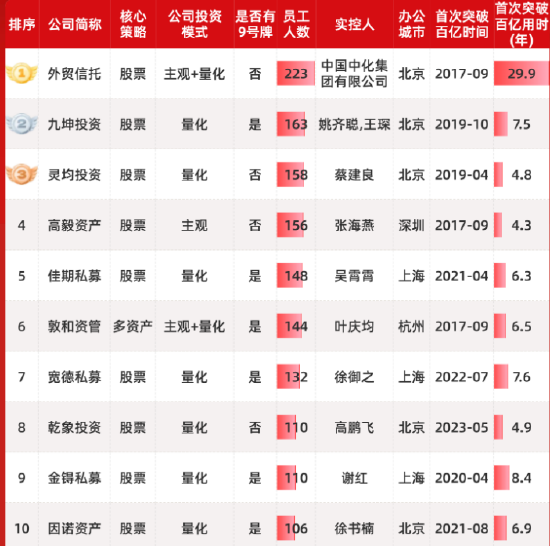
Core Insights - The 2025 annual performance of China's private equity funds with over 10 billion yuan in assets has been officially revealed, showcasing significant market fluctuations and structural differentiation in global asset classes amid a complex external environment [1][13] - The A-share market exhibited a strong upward trend, with the Shanghai Composite Index rising over 18%, the Shenzhen Component Index increasing by more than 29%, and the ChiNext Index surging over 49% [1][13] - The Hong Kong market also performed well, with the Hang Seng Index increasing approximately 28% and the Hang Seng Tech Index rising over 23% [1][13] Group 1: Changes in the Private Equity Landscape - The number of private equity funds with over 10 billion yuan reached 112 in 2025, marking a return to the "double hundred era" [14] - Quantitative private equity funds now dominate the landscape, with 55 funds compared to 45 subjective funds, and 10 funds employing a "subjective + quantitative" strategy [2][14] Group 2: Performance Rankings - In 2025, 57 private equity funds met the ranking criteria, with 22 funds achieving an average return of over ***% [18] - The top 10 funds by average return include Lingjun Investment, Yuanshin Investment, and Fusheng Asset, with 7 being quantitative and 3 subjective [18][19] Group 3: Notable Private Equity Firms - Yuanshin Investment, established in 2014, focuses on long-term value investment based on deep fundamental research, achieving an average return of ***% in 2025 [19][20] - Fusheng Asset, founded in 2015, emphasizes a research-driven approach and has a strong focus on consumer, manufacturing, and internet sectors, with an average return of ***% in 2025 [20] - Ningbo Huansheng Quantitative, a major player in the quantitative investment field, achieved an average return of ***% in 2025, ranking second among quantitative funds [20] Group 4: Employee and Location Insights - Among the 112 private equity funds, 14 have over 100 employees, including prominent firms like Foreign Trade Trust and Jiukun Investment [17] - The majority of these funds are located in Shanghai (53), followed by Beijing (29) and Shenzhen (8) [17]

【财经分析】出口回升但隐忧犹存 印尼锡产业迎来重构窗口期
Xin Hua Cai Jing· 2025-11-15 07:56
Group 1 - The core viewpoint of the article highlights that Indonesia's tin exports are experiencing a recovery due to rising international tin prices and the restoration of domestic production capacity, despite ongoing governance issues that hinder the industry's competitiveness [1][2][4] Group 2 - From January to September, Indonesia exported 37,600 tons of refined tin, reaching 68% of the government's annual export quota, with a 25.8% increase in export value in the third quarter, amounting to $1.16 billion [2] - The international tin price has been driven up by the closure of 1,000 illegal tin mines in Bangka-Belitung province, which raised concerns about global tin supply tightening, leading to a surge in London Metal Exchange (LME) tin prices, with November contracts exceeding $37,000 per ton [2][3] - The recovery of Indonesia's tin exports is supported by the approval of project plans and export licenses for 23 companies, indicating a restoration of order in the industry [3] Group 3 - Governance reforms are identified as a critical variable affecting the long-term competitiveness of Indonesia's tin industry, with a consensus on the need for a unified and transparent tin benchmark price system [4][5] - The Indonesian parliament is accelerating the legislative process for the benchmark price system, aiming to establish a national pricing formula by January 1, 2026, to address issues of price manipulation and resource outflow [4] - PT Timah, as a leading company, is initiating pilot projects for the legalization of artisanal miners and is advocating for the government to expedite the introduction of relevant regulations to enhance the tin industry's compliance and stability [4][5] Group 4 - The political landscape shows a strong stance against illegal mining, with President Prabowo indicating that illegal tin mining and smuggling have caused Indonesia an annual loss of approximately 40 trillion Indonesian rupiah (around $2.4 billion) over the past 20 years [5]