AI就绪

Search documents
阿里云李飞飞:AI原生是数据库演进必然方向,大模型Token调用量激增百倍
Guan Cha Zhe Wang· 2026-02-03 07:16
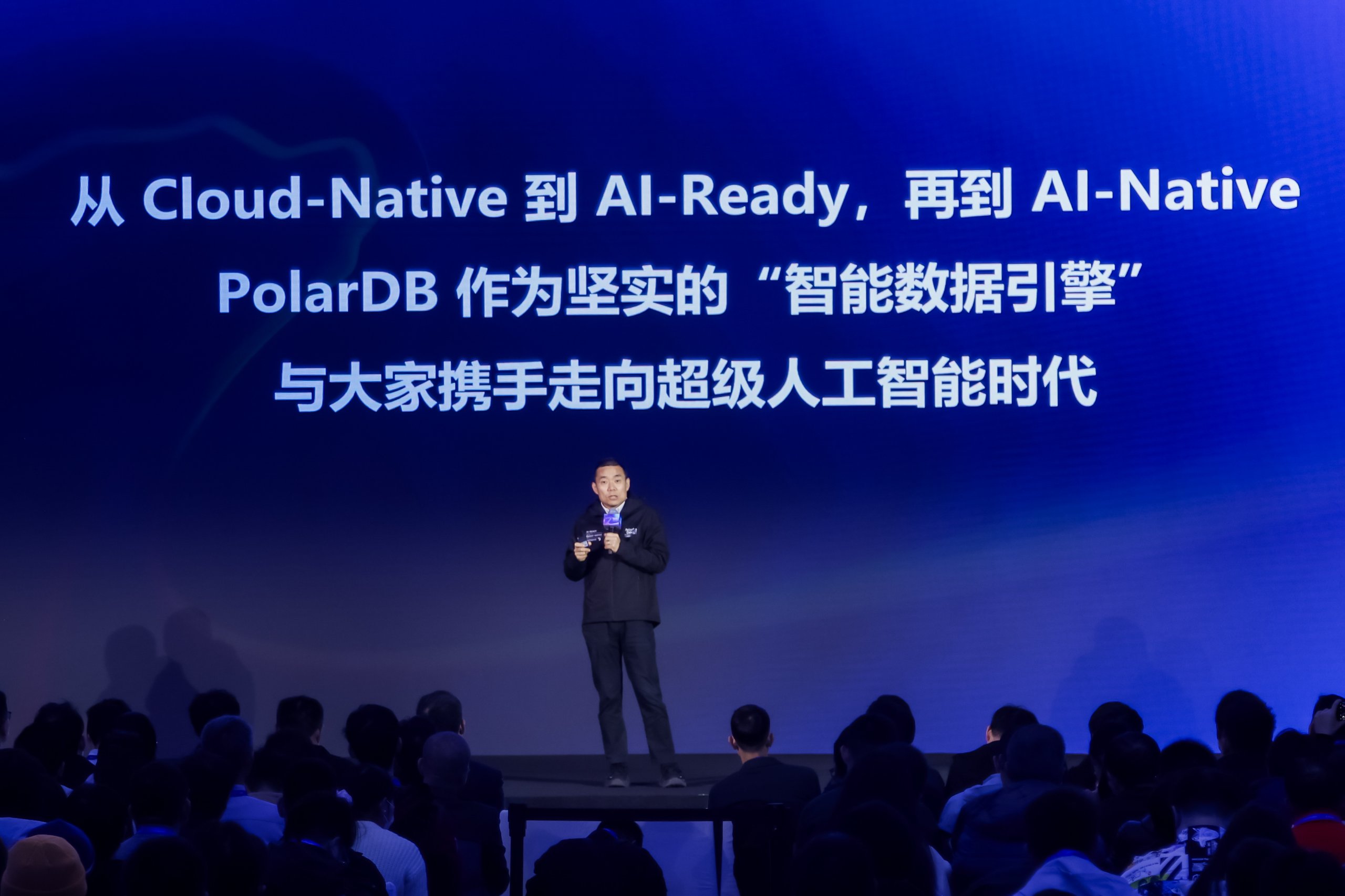
Core Viewpoint - The concept of "AI Native" is evolving, and the focus should be on "AI Ready" as a more practical definition for the current stage of development in databases [1][4][6]. Group 1: Definition and Standards - The definition of "AI Native" is still under development, and there is no unified standard in the database industry [1][5]. - Two key standards for measuring the maturity of AI Native databases are proposed: at least 50% of instances should be used by Agents, and at least 50% of outputs should be measured in Bytes, specifically Tokens [5][6]. Group 2: Current Positioning - Alibaba Cloud's PolarDB is positioned as "AI Ready" rather than "AI Native," emphasizing a gradual upgrade in technology architecture to lay the foundation for becoming AI Native [6][7]. - The company acknowledges the rapid evolution of AI and advocates for a measured approach to adopting AI technologies, avoiding radical overhauls [6][7]. Group 3: Future User Dynamics - Future database users are expected to be primarily Agents rather than programmers, with predictions that 80% to 90% of new databases will be created autonomously by Agents [7]. - The interaction between users and databases will shift towards natural language for users, while Agents will continue to use command lines and scripts [7]. Group 4: Data Management and Cost Considerations - The concept of "hot," "warm," and "cold" data is emphasized, with hot data being critical for real-time transactions that large models cannot process [8]. - Recent increases in memory costs (30% to 40%) are anticipated to continue for 3-5 years due to unprecedented demand driven by AI [8][9]. Group 5: Architectural Changes - PolarDB is adopting a serverless model that allows for minimal computational resources until requests are made, reflecting a shift in database design logic [7][9]. - The architecture is evolving to support cost reduction through techniques like data tiering and resource pooling [9]. Group 6: Future Vision - The future vision includes databases acting as the central hub for actions, with Agents directly issuing commands to databases, transforming them from mere storage to decision-making entities [10]. - The company believes that a steady and pragmatic approach to becoming AI Native is essential for long-term competitiveness in the industry [10].


阿里云重新定义AI时代数据库
Hua Er Jie Jian Wen· 2026-01-21 10:18
Core Viewpoint - Alibaba Cloud's approach to the "AI Native" trend is more pragmatic, focusing on being "AI Ready" rather than rushing to label their products as "AI Native" [3][4]. Group 1: AI Readiness - The concept of "AI Ready" is explained through a "4+1" formula, emphasizing the need for databases to evolve from traditional structured data storage to a more versatile "Lakebase" that can handle various data types [4][5]. - The first step towards "AI Ready" is transforming databases into a "Lakebase" that can store both structured and unstructured data, allowing for better data management [4][8]. - The second key aspect is unified metadata management, which is crucial for handling the diverse and large volumes of data generated in the AI era [8][9]. - The third capability involves multi-modal retrieval and processing, integrating structured, semi-structured, and unstructured data [9][11]. - The fourth aspect includes model operatorization and support for AI agents, enabling real-time data processing and interaction with AI models [11][12]. Group 2: Cost Efficiency - Alibaba Cloud emphasizes cost efficiency through resource pooling, multi-tenancy, and elastic scaling, which are essential in the context of rising hardware prices [13][14]. - The "Serverless" model allows for extreme elasticity, enabling businesses to only pay for resources when needed, thus reducing costs during periods of low demand [15][16]. - The company highlights the importance of scale in achieving cost advantages, as larger operations can better absorb costs and provide savings to customers [36][38]. Group 3: Future of AI Native Databases - The transition from "AI Ready" to "AI Native" is seen as a gradual process, with specific criteria needed to define a database as "AI Native," such as a significant portion of users being AI agents and outputs being predominantly tokens [23][24]. - The future landscape is expected to be dominated by AI agents utilizing databases, with a focus on token-based outputs rather than traditional data formats [24][26]. - The integration of various AI capabilities, including natural language processing and multi-modal interactions, is essential for enhancing user experience and database functionality [20][21]. Group 4: Industry Trends and Challenges - The current trend in the AI landscape is characterized by rapid evolution, making it premature for companies to claim they have achieved "AI Native" status [22][30]. - The ongoing rise in memory and storage prices is expected to be a long-term challenge, impacting the overall cost structure of cloud services [39][40]. - Companies are encouraged to leverage cloud and AI platforms to maximize value, especially during periods of rising costs, as they can provide greater efficiency and scalability compared to traditional self-managed resources [40].