AI管理货物

Search documents
轻舟货运飞船初样船完成多项关键技术验证 中国空间站将迎来“商业化货运”时代
Yang Guang Wang· 2025-12-10 05:07
Core Viewpoint - The "Light Boat" cargo spacecraft developed by the Chinese Academy of Sciences has completed key technology validations and is entering the overall testing phase, marking the beginning of a "commercial cargo" era for the Chinese space station [1] Group 1: Cargo Capabilities - The "Light Boat" can carry 1.8 tons of cargo to the space station, fulfilling its core mission of "delivery to the door" [1] - The spacecraft is designed to collect waste and old equipment from the space station, which will be incinerated upon re-entry into the Earth's atmosphere over the South Pacific [1] Group 2: Cold Chain System - The cargo hold of the "Light Boat" features a modular cold chain system, functioning as a "space refrigerator" with each module having a capacity of 60 liters and a maximum of five modules [2] - The cold chain can maintain temperatures between 0°C and 8°C, suitable for preserving fruits, vegetables, and special biological samples [2] Group 3: Smart Management - The cargo hold is equipped with AI management for efficient inventory control, allowing astronauts to quickly locate needed items through voice interaction [2] - The current transportation cost for the "Light Boat" is approximately 100,000 yuan per kilogram [2]
“太空烧烤”食材如何锁鲜?探秘·轻舟货运飞船用最前沿科技为太空带去人间烟火
Yang Shi Wang· 2025-12-09 05:09
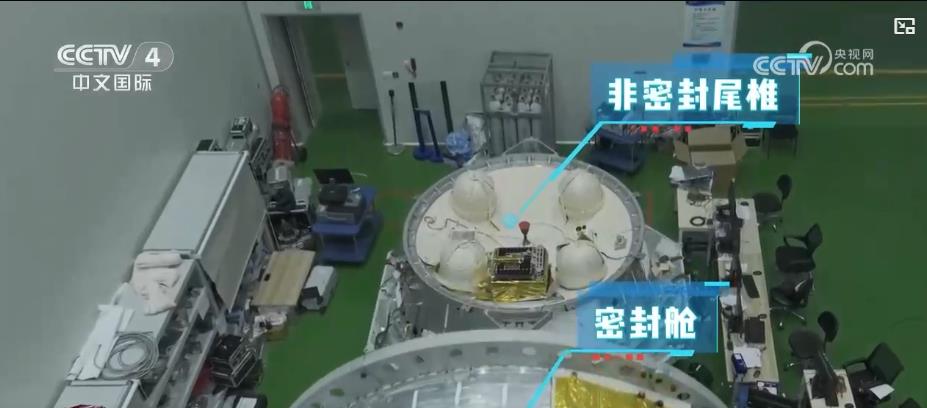
Core Viewpoint - The "Light Boat" cargo spacecraft developed by the Chinese Academy of Sciences has completed key technology validations and has entered the overall testing phase, aiming to undertake low-cost cargo transportation tasks for the Chinese space station [1][3]. Group 1: Technical Specifications - The Light Boat cargo spacecraft consists of a sealed main cabin and an unsealed tail section, resembling a large sealed box with a pickup truck's cargo bed, allowing it to carry precision instruments and necessary supplies [6]. - The spacecraft can carry 1.8 tons of cargo to the space station and is also responsible for collecting waste and old equipment from the station, ensuring no debris is left behind upon re-entry [11]. Group 2: Features and Innovations - The cargo hold of the Light Boat includes a modular cold chain system, functioning like a "space refrigerator," with each module having a capacity of 60 liters, allowing for flexible configurations up to 300 liters total [13]. - The spacecraft is equipped with AI management for cargo, enabling astronauts to quickly locate items through voice interaction, enhancing efficiency and convenience in space living [15]. Group 3: Economic Aspects - The current transportation cost for this "interstellar delivery" service is approximately 100,000 yuan per kilogram, with expectations that costs will decrease with mass production and the involvement of commercial space ventures [17].

中国空间站将迎来“太空快递小哥”:轻舟货运飞船首次亮相 进入整体测试阶段
Yang Shi Wang· 2025-12-09 02:27
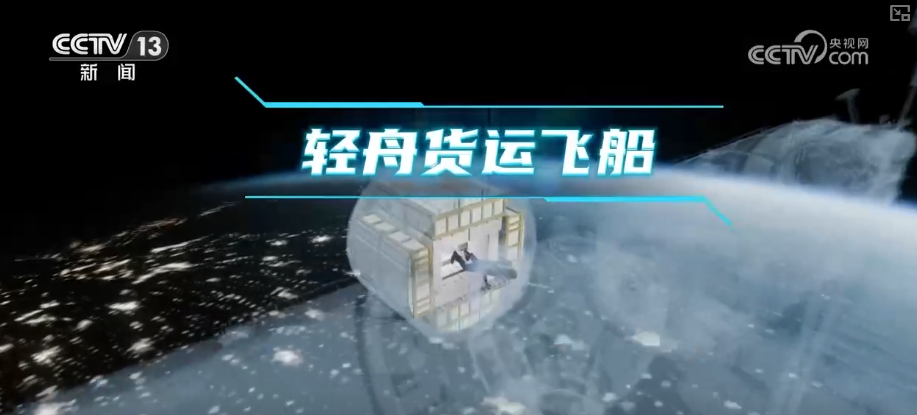
Core Viewpoint - The "Light Boat" cargo spacecraft developed by the Chinese Academy of Sciences has completed key technology validations and has entered the overall testing phase, aiming to undertake low-cost cargo transportation tasks for the Chinese space station [1]. Group 1: Design and Functionality - The "Light Boat" cargo spacecraft consists of a sealed main cabin and an unsealed tail section, resembling a large sealed box with an open cargo area, allowing it to carry precision instruments and supplies [3]. - It can carry 1.8 tons of cargo to the space station and is also responsible for collecting waste and old equipment from the station, ensuring no debris is left behind upon re-entry [5]. Group 2: Advanced Features - The cargo hold includes a configurable cold chain system, functioning as a modular "space refrigerator" with a total capacity of up to 300 liters, allowing precise temperature control between 0-8°C for various items [7]. - The spacecraft is equipped with AI management for cargo, enabling astronauts to quickly locate items through voice interaction, enhancing efficiency in space living [7]. Group 3: Cost and Future Prospects - The current transportation cost for this "interstellar delivery" service is approximately 100,000 yuan per kilogram, with expectations that costs will decrease with mass production and commercial space involvement [9].