AI赋能房地产

Search documents
一房千面 AI让“好房子”长出聪明劲
Chang Jiang Ri Bao· 2025-11-01 00:54
Core Insights - The 2025 Central Urban Work Conference emphasizes the construction of a "modern people-oriented city" characterized by innovation, livability, beauty, resilience, civilization, and intelligence [1] - The 2025 International (Wuhan) Smart Construction Industry Expo highlighted the transformative role of AI in redefining "good houses," from autonomous design to smart community operations [1] Group 1: AI in Home Design - Traditional home decoration often suffers from information gaps between homeowners and designers, but AI home decoration platforms are revolutionizing this process by generating multiple design options based on user-uploaded floor plans [3] - AI design systems can create elderly-friendly housing plans in as little as 30 minutes, and some systems utilize a library of 30 million design options to convert vague requirements into precise design parameters, achieving near-zero error rates [3] - The integration of AI not only breaks traditional design paradigms but also optimizes performance through real-time energy consumption simulations and structural safety calculations, enhancing both aesthetics and functionality [3][5] Group 2: AI in Community Management - AI-driven smart community scenarios, such as those developed by Hubei Lian Investment, showcase features like automatic climate control, security alerts, and emergency response systems, demonstrating a seamless integration of indoor and outdoor environments [4] - The AI-enabled community services include health monitoring and remote medical care, shifting from passive responses to proactive care for residents [4][5] - AI inspection systems achieve over 90% accuracy in detecting issues like wall cracks and equipment anomalies, while energy management systems dynamically adjust based on resident behavior to enhance energy efficiency [4][5] Group 3: AI in Construction Management - Robots equipped with 3D scanning technology are being used for precise measurements and quality control in construction projects, with data being uploaded in real-time for analysis [6] - The use of AI in construction is seen as a dual benefit of technological inclusivity and industry upgrade, allowing ordinary individuals to engage in design processes and enhancing service quality through predictive capabilities [6] - The future of AI in real estate is expected to focus on precise matching of people, homes, and services, driven by digital tools that respond to housing needs throughout the entire lifecycle [6]


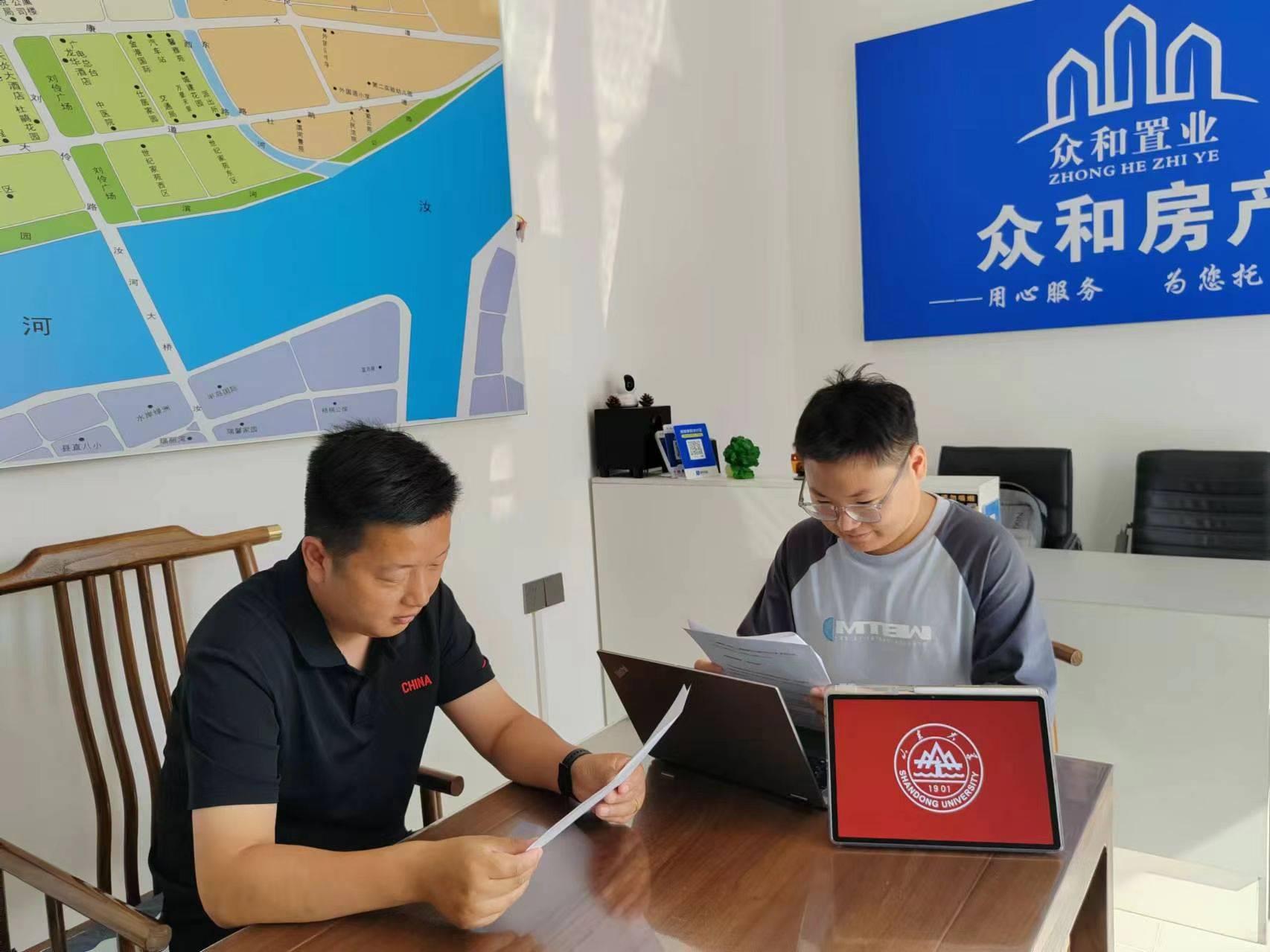
AI智慧兴营盘,数据动能盛地产——智策方舟实践团探访洛阳众和,共绘AI赋能地产新图景
Sou Hu Cai Jing· 2025-07-22 02:59
Core Insights - The article highlights the challenges faced by local real estate companies, particularly in third and fourth-tier cities, and emphasizes the need for localized AI systems to address these issues [1][2]. Group 1: Regional Challenges - The company, Luoyang Zhonghe, has been operating locally for eight years and reflects common issues in regional real estate, such as sales risks and local challenges [2]. - The company primarily engages in new housing agency and second-hand housing transactions, facing significant sales risks, as evidenced by a funding chain crisis in 2021 [2]. - The phenomenon of "phantom school districts" is prevalent, where delayed school deliveries inflate housing prices, while the decline in demand for older city areas exacerbates the situation [2]. Group 2: AI Solutions - The "Zhice Fangzhou" system offers targeted solutions for Luoyang Zhonghe, including a risk control model that identifies potential crises through monitoring financial health and land finance [3]. - The system incorporates local government text analysis and public sentiment tracking to address local decision-making challenges, quantifying issues like "school district premium bubbles" [3]. - Marketing efficiency is enhanced by leveraging data on potential buyers, such as teachers and civil servants, to improve customer acquisition [3]. Group 3: Innovative Collaboration - A performance-based payment model is proposed, where service fees are contingent on the accuracy of property price recommendations and successful risk warnings [4]. - This model links AI value directly to business outcomes, fostering trust and encouraging deeper participation in system trials [4]. Group 4: Industry Trends - There is a consensus that AI will eliminate information barriers and push for service upgrades in the real estate sector [5]. - The industry is expected to undergo significant restructuring, with smaller developers lacking AI risk control capabilities likely to exit the market first [5]. - The future winners in regional markets will be those real estate companies that rapidly adopt AI technologies [5]. Group 5: Empirical Value of AI - The regional implementation of the Zhice Fangzhou system is based on three core values: deep understanding of local issues, sensitivity to policy changes, and a quantifiable effectiveness mechanism [9]. - The research provides critical empirical evidence for AI empowerment in regional economies and sets a benchmark for intelligent transformation in similar markets [9].