AI超级计算平台

Search documents
混合计算成为常态,这个平台急需建设
Zhong Jin Zai Xian· 2025-10-24 06:21
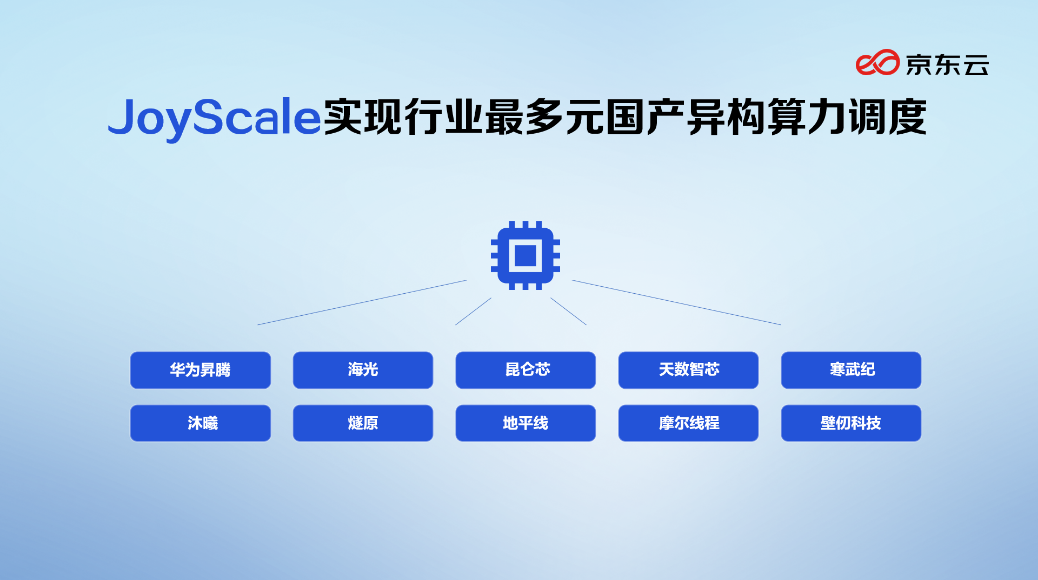
Core Insights - Gartner identifies AI supercomputing platforms as the top strategic technology trend for 2026, integrating various computing paradigms to manage complex workloads [1] - By 2028, over 40% of leading enterprises are expected to adopt hybrid computing paradigms, a significant increase from the current 8% [1] - The shift towards hybrid computing is driven by the need to mitigate risks associated with reliance on single types of chips, making it a necessity for AI strategies [1] Industry Challenges - The transition in computing architecture is necessary as AI's role grows, requiring a shift from CPU-centric to GPU-centric infrastructures [2] - Utilization rates of computing resources in unoptimized hybrid environments are generally below 40%, leading to inefficiencies [2] - The complexity of hybrid architectures increases exponentially from experimental to production systems, often exceeding the capabilities of most technical teams [2] Company Solutions - JoyScale AI computing platform aims to address the challenges of hybrid computing by providing a comprehensive service model rather than merely aggregating resources [3] - JoyScale enhances AI task deployment density and overall resource utilization by 70% through intelligent scheduling and compatibility with various domestic computing resources [5] - The platform is designed to meet stringent security and compliance requirements, ensuring data safety and performance stability [6] Market Adoption - As AI applications mature, competition in computing infrastructure is shifting from scale to systematic competition, with a focus on resource utilization and cost [7] - JoyScale has been adopted by numerous leading state-owned enterprises, demonstrating its effectiveness in pooling dispersed GPU resources and significantly improving utilization rates [7] - The platform supports a comprehensive product matrix for large model deployment, facilitating rapid implementation of AI applications in complex scenarios [7]


Gartner《2026年重点关注的十大战略技术趋势》(下载)
欧米伽未来研究所2025· 2025-10-21 09:14
Core Viewpoint - The article emphasizes that 2026 will be a pivotal year for technology leaders, with unprecedented speed in transformation, innovation, and risk driven by artificial intelligence (AI) and a highly interconnected world [2]. Group 1: AI Supercomputing Platforms - AI supercomputing platforms integrate various computing paradigms to manage complex workloads, enhancing performance and innovation potential [5]. - By 2028, over 40% of leading companies will adopt hybrid computing architectures for critical business processes, a significant increase from the current 8% [6]. - The technology is already driving innovation across industries, significantly reducing drug modeling time in biotech and lowering portfolio risks in financial services [7]. Group 2: Multi-Agent Systems - Multi-agent systems consist of multiple AI agents that interact to achieve complex individual or collective goals, enhancing automation and collaboration [9]. - These systems allow for modular design, improving efficiency and adaptability in business processes [9]. Group 3: Domain-Specific Language Models (DSLM) - DSLMs are trained on specialized datasets for specific industries, providing higher accuracy and compliance compared to generic large language models (LLMs) [11]. - By 2028, over half of generative AI models used by enterprises will be domain-specific [12]. - Context is crucial for the success of AI agents based on DSLMs, enabling them to make informed decisions even in unfamiliar scenarios [13]. Group 4: AI Security Platforms - AI security platforms provide unified protection mechanisms for third-party and custom AI applications, helping organizations monitor AI activities and enforce usage policies [13]. - By 2028, over 50% of enterprises will utilize AI security platforms to safeguard their AI investments [15]. Group 5: AI-Native Development Platforms - AI-native development platforms enable rapid software development, allowing non-technical experts to create applications with AI assistance [17]. - By 2030, 80% of enterprises will transform large software engineering teams into smaller, more agile teams empowered by AI [17]. Group 6: Confidential Computing - Confidential computing reshapes how enterprises handle sensitive data by isolating workloads in trusted execution environments [18]. - By 2029, over 75% of business workloads processed in untrusted environments will be secured through confidential computing [18]. Group 7: Physical AI - Physical AI empowers machines and devices with perception, decision-making, and action capabilities, providing significant benefits in automation and safety-critical industries [19]. Group 8: Proactive Cybersecurity - Proactive cybersecurity is becoming a trend as organizations face increasing threats, with predictions that by 2030, proactive defense solutions will account for half of enterprise security spending [23]. Group 9: Geopolitical Data Migration - Geopolitical risks are prompting companies to migrate data and applications to sovereign or regional cloud services, enhancing control over data residency and compliance [26]. - By 2030, over 75% of enterprises in Europe and the Middle East will migrate virtual workloads to solutions that mitigate geopolitical risks, up from less than 5% in 2025 [26].