
混合计算

Search documents
摩尔线程,走英伟达的路,也走自己的路
Tai Mei Ti A P P· 2025-12-22 01:37
Core Insights - The core message of the news is that Moore Threads is evolving from a GPU manufacturer to a comprehensive computing infrastructure company, similar to Nvidia, but tailored to address the unique challenges of the Chinese market [2][3]. Group 1: Product Development and Strategy - Moore Threads introduced its full-featured GPU architecture "Huagang" and the MUSA (Meta-computing Unified System Architecture) at the MDC 2025, emphasizing a shift towards a more integrated approach to computing [2][5]. - The company aims to support a wide range of applications, including graphics, AI, HPC, and video processing, through its full-featured GPU, which is designed to handle mixed computing tasks rather than focusing solely on AI [2][5][6]. - The MUSA architecture encompasses a complete technology stack, from chip architecture to software frameworks, allowing for versatile applications across different industries [7][8][10]. Group 2: Technical Innovations - The full-featured GPU integrates multiple computing engines, including AI computation, 3D graphics rendering, high-performance computing, and intelligent video encoding, to meet diverse computational needs [6][7]. - The latest MUSA upgrade to version 5.0 enhances compatibility with various programming languages and significantly improves performance metrics, such as achieving over 98% efficiency in core computation libraries [10][11]. - The "Huagang" architecture boasts a 50% increase in computing density and substantial improvements in energy efficiency, supporting a wide range of precision from FP4 to FP64 [12][14]. Group 3: Market Position and Future Outlook - Moore Threads is positioning itself as a key player in the domestic GPU market, leveraging its unique methodologies to tackle challenges such as supply chain uncertainties and technological barriers [3][5]. - The company is set to release two new chips, "Huashan" for AI training and "Lushan" for high-performance graphics rendering, which are expected to significantly enhance capabilities in their respective fields [14][15]. - The launch of the "Kua'a" supercomputing cluster marks a significant milestone, achieving floating-point performance of 10 Exa-Flops and demonstrating high efficiency in AI training and inference tasks [15][16].

混合计算成为常态,这个平台急需建设
Zhong Jin Zai Xian· 2025-10-24 06:21
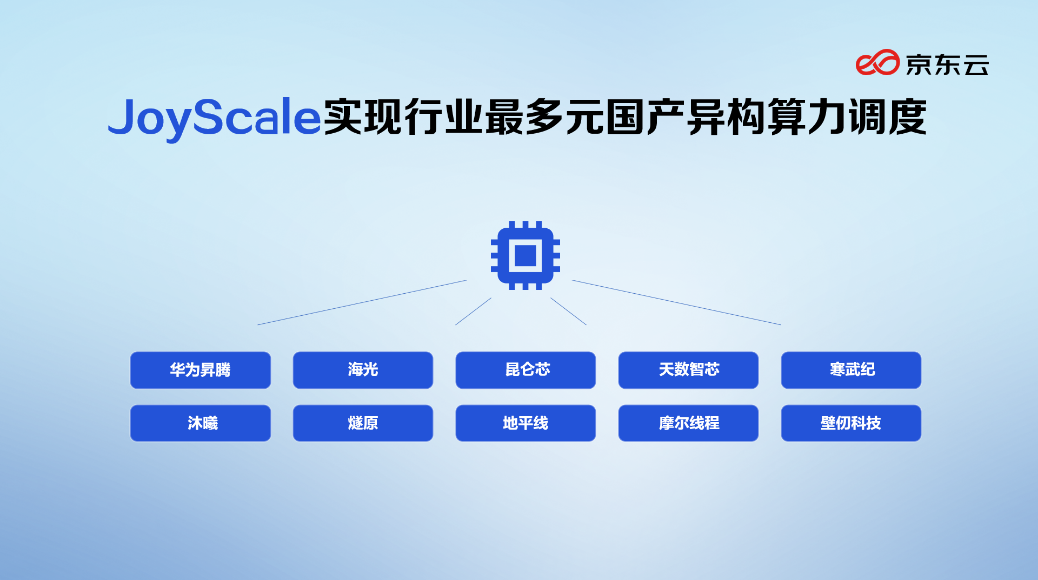
Core Insights - Gartner identifies AI supercomputing platforms as the top strategic technology trend for 2026, integrating various computing paradigms to manage complex workloads [1] - By 2028, over 40% of leading enterprises are expected to adopt hybrid computing paradigms, a significant increase from the current 8% [1] - The shift towards hybrid computing is driven by the need to mitigate risks associated with reliance on single types of chips, making it a necessity for AI strategies [1] Industry Challenges - The transition in computing architecture is necessary as AI's role grows, requiring a shift from CPU-centric to GPU-centric infrastructures [2] - Utilization rates of computing resources in unoptimized hybrid environments are generally below 40%, leading to inefficiencies [2] - The complexity of hybrid architectures increases exponentially from experimental to production systems, often exceeding the capabilities of most technical teams [2] Company Solutions - JoyScale AI computing platform aims to address the challenges of hybrid computing by providing a comprehensive service model rather than merely aggregating resources [3] - JoyScale enhances AI task deployment density and overall resource utilization by 70% through intelligent scheduling and compatibility with various domestic computing resources [5] - The platform is designed to meet stringent security and compliance requirements, ensuring data safety and performance stability [6] Market Adoption - As AI applications mature, competition in computing infrastructure is shifting from scale to systematic competition, with a focus on resource utilization and cost [7] - JoyScale has been adopted by numerous leading state-owned enterprises, demonstrating its effectiveness in pooling dispersed GPU resources and significantly improving utilization rates [7] - The platform supports a comprehensive product matrix for large model deployment, facilitating rapid implementation of AI applications in complex scenarios [7]

Synaptics (SYNA) Conference Transcript
2025-08-11 18:02
Synaptics (SYNA) Conference Summary Company Overview - **Company**: Synaptics - **Industry**: Semiconductor, specifically focusing on Internet of Things (IoT) and Edge AI technologies - **Key Personnel**: Rahul Patel (CEO), Ken Rizvi (CFO) Core Industry Insights - **Core IoT Focus**: Synaptics is positioning itself as a significant player in the core IoT space, leveraging its 40 years of experience and successful reinventions in the semiconductor industry [4][5] - **Wireless Connectivity**: The company has a strong wireless connectivity portfolio through licensing arrangements with Broadcom, focusing on high-performance, low-power solutions essential for core IoT applications [7] - **Edge AI Integration**: Synaptics is embedding edge AI capabilities into its processors, developed in collaboration with Google Research, which enhances the performance and efficiency of AI models on its platform [11][12] Financial Performance - **Growth Metrics**: - Overall business growth of 12% year-over-year for fiscal year 2025, with core IoT business growing over 50% year-over-year [18][19] - Earnings per share (EPS) grew by 61% in the same period, indicating strong profitability alongside revenue growth [24] - **Market Dynamics**: Channel inventories have returned to pre-COVID levels, suggesting a healthy demand environment moving forward [20][21] Product Development and Market Applications - **Processor Innovations**: The Astra processor is gaining traction in various applications, including video processing and audio systems, with significant design wins expected to drive future growth [13][14] - **Market Opportunities**: Anticipated growth in the PC market due to a refresh cycle, with approximately 400 million PCs needing upgrades, which could benefit Synaptics' market share [29][32] Competitive Landscape - **Differentiation from Competitors**: Synaptics does not compete directly with larger companies like Qualcomm and MediaTek, focusing instead on a different class of products that cater to edge applications, where 90% of applications could benefit from Synaptics' offerings [16] Strategic Direction - **M&A Philosophy**: The company is open to strategic acquisitions that can accelerate growth in core IoT, aiming to build comprehensive solutions rather than just selling individual components [35][38] - **Long-term Margin Goals**: Synaptics aims to maintain a long-term gross margin target of 57%, driven by product mix and the introduction of integrated solutions [39][40] Additional Considerations - **Automotive and Enterprise Markets**: The automotive market remains sluggish, while the enterprise market is recovering, with potential cyclical benefits from a PC refresh cycle and return-to-office trends [28][30] - **Foldable Technology Potential**: The anticipated launch of foldable smartphones could create new opportunities for Synaptics in the mobile touch market, potentially translating to significant unit sales [33] This summary encapsulates the key points discussed during the Synaptics conference, highlighting the company's strategic focus, financial performance, product innovations, and market dynamics.
