AI边界与治理

Search documents
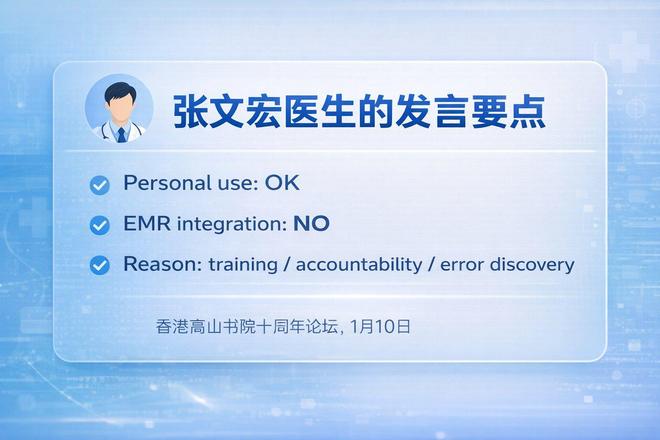
张文宏医生拒绝把AI接入病历系统:他真正担心的是什么?
Tai Mei Ti A P P· 2026-01-14 08:08
Core Viewpoint - The integration of AI into the medical system should be approached with caution, emphasizing the importance of human oversight and responsibility in decision-making processes [1][4][10] Group 1: AI in Medical Training - Concerns exist regarding AI altering the training pathways for doctors, potentially leading to a decline in critical thinking and understanding among new practitioners [2][3] - Senior doctors can use AI as a pre-screening tool, but they must possess the ability to identify errors and articulate reasons for their decisions, unlike less experienced doctors who may rely too heavily on AI-generated answers [2][3] Group 2: Governance and Responsibility - The discussion highlights the need for clear boundaries regarding AI's role in medical decision-making, ensuring that human accountability is maintained [4][5] - Key governance issues include defining which tasks require human judgment, establishing error detection mechanisms, and ensuring accountability in AI-assisted processes [4][5][7] Group 3: Risk Management - Effective risk management in AI deployment involves creating structured processes that incorporate oversight, transparency, and accountability [5][6] - The default assumption about AI's correctness can lead to diminished critical thinking and training among professionals, necessitating a focus on human reasoning and verification [7][9] Group 4: Training and Development - AI should be utilized as a training tool rather than a replacement for human judgment, promoting a culture of critical evaluation and reasoning [9][10] - The approach of having AI serve as a first reader rather than the final arbiter can enhance the training process, ensuring that professionals maintain their analytical skills [9][10]