AI - powered Robotics

Search documents
Serve Robotics Named to Fast Company's Next Big Things in Tech List
Globenewswire· 2025-10-14 20:29
Core Insights - Serve Robotics Inc. has been recognized in Fast Company's "Next Big Things in Tech" list, achieving the top position in the Robotics and Automation category, highlighting its significant impact on last-mile logistics through AI-powered delivery solutions [1][4]. Group 1: Product Innovation - The third-generation autonomous sidewalk delivery robot operates nearly twice as fast, travels double the distance, runs six additional hours per day, and carries larger cargo loads compared to previous models [2]. - Enhanced safety features include fail-safe mechanical brakes, autonomous collision avoidance, and an emergency braking system that stops 40% faster [2]. Group 2: Deployment and Growth - Since starting production in October 2024, Serve has deployed 1,000 Gen3 robots across major U.S. cities, including Los Angeles, Chicago, Dallas, Atlanta, and Miami, with a goal of reaching 2,000 robots by the end of 2025 [3]. - Serve's growth is supported by strategic partnerships with leading delivery platforms, including a new collaboration with DoorDash to integrate its robots into DoorDash's food delivery ecosystem, starting in Los Angeles [4]. Group 3: Company Background - Serve Robotics develops advanced, AI-powered, low-emissions sidewalk delivery robots aimed at making delivery sustainable and economical, having spun off from Uber in 2021 [6]. - The company has completed tens of thousands of deliveries for enterprise partners such as Uber Eats and 7-Eleven, and has scalable multi-year contracts, including an agreement to deploy up to 2,000 delivery robots across multiple U.S. markets [6].



After Losing More Than $1 Trillion in Market Cap Earlier This Year, Nvidia Has Reclaimed Its Position as the World's Most Valuable Company. Here's Why I Think It's Headed Even Higher.
The Motley Fool· 2025-07-17 08:55
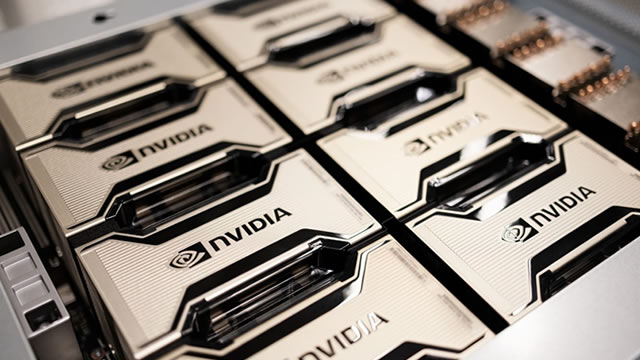
Core Viewpoint - Nvidia experienced a significant market value decline earlier in 2025, dropping to approximately $2.3 trillion, a 37% decrease from its peak, but has since rebounded to over $4 trillion following a strong earnings report in May [1][4]. Group 1: Factors Influencing Market Performance - The emergence of a Chinese start-up, DeepSeek, raised concerns among investors about the necessity of Nvidia's high-priced chipsets for AI infrastructure [2]. - New U.S. tariff policies and rising competition from Advanced Micro Devices, along with investments in custom silicon by major cloud providers, contributed to fears regarding Nvidia's growth prospects [3]. Group 2: Valuation Trends - Nvidia's current price-to-sales (P/S) and forward price-to-earnings (P/E) ratios are significantly lower than the highs seen during the AI revolution, indicating potential for future growth despite current multiples being down [5][7][8]. Group 3: Growth Catalysts - Nvidia's growth has primarily stemmed from its data center operations, but there are additional opportunities in sectors like autonomous driving, where it generated $567 million in sales from automotive services, reflecting a 72% year-over-year growth [9][10]. - The company is also involved in AI-powered robotics and quantum computing, with investments in companies like Figure AI and the development of the CUDA-Q platform for quantum applications [12][13]. Group 4: Investment Outlook - The technologies of autonomous driving, robotics, and quantum computing are still in nascent stages, presenting significant disruption potential across various industries, positioning Nvidia favorably to capitalize on these trends [15]. - Despite concerns about maturing operations and growth acceleration, the company's resilience and numerous growth opportunities suggest a positive long-term outlook for Nvidia stock [16][17].