Agentic Science

Search documents
AI4S又一瓶颈被攻克:两个AI「吵架」,让科研代码部署成功率突破95%
3 6 Ke· 2026-01-13 10:21
Core Insights - The article discusses the challenges in deploying scientific software, highlighting that most tools remain in a state of "published" rather than "executable" [3][10] - The emergence of AI for Science (AI4S) amplifies the need for tools that can interact closely with real scientific applications, making the ability to run tools a fundamental issue [7][23] Group 1: Current State of Scientific Software - There is an unprecedented accumulation of open-source software tools in scientific computing across various disciplines [1][2] - Most scientific software requires significant time and expertise to compile and run, leading to inefficiencies and a lack of reproducibility [4][5] - The deployment bottleneck limits the usability of scientific software despite advancements in containerization, cloud computing, and high-performance computing (HPC) [6] Group 2: The Role of Deploy-Master - Deploy-Master is introduced as a solution to streamline the deployment process, focusing on a continuous workflow from discovery to execution [11] - The tool aims to create a shared infrastructure that systematically transforms scientific tools into executable facts [10][21] - It employs a multi-stage funnel process to filter and validate scientific tools, significantly reducing the number of candidates from 500,000 to 52,550 [13] Group 3: Building and Validating Tools - The Build Agent uses a dual-model debate mechanism to generate and validate build specifications, improving success rates to over 95% [16] - The deployment process reveals a long-tail distribution in build times, with most tools completing in around 7 minutes, but some requiring significantly longer due to complexity [18] - The analysis of failed builds indicates that issues are concentrated in a few categories, primarily related to build process errors and missing dependencies [19] Group 4: Observability and Future Implications - The unified execution infrastructure allows for systematic observation of deployment behaviors, identifying failure points and assumptions [20] - The successful deployment of thousands of validated tools provides a foundation for community agents to share executable capabilities, enhancing collaboration [21][22] - The methodology established by Deploy-Master can be applied beyond scientific computing to other software ecosystems, emphasizing the importance of execution-centric design [23]

AI4S又一瓶颈被攻克:两个AI「吵架」,让科研代码部署成功率突破95%
量子位· 2026-01-13 09:50
Core Insights - The article discusses the challenges in deploying scientific software, emphasizing that most tools are published but not executable, which limits reproducibility and integration in scientific research [3][6][11] - The emergence of AI for Science (AI4S) highlights the need for tools that can interact seamlessly with AI systems, making the ability to run these tools a fundamental issue [8][9][10] - Deploy-Master is introduced as a solution to streamline the deployment process, focusing on creating a shared infrastructure that ensures tools are executable [12][35][37] Group 1: Challenges in Scientific Software - Scientific software often requires extensive manual effort to compile and run, leading to inefficiencies and reliance on individual expertise [4][5] - The deployment bottleneck persists despite advancements in containerization and cloud computing, affecting the usability of scientific software [7] - The lack of a systematic approach to convert tools into executable formats is identified as a structural barrier to the scalability of AI4S and Agentic Science [11][35] Group 2: Deploy-Master Overview - Deploy-Master is designed as a one-stop automated workflow centered on execution, addressing the entire deployment chain from discovery to execution [12] - The tool employs a multi-stage funnel process to filter and validate scientific tools, reducing an initial pool of 500,000 repositories to 52,550 candidates for automated deployment [15] - A dual model review mechanism is implemented to enhance the success rate of building specifications, achieving over 95% success in generating executable tools [22] Group 3: Deployment Insights - The deployment process is characterized by a long-tail distribution of build times, with most tools completing in around 7 minutes, but some requiring significantly longer due to complexity [25][26] - A diverse language distribution is observed among successfully deployed tools, with Python being the most prevalent, followed by C/C++, R, and Java [27][28] - Failure rates in builds are concentrated in specific areas, primarily due to inconsistencies in build processes and missing dependencies [31][32] Group 4: Future Implications - Deploy-Master's success in creating a large collection of executable tools provides a foundation for community agents and various master agents to operate effectively [35][36] - The methodology established by Deploy-Master can be applied beyond scientific computing to other software ecosystems, emphasizing the importance of a robust execution infrastructure [37]

这脑洞神了,两AI“互喷”,竟治好祖传科研软件95%老毛病?
3 6 Ke· 2026-01-09 12:22
Core Insights - The article discusses the challenges in deploying scientific software tools, emphasizing that many open-source tools are not readily executable, leading to inefficiencies in research practices [2][6][24] - Deploy-Master is introduced as a solution to automate the deployment process, enabling the execution of over 50,000 scientific tools and addressing the deployment bottleneck in AI for Science (AI4S) and Agentic Science [1][8][21] Group 1: Challenges in Scientific Software Deployment - The scientific computing field has seen an unprecedented accumulation of open-source software tools, yet most remain in a state of "published" rather than "executable" [2] - Researchers often spend days or weeks resolving issues related to compilation failures, dependency conflicts, and system incompatibilities, which hampers reproducibility and large-scale evaluation [2][6] - The deployment bottleneck persists despite advancements in containerization, cloud computing, and high-performance computing (HPC) platforms, limiting the usability of scientific software [2][7] Group 2: The Role of AI in Scientific Tools - The emergence of AI for Science (AI4S) has intensified the need for scientific tools to interact closely with AI systems, requiring them to execute simulations, run analysis pipelines, and process real data [3][4] - The ability of tools to be executed has become a fundamental issue, impacting the planning and execution capabilities of intelligent agents in scientific research [5][6] Group 3: Deploy-Master Overview - Deploy-Master is designed as a one-stop automated workflow centered on execution, addressing the entire deployment chain from tool discovery to execution [10][21] - The tool employs a multi-stage funnel process to filter and validate scientific tools, ultimately narrowing down from approximately 500,000 repositories to 52,550 candidates for automated deployment [12] Group 4: Building and Validating Tools - The Build Agent within Deploy-Master utilizes a dual-model debate mechanism to generate and validate build specifications, significantly increasing the success rate of deployments to over 95% [15] - The deployment process reveals a long-tail distribution in build times, with most tools completing in around 7 minutes, while some require significantly longer due to complex dependencies [17] Group 5: Observability and Continuous Improvement - Deploy-Master aims to transform the deployment of scientific software from an experiential judgment into a quantifiable and analyzable engineering object [20] - The system allows for systematic observation of deployment behaviors, identifying failure points and underlying assumptions that can be improved over time [18][19] Group 6: Implications for the Broader Software Ecosystem - The methodology developed through Deploy-Master is not limited to scientific computing but can be applied to various software tool ecosystems, including engineering tools and data processing systems [23][25] - The article concludes that establishing an execution-centered infrastructure is crucial for overcoming deployment challenges across different software domains [24][26]
让两个大模型「在线吵架」,他们跑通了全网95%科研代码|深势发布Deploy-Master
机器之心· 2026-01-09 06:16
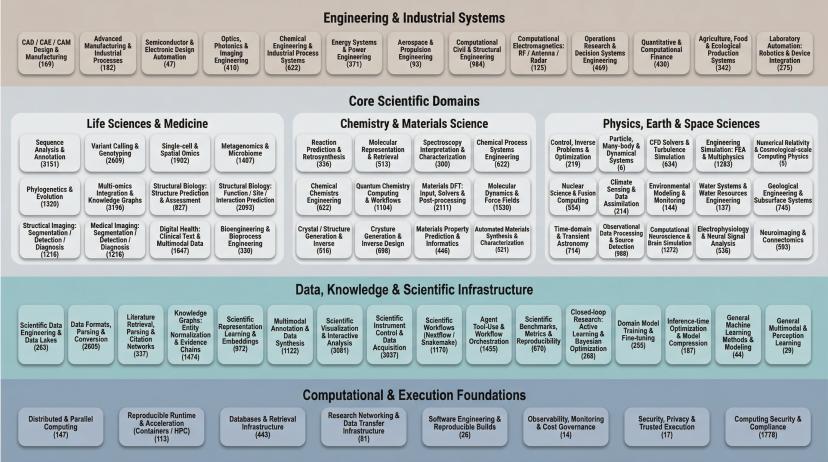
Core Insights - The article discusses the challenges in deploying scientific software, emphasizing that most tools are published but not executable, leading to inefficiencies in research practices [3][5][21] - It introduces Deploy-Master as a solution to create a shared infrastructure that transforms scientific tools into executable entities, addressing the deployment bottleneck in AI for Science (AI4S) and Agentic Science [5][19][20] Group 1: Challenges in Scientific Software Deployment - A significant issue is that scientific software often requires extensive time to resolve compilation failures and dependency conflicts, resulting in a lack of reproducibility and integration [3][4] - The emergence of AI4S has intensified the need for tools that can interact seamlessly with scientific processes, making the ability to execute tools a fundamental concern [3][5] - The deployment process is not isolated but part of a continuous chain that includes discovery, understanding, environment construction, and execution [5][19] Group 2: Deploy-Master Overview - Deploy-Master is designed to automate the deployment workflow, focusing on execution readiness and addressing the challenges of discovering and verifying scientific tools [5][19] - The initial phase involved searching through 91 scientific and engineering domains, resulting in a refined list of 52,550 candidates for automated deployment from an initial pool of 500,000 repositories [8][9] - A dual-model debate mechanism was implemented to enhance the success rate of building specifications, increasing it to over 95% by iteratively refining the proposed build plans [12][13] Group 3: Deployment Insights and Observations - The deployment process exhibits a long-tail distribution in build times, with most tools completing in around 7 minutes, while some require significantly longer due to complex dependencies [15] - A diverse language distribution was observed among the successfully deployed tools, with Python being the most prevalent, followed by C/C++, R, and Java [16] - The primary reasons for build failures were identified as inconsistencies in the build process, missing dependencies, and mismatched compilers or system libraries, highlighting the need for improved deployment strategies [16][17] Group 4: Implications for the Future - Deploy-Master provides a foundational infrastructure for community agents, enabling them to share verified tools and ensuring a stable action space for planning and execution [19][20] - The methodology established through Deploy-Master can be applied to broader software ecosystems, indicating that deployment challenges are not limited to scientific tools but are prevalent across various software types [20] - The article concludes that in the era of Agentic Science, execution is a prerequisite for all capabilities, and establishing a robust execution infrastructure is essential for future advancements [20][21]