Bank Consolidation

Search documents
Mayo Says This Is a 'New Era for Bank Consolidation' (Correction)
Bloomberg Television· 2026-02-06 21:02
What is the biggest driver. Because that need to consolidate has been around. Is it just that the regulation is letting the banks do this now.>> Well, scale has never been more important. And to put things in context, the bank that just sold, it takes them, it would have taken them a decade and a half of spending to equal what JP Morgan's going to be spending just on technology this year. So, it's never been more competitive.But also, the regulatory environment, it suppressed the level of bank mergers. I th ...


Mayo Says This Is a 'New Era for Bank Consolidation'
Bloomberg Television· 2026-02-04 15:39
What is the biggest driver. Because that need to consolidate has been around. Is it just that the regulation is letting the banks do this now.Well, scale has never been more important. And to put things in context, the bank that just sold, it takes them it would have taken them a decade and a half of spending to equal what JPMorgan's going to be spending just on technology this year. So it's never been more competitive.But, also, the regulatory environment, it suppressed the level of bank mergers. I think t ...

PSB consolidation to gain momentum in 2026 as govt eyes big, world-class banks
BusinessLine· 2025-12-26 06:08
Consolidation in Public Sector Banks - The government aims to accelerate consolidation in public sector banks to create larger, world-class banks by 2047, as stated by Finance Minister Nirmala Sitharaman [1][2] - Currently, there are 12 public sector banks, with only the State Bank of India (SBI) ranked among the global top 50 banks by assets, positioned at 43rd [2] Historical Context of Consolidation - The government has previously conducted two rounds of consolidation, reducing the number of public sector banks from 27 in 2017 to 12 in 2019 through major mergers [3][4] - Notable mergers include the consolidation of United Bank of India and Oriental Bank of Commerce with Punjab National Bank, and others involving Syndicate Bank, Allahabad Bank, and Andhra Bank [4][5] Financial Performance of Public Sector Banks - In the first half of FY25-26, the 12 public sector banks reported a net profit of ₹93,675 crore, a 10% increase from ₹85,520 crore in the same period of the previous fiscal year [7] - The net profit for public sector banks is projected to exceed ₹2 lakh crore by the end of FY26, following a record profit of ₹1.78 lakh crore in the previous financial year, which was a 26% increase from ₹1.41 lakh crore in FY24 [8] Foreign Investment Trends - The private sector banking space has seen significant foreign capital inflow, exemplified by Sumitomo Mitsui Banking Corporation acquiring a 20% stake in Yes Bank for ₹13,483 crore [9] - Emirates NBD Bank also announced plans to acquire a 60% stake in RBL Bank for ₹26,853 crore, indicating the attractiveness of India's financial institutions to foreign investors [10] Regulatory Developments in the Insurance Sector - The passage of the Sabka Bima Sabki Raksha Bill allows for 100% foreign direct investment in the insurance sector, which is expected to attract new capital and enhance competition [11][12] - The removal of the 18% GST rate on individual policy premiums has improved affordability and access to insurance products [12][13]

X @Bloomberg
Bloomberg· 2025-12-09 10:26
The EU's financial services commissioner says Europe should "get out of the way" of bank consolidation, telling @ocrook a pan-European bank would allow the bloc to compete on the global stage https://t.co/lgpO134qxm https://t.co/bFCO0CWg8M ...
More Indian lenders to appear in top 100 global banks list soon: RBI Guv Sanjay Malhotra
The Economic Times· 2025-11-20 14:30
Core Viewpoint - The Reserve Bank of India (RBI) Governor Sanjay Malhotra expressed optimism that India will soon have more domestic banks in the top 100 global banks list due to the rapid growth of both public and private sector banks [8][9]. Group 1: Banking Sector Growth - The cumulative profit of public sector banks reached a record level of ₹1.78 lakh crore for the fiscal year ending March 2025, marking a growth of 26% compared to the previous year [2][9]. - Currently, only two Indian banks, State Bank of India (SBI) and HDFC Bank, are ranked among the world's top 100 banks, positioned at 43rd and 73rd respectively [8][9]. Group 2: Government Initiatives - The Indian government has previously undertaken two rounds of consolidation in the banking sector, reducing the number of public sector banks from 27 in 2017 to 12 by August 2019 through major mergers [7][9]. - As part of its privatization efforts, the government sold a controlling 51% stake in IDBI Bank to Life Insurance Corporation (LIC) in January 2019, and plans for further strategic sales are underway [7][9]. Group 3: Future Prospects - Finance Minister Nirmala Sitharaman emphasized the need for larger, world-class banks and indicated that discussions with the RBI and lenders are ongoing to create a conducive environment for bank growth [6][9]. - The government is working on establishing a more dynamic ecosystem for banks to operate and grow, which is seen as essential for achieving the goal of having more banks in the global top 100 [6][9].

India's big bank moment has arrived. Why it matters
The Economic Times· 2025-11-07 10:03
Core Perspective - India's ambition to create at least two globally competitive banks among the world's top 20 aligns with its broader developmental goals, particularly the "Viksit Bharat 2047" roadmap, which envisions an economy capable of financing its own transformation [1][12] Group 1: Banking Landscape and Consolidation - India's banking landscape has been characterized by fragmentation, with numerous public sector banks (PSBs) operating with overlapping mandates [2][13] - The government's consolidation drive in 2020 reduced the number of state-owned banks from 27 to 12, aiming to create institutions with stronger balance sheets and broader reach [2][13] - The current consolidation effort may merge stronger, mid-sized PSBs into larger entities to build globally resilient institutions [13] Group 2: Importance of Scale - The scale of financial institutions is crucial for funding large-scale projects, managing risks, and influencing markets [5][12] - India's largest lender, the State Bank of India (SBI), has assets of around USD 846 billion, ranking 43rd globally, and would need to triple its balance sheet to break into the top 10 [13] - Large banks are better positioned to support multi-billion-dollar infrastructure projects and raise capital on favorable terms in international markets [13] Group 3: Reform and Modernization - Experts emphasize that mergers alone cannot create world-class banks; reforms in governance, human resources, and technology are essential [5][12] - Successful mega-banks must modernize through digital transformation, data-driven lending, and advanced risk management systems [6][12] - The government's proposal to raise the foreign investment limit in PSBs from 20% to 49% aims to improve access to international capital and attract long-term strategic investors [7][8] Group 4: Challenges and Considerations - The ambition to create large banks raises questions about enhancing profitability, governance, and service quality, as larger balance sheets do not guarantee better banking [9][10] - Merging large institutions involves complex integration challenges, including technology systems and corporate cultures [11][12] - There is a risk of creating "too big to fail" institutions, which could heighten systemic vulnerability if not managed prudently [11][12] Group 5: Potential Rewards - A handful of globally strong Indian banks could champion the country's international trade, infrastructure finance, and digital banking leadership [12] - With a stronger capital base and better access to foreign markets, these banks could help Indian firms expand globally while providing the domestic economy with the necessary credit depth [12]
Red flag from unions — Oppose new plans for public sector bank mergers
MINT· 2025-11-03 06:27
Core Viewpoint - India's bank employee unions oppose new public sector bank mergers, citing concerns over financial inclusion, employee morale, and customer service [1][3][5] Group 1: Government Plans and Proposals - The government is considering restructuring state-run banks, potentially merging Union Bank of India with Bank of India, which would create the second-largest state-run lender by assets [2] - Other proposed mergers include Indian Overseas Bank with Indian Bank, and potential privatization candidates include Punjab & Sind Bank and Bank of Maharashtra [2] - No formal announcement has been made regarding new mergers, but discussions are ongoing within the finance ministry [6][7] Group 2: Union Perspectives - Union leaders argue that India's banking system has significant room for expansion, especially in rural areas, and that consolidation is premature [3][4] - Previous mergers have led to operational disruptions and decreased accountability, with a call for more effective banks rather than larger ones [5] - The decline in service quality and competition due to reduced numbers of public sector banks is highlighted as a concern [9] Group 3: Analyst Opinions - Some analysts advocate for consolidation, suggesting it could provide economies of scale, optimize costs, and enhance profitability for public sector banks [10][11] - Merged entities could streamline operations, invest in digital transformation, and improve competitiveness against private and foreign banks [12] Group 4: Historical Context - The consolidation of public sector banks began in 2017, with significant mergers occurring in subsequent years, reducing the number of public sector banks from 27 to 12 [13][14] - The largest private sector merger in 2023 involved HDFC Ltd merging with HDFC Bank Ltd, creating the largest private lender by market capitalization [15]
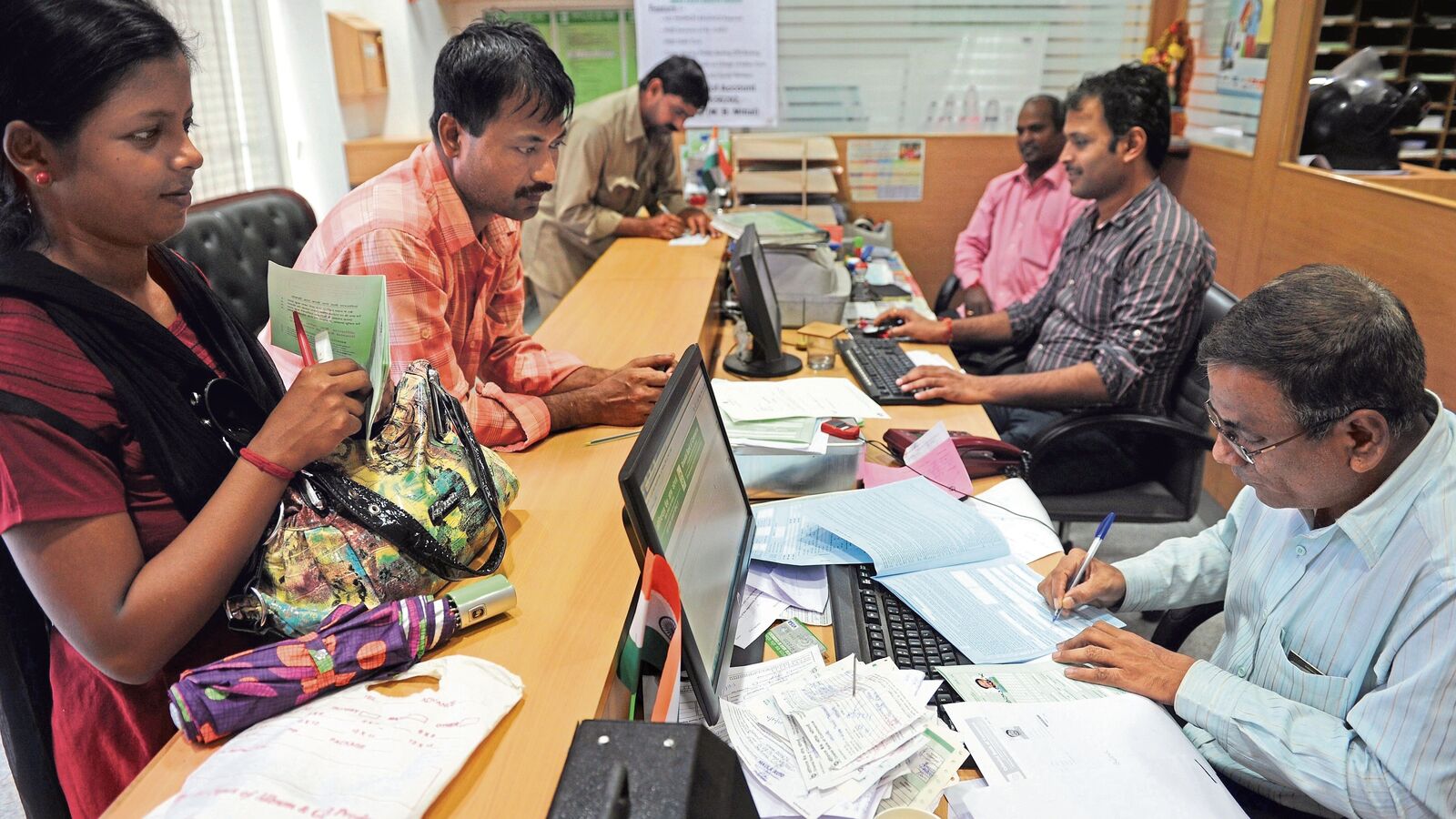
Govt consolidation blueprint—UBI-BoI merger to create mega bank; Punjab & Sind Bank, BoM privatization on radar
MINT· 2025-10-28 07:12
Core Viewpoint - The Indian government is planning a new blueprint for merging select public sector banks to enhance their scale and streamline operations, as part of ongoing banking sector reforms [1][4]. Group 1: Proposed Mergers - Discussions are ongoing regarding the merger of Union Bank of India and Bank of India, which would create a state-run lender with assets of ₹25.67 trillion, making it the second largest after State Bank of India [2]. - The potential merger of Indian Overseas Bank and Indian Bank is also being considered, focusing on operational synergies due to their similar customer bases and geographic footprints [3][9]. - Other banks, such as Punjab & Sind Bank and Bank of Maharashtra, are being evaluated for potential privatization in later phases of the reform [3][11]. Group 2: Historical Context and Objectives - The current discussions are part of a long-term process of banking reforms in India that began in 1991, with the last major milestone being the amalgamation of associate banks into SBI in 2017 [4][13]. - The aim of the consolidation is to strengthen public sector banks through scale and efficiency, emphasizing operational optimization and synergies [4][10]. Group 3: Financial Performance and Timing - Public sector banks have shown strong performance recently, with total business rising from ₹203 trillion to ₹251 trillion between FY 2022-23 and FY 2024-25, and net NPAs declining from 1.24% to 0.52% [7]. - The finance ministry believes that the timing of these reforms, midway through its five-year tenure, is appropriate given the improved performance of state-run banks [7]. Group 4: Future Considerations - Internal teams have been assigned to conduct due diligence and cost-benefit analysis for the proposed mergers, with an external agency potentially involved once the banks are finalized [6]. - The government plans to advance its privatization agenda selectively, with the timing and sequencing of sales depending on market conditions and valuations [11][12].
RBC's Cassidy: Tailwinds growing for banks into earnings season
Youtube· 2025-10-13 22:23
Core Viewpoint - The discussion centers around the current state of the banking sector, focusing on the potential for rerating of banks and the impact of consumer credit and capital markets on their performance [4][5][6]. Group 1: Bank Valuations and Performance - JP Morgan is considered a bellwether for the banking sector, with a diversified revenue mix and strong performance expected in investment banking and trading due to robust capital markets in Q3 [2][10]. - The average valuation of banks is slightly below the cyclical highs of January 2018, indicating potential for rerating if banks navigate the next credit cycle without significant losses [6]. - The profitability of banks is heavily influenced by credit performance, which is tested during economic downturns, making it crucial to observe how banks perform in the next credit cycle [5]. Group 2: M&A Activity and Market Dynamics - The recent acquisition of Comerica by Fifth Third Bank is seen as the beginning of a trend towards consolidation in the banking sector, with expectations of more deals in the next 12 to 24 months [7][8]. - The focus on growing tangible book value per share without dilution was a key factor in the success of the Fifth Third and Comerica deal [8]. - The historical context shows a significant reduction in the number of banks in the U.S., from 18,000 in the 1980s to about 4,300 today, suggesting ongoing consolidation trends [7]. Group 3: Regional vs. Money Center Banks - Money center banks have outperformed regional banks this year due to increased deal activity and robust trading [10]. - However, regional banks may lead the sector over the next 12 months if the economy remains healthy, with expected Fed rate cuts and a steeper yield curve [11]. - A resilient economy could drive loan growth and increased capital expenditures, positioning regional banks for leadership in 2026 [12].