Bioethics

Search documents
Fujifilm Launches Bioethics Advisory Committee to Guide Ethical Decision-Making Across Life Sciences and Healthcare Businesses in the Americas
Businesswire· 2025-11-17 14:30
Core Insights - Fujifilm has established a Bioethics Advisory Committee to enhance ethical decision-making in its life sciences and healthcare operations across the Americas [1][2][3] Group 1: Committee Formation and Purpose - The Bioethics Advisory Committee aims to provide independent recommendations and governance guidance for Fujifilm's life sciences and healthcare subsidiaries [1][2] - The committee will address complex ethical considerations in areas such as research, product development, AI technologies, manufacturing, and commercialization [1][2] - It will consist of Fujifilm experts and independent specialists in bioethics, medicine, law, compliance, and patient advocacy [2][3] Group 2: Ethical Commitment and Governance - Fujifilm emphasizes that ethical considerations are integral from discovery to delivery, reflecting its commitment to responsibility in innovation [2][3] - The committee's goal is to anticipate ethical risks and provide practical guidance to ensure responsible development and delivery of therapies [3][4] - Policies addressing bioethical dilemmas will be published to support sound decision-making as scientific advancements occur [3][4] Group 3: Leadership and Expertise - The committee will include top-tier leaders recognized for their expertise in bioethics and related fields [4] - Alta Charo, JD, serves as the committee chairperson, bringing extensive knowledge in governance issues surrounding biotechnology [9] - The inaugural meeting of the committee is scheduled for December 2025 [4]


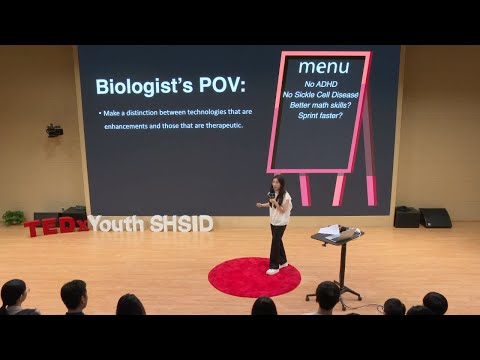
The DNA Dilemma: Shaping Bioethical Technologies Together | Andrea Lei | TEDxSHSID Youth
TEDx Talks· 2025-09-19 14:57
Core Technology & Impact - CRISPR gene editing technology has the power to alter DNA, presenting immense potential as a precision tool but also raising concerns about its capacity to change any aspect of the human body [3][4][5] - Brain-computer interfaces (BCI), like gene editing, are a double-edged sword, offering therapeutic uses and enhancement possibilities, but also raising concerns about accessibility and social stratification [13][14] Ethical Considerations - Gene editing raises ethical dilemmas regarding informed consent, particularly for unborn babies who cannot provide consent for permanent genetic alterations [6][7] - The distinction between therapeutic and enhancement applications of gene editing is crucial, with therapeutic interventions potentially justifiable without explicit consent, while enhancement raises ethical questions [8][9] - Socioeconomic disparities could lead to unequal access to gene editing technologies, exacerbating social stratification and creating inequities in biological enhancement [10][11][15] Proposed Solutions - A two-part system is proposed: free innovation in labs coupled with oversight from a review committee (science, business, economics) when technology is ready for market release [16] - Education for both the public and medical professionals is crucial for informed decision-making regarding the long-term implications of gene editing technologies [17][18] - Government oversight and review committees are needed to create safeguards that reflect societal values and ensure ethical principles guide decision-making [20]