Black-Scholes定价公式

Search documents
期权定价与希腊字母
Jin Rong Jie· 2025-12-05 07:45
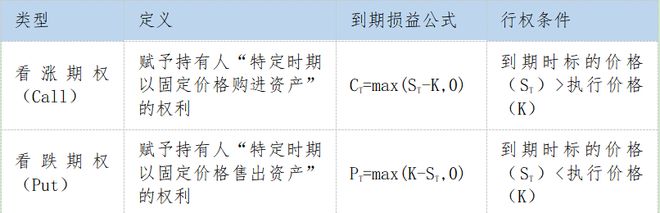
Group 1 - The article outlines the core fundamentals of options, pricing models, risk measurement tools (Greek letters), and practical trading applications, providing a theoretical foundation for pricing analysis, risk monitoring, and strategy construction in options trading [1] - Options are defined as the right of the holder to buy or sell an asset at a fixed price within a specific time frame, categorized into call options (buy) and put options (sell) with distinct definitions and payoff formulas [1] Group 2 - The article presents the options pricing parity formula, which establishes a no-arbitrage pricing relationship between call and put options for the same underlying asset, strike price, and expiration date [2] - It describes two investment portfolios that demonstrate the equivalence of the current values of call and put options, reinforcing the no-arbitrage principle [3] Group 3 - The Black-Scholes pricing formula for European call and put options is detailed, including the variables involved such as the current asset price, strike price, time to expiration, risk-free interest rate, and annualized volatility [4] - The core logic of the Black-Scholes formula is explained as the expected value of the option's payoff under a risk-neutral probability measure [4] Group 4 - The article discusses the components of option value, distinguishing between intrinsic value (immediate exercise profit) and time value (the portion of the option price exceeding intrinsic value), which is influenced by volatility and time to expiration [5] Group 5 - Greek letters are introduced as quantitative indicators of the impact of changes in underlying price, volatility, time, and interest rates on option value, with key metrics such as Delta, Gamma, Vega, Theta, and Rho defined and compared for call and put options [6]