
希腊字母

Search documents
期权定价与希腊字母
Jin Rong Jie· 2025-12-05 07:45
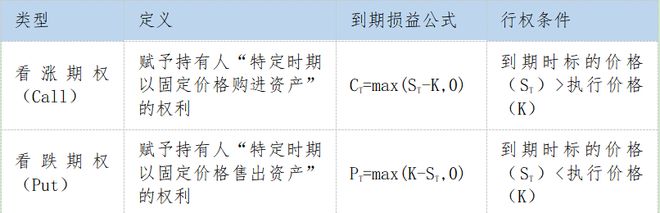
Group 1 - The article outlines the core fundamentals of options, pricing models, risk measurement tools (Greek letters), and practical trading applications, providing a theoretical foundation for pricing analysis, risk monitoring, and strategy construction in options trading [1] - Options are defined as the right of the holder to buy or sell an asset at a fixed price within a specific time frame, categorized into call options (buy) and put options (sell) with distinct definitions and payoff formulas [1] Group 2 - The article presents the options pricing parity formula, which establishes a no-arbitrage pricing relationship between call and put options for the same underlying asset, strike price, and expiration date [2] - It describes two investment portfolios that demonstrate the equivalence of the current values of call and put options, reinforcing the no-arbitrage principle [3] Group 3 - The Black-Scholes pricing formula for European call and put options is detailed, including the variables involved such as the current asset price, strike price, time to expiration, risk-free interest rate, and annualized volatility [4] - The core logic of the Black-Scholes formula is explained as the expected value of the option's payoff under a risk-neutral probability measure [4] Group 4 - The article discusses the components of option value, distinguishing between intrinsic value (immediate exercise profit) and time value (the portion of the option price exceeding intrinsic value), which is influenced by volatility and time to expiration [5] Group 5 - Greek letters are introduced as quantitative indicators of the impact of changes in underlying price, volatility, time, and interest rates on option value, with key metrics such as Delta, Gamma, Vega, Theta, and Rho defined and compared for call and put options [6]

转债凸性与定价系列报告之三:转债定价策略的“理想”与“现实”
Shenwan Hongyuan Securities· 2025-10-25 12:41
Core Insights - The report emphasizes the importance of understanding the Black-Scholes (BS) model as a foundational option pricing model, despite its limitations in practical applications [6][7][8] - It highlights the advantages of using Monte Carlo simulation for pricing convertible bonds, particularly in accounting for complex features such as redemption and down-round clauses [34][41] - The report discusses the relationship between implied volatility and actual bond pricing, suggesting that discrepancies can indicate market conditions [20][25][26] Group 1: BS Model and Its Applications - The BS model is a fundamental option pricing model that assumes stock prices follow a geometric Brownian motion, which is crucial for understanding option pricing [6][9] - The report outlines the application of the BS model in calculating implied volatility, theoretical pricing, and Greek letters, which are essential for assessing convertible bonds [20][31] - It notes that the BS model's limitations include its inability to account for certain bond features, leading to potential overvaluation or undervaluation of convertible bonds [26][18] Group 2: Monte Carlo Simulation - Monte Carlo simulation is presented as a method that can effectively incorporate the impact of bond features on pricing, contrasting with the BS model's separation of bond value and option value [34][41] - The report details the steps involved in Monte Carlo simulation, including generating random stock price paths and evaluating cash flows based on bond features [34][37] - It concludes that while Monte Carlo simulation may require more computational resources, it often yields more accurate pricing results compared to the BS model, especially in bear markets [41][46] Group 3: Investment Strategies - The report suggests constructing investment strategies based on the pricing discrepancies identified through BS and Monte Carlo simulations, focusing on undervalued convertible bonds [34][41] - It emphasizes the importance of Greek letters in developing investment strategies, as they provide insights into the sensitivity of bond prices to various factors [31][32] - The report indicates that strategies based on BS pricing deviations and Monte Carlo simulations have historically outperformed traditional low-price strategies [41][49]