C刊发表困境

Search documents
中国百万文科学者,为生存抢破头
虎嗅APP· 2025-11-16 13:29
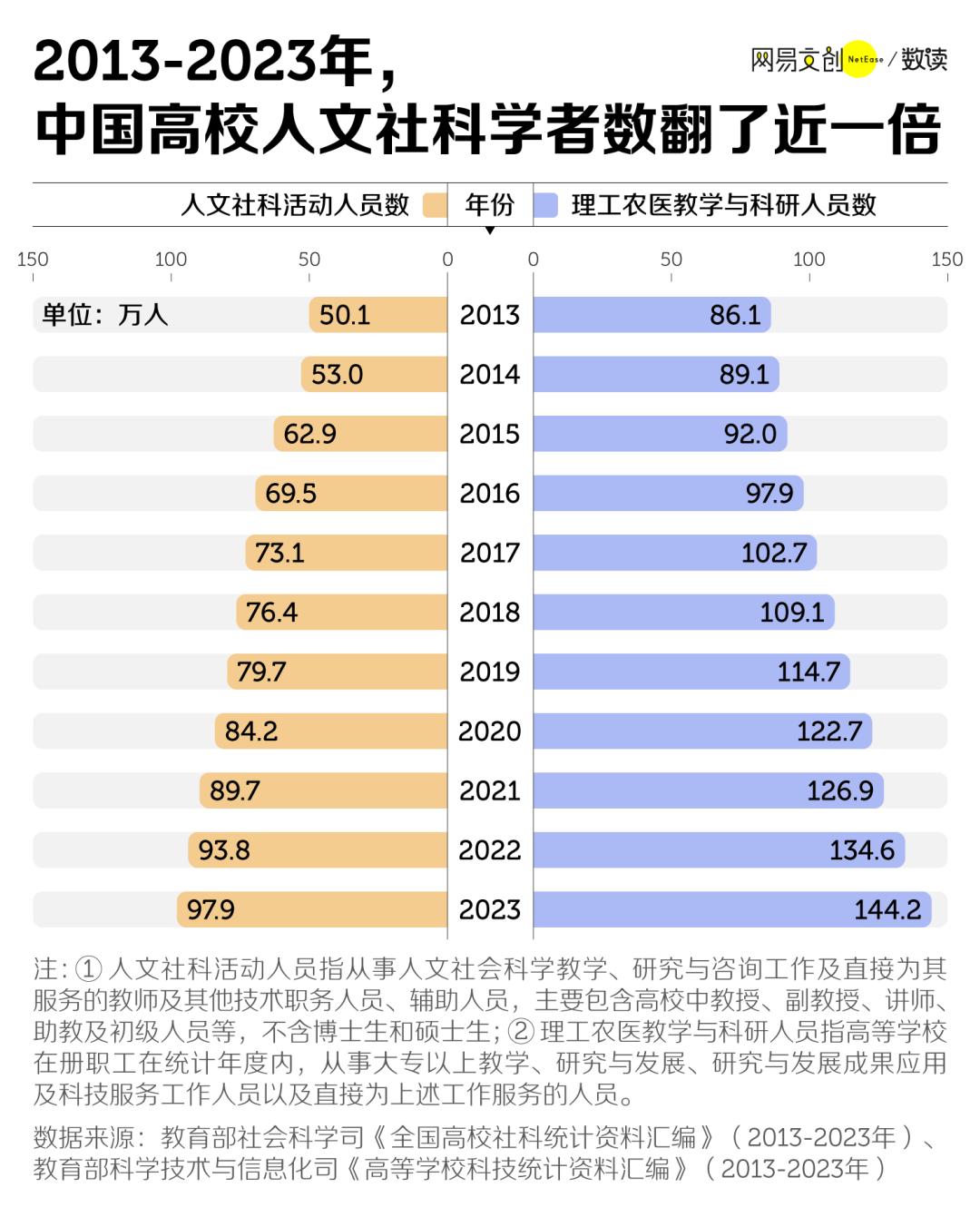
以下文章来源于网易数读 ,作者网易数读 网易数读 . 网易旗下栏目,用数据说话。 本文来自微信公众号: 网易数读 ,作者:火焰雨,数据:火焰雨、乐乐,设计:卜卜脆、秋瞳,题 图来自:AI生成 卷生卷死的文科人,走到哪都是劳碌命。进国企少不了文山会海,入私企天天加班赋能,就连投奔高 校当学者,也得为发 C 刊拼个你死我活。 所谓 C 刊,全称 CSSCI 来源期刊,这是由南京大学牵头评选,并收录在《中文社会科学引文索引 (CSSCI) 》数据库的一批人文社科顶级期刊,在学术界认可度极高 [1] 。 对文科学者来说,C 刊发得多,"加官进爵"升个副教授指日可待。可如果发不够数量,各种好事都得 靠边站,甚至还有可能把饭碗丢了。 但现实情况是,C 刊版面少不说,眼光还很挑剔,普通学者发表机会屈指可数,很多人因此陷入困 境。想发 C 刊,为什么就这么难? 一、僧多粥少,C刊不够发了 虽然文科屡遭恶评,可扎堆做研究的学者却不减反增。从事人文社科领域的高校教师、技术人员和辅 助人员,已经由 2013 年的 50.1 万人飙升至 2023 年的 97.9 万人 [2] 。 对比理科来看,2023 年,各高校理工农医相关的教学 ...


中国百万文科学者,为生存抢破头
3 6 Ke· 2025-11-12 07:31
Core Viewpoint - The article discusses the challenges faced by humanities scholars in China regarding the publication of papers in top-tier journals (C journals), highlighting the imbalance between the increasing number of scholars and the decreasing availability of publication opportunities [1][4][21]. Group 1: Publication Challenges - The number of humanities scholars has increased significantly from 501,000 in 2013 to 979,000 in 2023, while the number of published papers in C journals has decreased from 92,100 to 74,100 over the same period, representing a nearly 20% decline [2][4]. - The competition for publication in C journals is intense, with many scholars waiting for extended periods for their papers to be reviewed, often leading to multiple revisions and eventual rejections [7][10]. - A significant portion of C journal publications is dominated by a small number of high-ranking institutions, with top universities accounting for 59% of publications despite representing only 10% of all universities [8][10]. Group 2: Academic Pressure and Career Implications - Many universities have adopted a "non-promotion means departure" policy, putting immense pressure on young scholars to publish in C journals within a limited timeframe, often leading to high levels of anxiety and burnout [14][18]. - The average research cycle for major funding projects, such as the National Social Science Fund, is lengthy, averaging 6.38 years, with less than 50% achieving favorable outcomes, further complicating the publication landscape for humanities scholars [15][18]. - The pressure to publish has led some scholars to resort to "quick and easy" research topics, compromising the quality of their work in order to meet publication quotas [18][21].