Care - bot

Search documents
人形机器人技术持续迭代,机器人ETF易方达昨日净流入近2亿元
Mei Ri Jing Ji Xin Wen· 2025-10-23 08:26
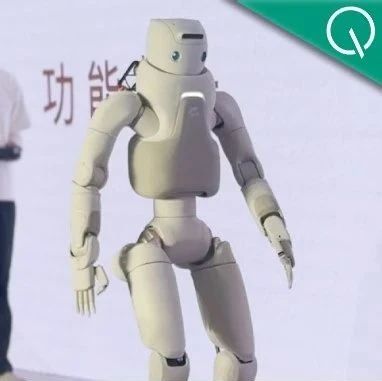
Core Viewpoint - The robotics industry is experiencing a short-term adjustment after a strong performance in September, with the National Robotics Industry Index showing a decline of 1.3% as of 10:25 AM. This adjustment is attributed to external disturbances affecting the technology growth sector, leading to profit-taking by investors [1]. Group 1: Market Performance - The National Robotics Industry Index has seen a decline of 1.3% after three consecutive days of gains [1]. - The E Fund Robotics ETF (159530) has attracted nearly 200 million yuan in net inflows yesterday and over 6.5 billion yuan since September, making it the largest in its category [1]. Group 2: Industry Developments - The International Conference on Intelligent Robots and Systems has commenced, showcasing the latest humanoid robots, including the GR-3 and the open-source humanoid robot N1 from Fourier. The GR-3 introduces the "Care-bot" concept, integrating biomimetic design with multimodal interaction capabilities [1]. - The current focus of the National Robotics Industry Index is on humanoid robots and core components, with related stocks accounting for nearly 80% of the index weight, indicating a strong alignment with future trends in the humanoid robotics sector [1]. Group 3: Investment Insights - CITIC Securities believes that the humanoid robot sector has returned to normal fundamentals after a September rally, and the recent pullback may present a buying opportunity due to liquidity fluctuations. Stocks with better-than-expected third-quarter performance and advancements in robotics are recommended for investment [1]. - Investors interested in the robotics sector can leverage the E Fund Robotics ETF (159530) to gain exposure to investment opportunities within the industry [1].

长得这么“乖”的人形机器人,第一次见
量子位· 2025-08-07 00:56
Core Viewpoint - The article discusses the launch of the Care-bot GR-3, a humanoid robot developed by Fourier, highlighting its advanced design and interactive capabilities aimed at enhancing emotional connections and practical assistance in various scenarios [3][29]. Group 1: Product Features - The GR-3 features a warm color palette and a friendly design, moving away from traditional robotic aesthetics [4][5]. - It is equipped with a full sensory interaction system that integrates visual, auditory, and tactile feedback for a more engaging user experience [7][18]. - The robot can perform various human-like walking postures, including straight walking, swaying, and small running [10][12]. - GR-3 has a height of 165 cm and a weight of 71 kg, with 55 degrees of freedom and a single-hand load capacity of 3 kg [15]. Group 2: Interaction System - The visual perception module includes structured light and RGB wide-angle lenses, ensuring users remain within the robot's field of view [18]. - The auditory module features a four-microphone array for omnidirectional sound capture, enhancing interaction accuracy [19][20]. - The interaction feedback employs a "dual-path response mechanism," allowing for quick responses to simple commands and more complex replies to repeated interactions [23]. Group 3: Battery and Development - The GR-3 utilizes a dual-battery hot-swappable architecture, providing a continuous operation time of up to 3 hours [24][25]. - The development framework has been optimized based on user feedback, supporting a server-client architecture for easier customization by developers [27][28]. Group 4: Company Background and Future Direction - Fourier, founded in 2015, initially focused on rehabilitation robots and has since expanded its offerings with the GR series [29][30]. - The company aims to create robots that facilitate emotional connections and practical assistance, targeting both social companionship and assistive care in various environments [34].