China-plus-one

Search documents
How China's Factories Are Being Rocked by Trump
Bloomberg Originals· 2025-07-18 08:00
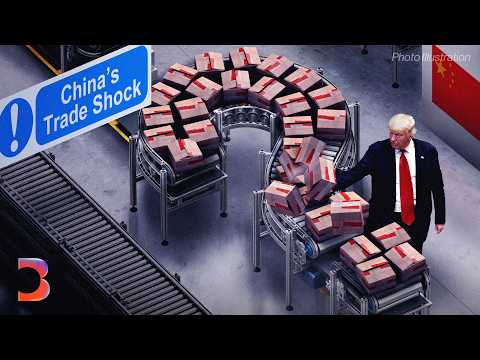
Trade War Impact on Chinese Manufacturers - US-China trade tensions, driven by tariff increases, create uncertainty for Chinese manufacturers, forcing them to focus on short-term survival rather than long-term strategies [1][2][4] - The trade war has led to reduced revenue for some Chinese manufacturers, with one example showing a 20% decrease in revenue [5] - Tit-for-tat tariff hikes between the US and China have raised tariffs up to 145% for Chinese goods going to the US and 125% for US goods coming to China [6] - Despite trade tensions, China's GDP expanded by 52% in the second quarter, but exports to the US fell by 24% during the same period [11] - The US imported approximately 439 billion USD worth of goods from China, while US exports to China totaled approximately 143 billion USD, resulting in a trade deficit of approximately 295 billion USD [7][8] Strategies and Adaptations - Chinese manufacturers are exploring the "China-plus-one" model, shifting production to countries like Cambodia, India, and Southeast Asia to avoid tariffs and take advantage of lower labor costs [19][20] - Some companies are considering shifting focus to other markets like Europe, but find it difficult to replace the US consumer market due to its size and openness to new trends [21][22][23] - The uncertainty in US trade policy, including on-again, off-again tariffs and the closure of the de minimis tariff loophole, has disrupted manufacturers' planning and order cycles [15][18] Economic Concerns - Concerns exist that reduced access to the US market could lead to price cuts, job losses, and lower wages in China, potentially dampening consumer sentiment [9] - China faces persistent deflation, which reduces company earnings and discourages investment and hiring [11][12] - The loss of jobs, lower wages, and potential price cuts due to trade tensions could lead to a deflationary spiral in China [13] Market Dynamics - The US consumer market is considered essential and difficult to replace due to its size and spending power [3][23][25] - Despite tariffs, Chinese companies are not entirely deterred from the US market, but are focused on managing the uncertain relationship and planning for potential decoupling [25]