Computing Power Satellite

Search documents
四点半观市 | 机构:AI产业需额外产业进展或流动性催化新一轮行情
Sou Hu Cai Jing· 2025-12-01 08:39
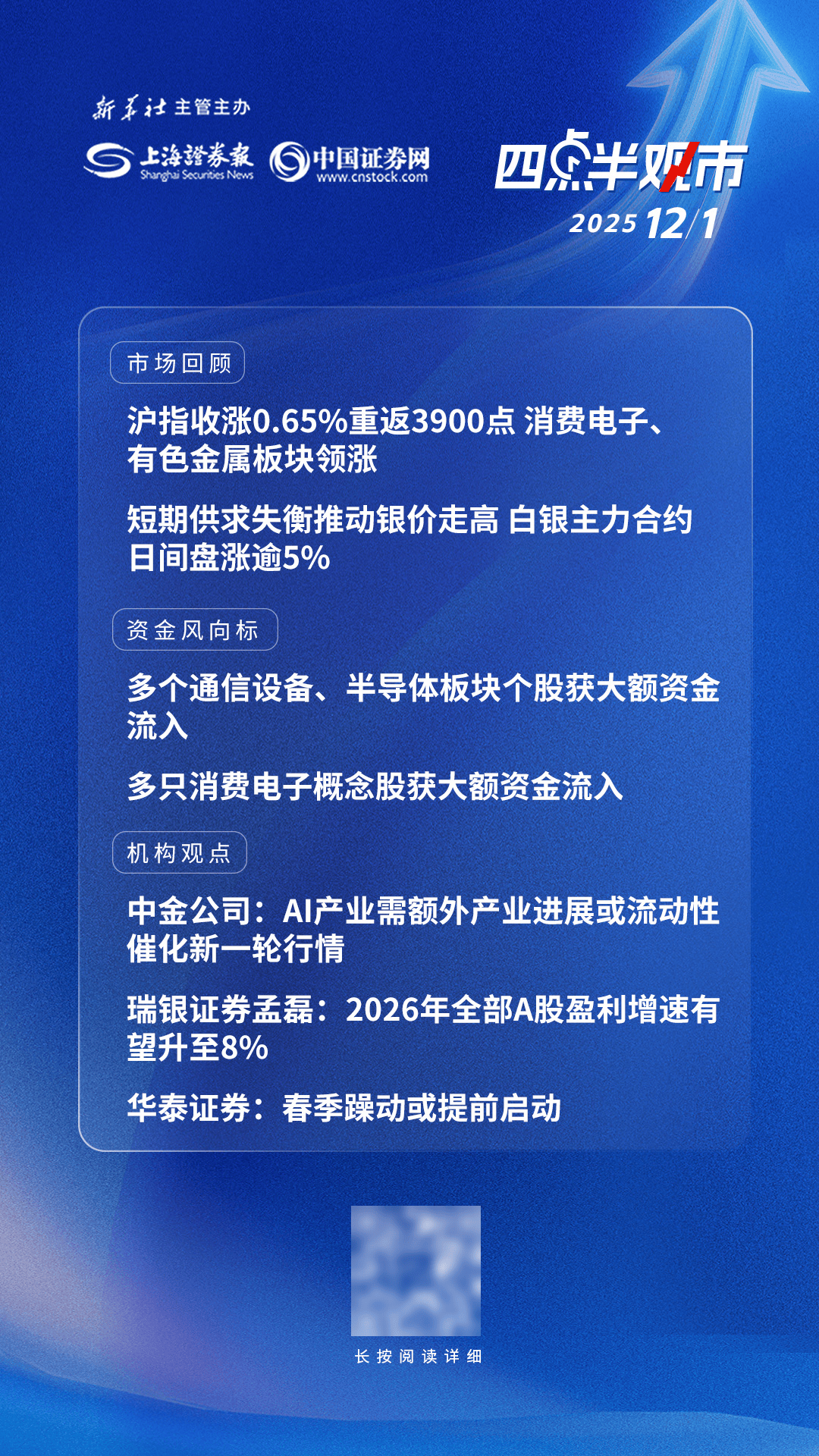
Market Overview - The Shanghai Composite Index rose by 0.65%, closing at 3914.01 points, marking a return to the 3900-point level. The Shenzhen Component and ChiNext Index increased by 1.25% and 1.31%, respectively. The total trading volume in both markets reached 1.87 trillion yuan, an increase of 288.1 billion yuan compared to the previous Friday [6][4]. Sector Performance - The consumer electronics and non-ferrous metals sectors led the market gains. Silver prices surged over 5% due to short-term supply-demand imbalances, with the main silver futures contract showing strong performance [4][6]. - In the commodity futures market, most major contracts saw price increases, with silver, platinum, and polysilicon rising over 3%, while copper and coke increased by over 2% [6]. Fund Flow - Significant capital inflows were observed in several stocks, particularly in the communication equipment and semiconductor sectors, with net inflows exceeding 70 billion yuan for these sectors on December 1. Notable stocks included ZTE Corporation, Beijing Junzheng, and Guanghetong, with ZTE receiving over 5 billion yuan in net inflows [7][8]. - The top ten stocks by net capital inflow included ZTE Corporation, Zhaoyi Innovation, and Zijin Mining, all exceeding 800 million yuan in inflows [7]. Institutional Insights - CICC indicated that the AI industry requires additional industrial progress or liquidity to catalyze a new market cycle, despite high valuations and expectations in the sector [8]. - UBS's analyst Meng Lei projected that the overall A-share profit growth rate could rise from 6% this year to 8% by 2026, driven by nominal GDP growth, corporate revenue increases, and supportive policies [8]. - Huatai Securities suggested that the market may experience an early spring rally due to improving fundamentals and macro liquidity, alongside policy and industry theme catalysts [8]. - Industrial insights from various securities firms highlighted the potential for recovery in Chinese assets, driven by easing global risk aversion and favorable domestic conditions [9].