Cultural Preservation

Search documents
The Legacy Blueprint: Culture, Capital & Community | Derek Fleming | TEDxOvertown
TEDx Talks· 2026-03-19 15:57
I am a developer, but more importantly, I'm a cultural preservationist. Yes, I design spaces and buildings, but my ultimate goal is to build belonging. Because when development becomes transactional rather than an opportunity for transformation, we lose what matters most, legacy, identity, and culture.I was born in Compton, California. Not the Compton you may have seen in headlines. Compton I knew was built on family, faith, fellowship, and resilience.Teachers lived next to jazz musicians, carpenters, next ...


Culture, Content and Change | Duraid Qureshi | TEDxRMI
TEDx Talks· 2026-02-11 17:18
Asalamaikkum. It's a very difficult topic. I think the first topic that was given to me was much easier and that was about how media has transformed Pakistan into.But when you say re-imagining culture, we have to define what culture is. And I think as I was preparing for this topic, the more I read about culture and the culture of Pakistan, it was so difficult for me to assess what is the culture of Pakistan. Culture basically means shared values and belief that a group of people or individuals have.Is Pakt ...
X @Nick Szabo
Nick Szabo· 2026-02-03 06:27
RT Dr. Ricardo Duchesne (@dr_duchesne)One reason to cease immigration is that heritages like the Palazzo Colonna in Rome, a grand Baroque residence from the 1600s, will eventually be disregarded and then transformed into a multicultural site. Only Italians (and then Europeans) can truly care about it. https://t.co/cOHXOHWcmE ...
People of the Forest: Indigenous Wisdom for a Changing Climate | Bancha Muhae | TEDxChiangMai
TEDx Talks· 2025-12-11 16:25
Community & Cultural Preservation - The Karen people believe humans are born and die with trees and bamboo, highlighting the deep connection with nature [1] - The community's traditional rotational farming (rai muan wian) is misunderstood as destructive shifting cultivation, but it's actually a sustainable agricultural practice that promotes biodiversity and forest regeneration [1] - The Bo Hue ritual connects humans with nature and unseen forces, seeking permission for sustainable living and ensuring fire is used responsibly [1] - The community designates over 80% (21,000 rai total area, using less than 20%) of their land as protected forest and watershed areas, demonstrating a commitment to conservation [2] - The community successfully advocated for the establishment of their village, Doi Chang Pa Pae, as a special cultural protection zone, preserving their traditional way of life [1] Sustainable Practices & Innovation - The community employs controlled burns with firebreaks to manage land, preventing uncontrolled wildfires [1] - The community has developed innovative green firebreak technologies, including timer-operated sprinklers, IOT-controlled systems, and smoke detectors [2] Challenges & Advocacy - The community faced challenges when traditional rotational farming was deemed illegal, threatening their livelihoods and cultural heritage [1] - The community actively collects data (maps, GIS, GPS) to advocate for policy changes and negotiate with government agencies [1] - Despite conservation efforts, the community faces blame for environmental disasters like landslides and haze, highlighting societal misconceptions [2] - The community emphasizes that individual actions contribute to global warming and advocates for collective responsibility in protecting the planet [2]
X @Nick Szabo
Nick Szabo· 2025-11-22 04:25
Immigration Policy - Japan enforces strict new immigration rules to protect its borders, culture, and national identity [1] - Illegal immigrants, lawbreakers, those who don't follow local customs, and those who don't respect Japanese culture will be deported [2] Geopolitical Implications - Japan is setting a standard that other Western nations are too cowardly to follow regarding immigration [1] - The report suggests the UK should consider adopting Japan's immigration model [2]
Keeping Community Culture Alive: The Everyday Act | Siti Nur Sarah Annuar | TEDxGIIS Youth
TEDx Talks· 2025-11-19 16:50
Core Argument - Preserving community culture is not about nostalgia or passively freezing traditions, but an active, everyday act of showing up, connecting, and caring for communities [3][4] - Fast-paced societies risk losing everyday culture in pursuit of progress, leading to cultural erosion, which is the fading of intangible practices [4][5][6] - Community provides identity, a sense of belonging, and resilience, making its preservation crucial [9][10][11] Key Actions for Preservation - Inquiry: Actively seeking out and recording the knowledge of elders, turning polite listening into active journalism [13][14] - Choice: Supporting local businesses and spaces (e g, wet markets, mama shops) over globalized options to sustain the community [17][18] - Bridging: Weaving traditional cultural elements into modern forms to ensure continuity and relevance across generations and borders [20][24] Examples and Illustrations - The speaker's youth network uses intergenerational programs to foster bonding between seniors and youth, preserving stories and wisdom [15][16] - Choosing local convenience shops (mama shops) over global chains can have a deeper impact on sustaining community spaces [18][19] - A performing arts collective introduces traditional Malay performing arts to children, making them interactive and accessible [21] - Food and clothing can serve as living bridges connecting people through memories and meaning, even across nations [23][24]
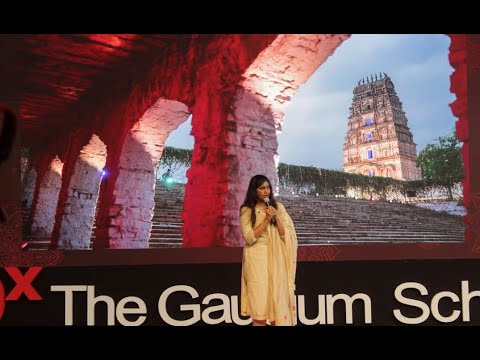
Revisiting the Past Glory Through Ancient Architecture | Bhavana Reddy | TEDxThe Gaudium School
TEDx Talks· 2025-09-19 15:29
Architectural History & Preservation - Ancient Indian education systems like the Gurukul system emphasized holistic learning, encompassing life skills, moral values, and spiritual development [3] - Nalanda University, established in the 5th century CE, was an international university housing over 10,000 students and 2,000 teachers, attracting scholars from across Asia [6][7] - The decline of Nalanda University occurred around the 12th century due to invasion, resulting in the destruction of its infrastructure and a vast library containing approximately 9 million books [8] - Excavations at sites like Fanigiri reveal intricate stone carvings and architectural elements from the 1st century CE, highlighting the art and culture of the time [15] Restoration & Material Science - Traditional lime mortar, used for thousands of years, is presented as a primary building material, contrasting with the more recent adoption of cement in 1904 in India [21][22][23] - The industry emphasizes the importance of using original materials and techniques in restoration projects to preserve the integrity of age-old structures [21][23] - Initial restoration attempts using cement were unsuccessful, highlighting the need for traditional materials like lime mortar [23] Cultural Significance & Future Implications - Architecture plays a crucial role in preserving culture through art, serving as a reliable means of transferring cultural data to future generations [20] - Forgotten architectural forms represent not only physical structures but also lost systems, languages, values, and ways of learning [24] - Restoring ancient structures and preserving forgotten forms can inspire the present and shape the future by reminding us of past knowledge, design, and education [26]
A Century-Old Letter: Will You Break the Seal? | Ivy | TEDxYuehai St Studio
TEDx Talks· 2025-07-25 16:50
Overview of "Telpi" - "Telpi" refers to letters carrying money and messages from Chinese immigrants to their families in the 19th to early 20th centuries [2][3] - These letters served as a crucial lifeline for families separated by oceans, especially in the absence of reliable postal services [4] - Private carriers ("cers") specialized in safely transporting money and messages across borders, highlighting the entrepreneurial spirit of the time [5] Cultural and Historical Significance - "Telpi" reveals family mysteries, such as coded messages warning about local bandits, showcasing the resourcefulness of migrants [6] - The letters often feature artistic elements like ink paintings, reflecting the sender's care and cultural expression [7] - During World War II, "Telpi" documented the struggles of Chinese migrants facing shortages and danger, providing insights into their daily lives [8] - "Telpi" emerged due to massive Chinese migration in the 19th century, driven by poverty and political instability in regions like Chaos [9] - The letters preserved culture through local dialects, poems, and secret codes like "sujoama," passing down values and traditions [10][11] Preservation and Future Opportunities - Digitizing and sharing "Telpi" can preserve these stories and inspire future generations [15] - Modern technology like AI and virtual exhibits can bring "Telpi" to life, decoding hidden messages and connecting them to broader migration stories [15]

Cultural Preservation and Environmental Education | Jefferson Bob | TEDxVárzea Alegre
TEDx Talks· 2025-07-02 15:18
Business Transformation & Growth - The speaker transformed a bird-watching hobby into a profession, starting as a volunteer at Projeto Soldadinho do Araripe and later becoming a bird-watching tour guide [1] - In 2014, the speaker formalized the work by opening a tourism agency, initially named Arariping and later changed to Estigmatura Expedições [1] - In 2017, the speaker adapted the family home into a guesthouse with three suites to accommodate clients, using crowdfunding to finance the renovation [1][3] - Sítio Pau Preto has become a reference point for birdwatching tourism in Ceará, attracting both Brazilian and international visitors [5][6] - The site has expanded to six rooms and is recognized as an international hotspot for birdwatching [8][9] Community & Cultural Impact - The speaker integrates cultural elements into the birdwatching tours, showcasing the local culture of the Cariri region [19] - The speaker collaborates with artisans and cultural groups in the Sertão region, promoting local crafts and traditions [23] - Sítio Pau Preto was recognized as an Organic Museum, Casa dos Pássaros do Sertão, in 2019, integrating it into a network of organic museums [24] Environmental Conservation - The speaker stopped deforestation on the property, allowing the native vegetation to regenerate and attract bird species [15] - The site has recorded approximately 230 bird species, making it one of the most surveyed locations in Ceará [11][13] - The speaker plants vegetation, such as *cansaçao* (nettle), to attract specific bird species like the Beijaflor Vermelho (Red hummingbird) [27] Tourism & Destination Development - The speaker is developing a comprehensive route to attract a broader audience interested in experiencing the region's culture and nature [21] - The speaker is expanding routes beyond Sítio Pau Preto and the Cariri region to include Serra da Capivara in Piauí and Canudos in Bahia [19][21] - The speaker collaborates with local guides and museums to enhance the tourism experience in the Chapada do Araripe region [21]