Dark Patterns

Search documents
Scrollujesz w cudzym interesie | Anna Ledwoń-Blacha | TEDxMościce
TEDx Talks· 2026-01-28 16:55
Znasz Adę. A ty znasz Adę. Może ty znasz Adę.Czy ktoś zna Adę. Ada. Ada to ta brunetka koło 30.Mieszka pod Krakowem, pracuje w korporacji i AD co rano budzi dźwięk budzika. Pewnie tak jak was, tylko że nie jest to budzik tak jak tutaj. To nie jest budzik analogowy.AD co rano budzi dźwięk budzika z telefonu i Ada nie jest w tym odosobniona, dlatego że aż 80% Polaków zaczyna swój dzień od internetu, aż 75% Polaków zaczyna swój dzień od mediów społecznościowych. A ty. Podejrzewam, że może być podobnie.Ada już ...


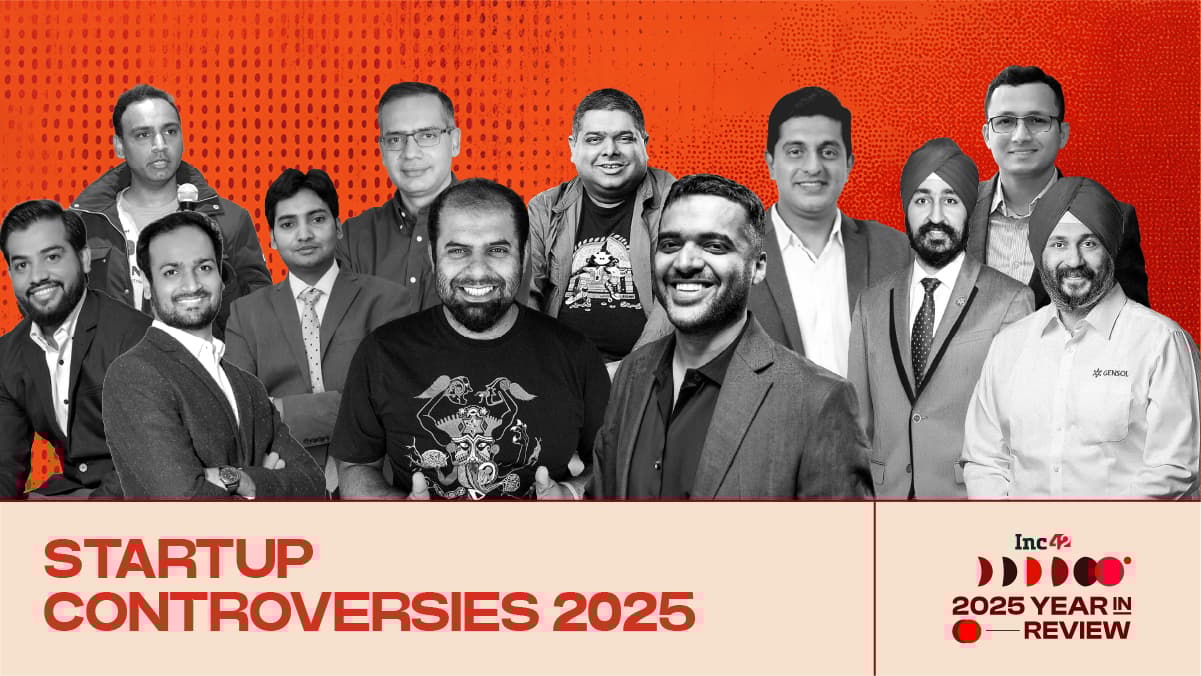
Controversies That Created Storms In The Indian Startup Ecosystem In 2025
Inc42 Media· 2025-12-16 13:06
Core Insights - The year 2025 has been marked by significant controversies in India's startup ecosystem, shifting from behind-the-scenes disputes to public meltdowns and regulatory confrontations [1][2][3] Controversies Overview - The controversies have led to serious consequences including arrests, asset freezes, market bans, and leadership exits, highlighting the ecosystem's vulnerabilities [1][3] Eggoz Controversy - A viral video claimed Eggoz's eggs contained cancer-linked chemicals, raising public health concerns [5] - Eggoz's founder denied the claims and stated that independent tests showed compliance with permissible limits [8] WinZO's RMG Reckoning - WinZO's founders were arrested for money laundering, with allegations of mishandling INR 43 Cr of gamers' funds after a ban on real-money gaming [11][12] - The Enforcement Directorate froze assets worth INR 505 Cr, escalating the legal crisis for the gaming platform [15][16] Dataisgood Founder’s Arrest - Dataisgood's founder was detained at the airport amid allegations of cheating and fund misuse, leading to a significant legal battle [17][18] - The Supreme Court ordered his surrender after multiple bail pleas were rejected [21] BluSmart's Financial Issues - BluSmart faced scrutiny after defaulting on non-convertible debentures, revealing deeper financial misconduct linked to its founders [23][29] - SEBI's investigation uncovered unaccounted funds exceeding INR 260 Cr, leading to a governance crisis [28][29] Medikabazaar's Governance Crisis - Medikabazaar's boardroom conflict escalated into a public battle over financial irregularities, resulting in the ousting of its CEO [30][34] - The board accused the CEO of inflated metrics and misreporting, leading to a significant indemnity claim from investors [36] DroneAcharya's Financial Irregularities - SEBI's investigation revealed that a third of DroneAcharya's reported revenue was fabricated, leading to penalties and a ban on its promoters [37][42] - The company misused IPO funds, diverting them from intended purposes [42] EaseMyTrip vs MakeMyTrip - EaseMyTrip's cofounder accused MakeMyTrip of having Chinese influence, raising national security concerns amid geopolitical tensions [45][46] - MakeMyTrip refuted the claims, emphasizing its compliance with Indian laws [52] CoinDCX Crypto Heist - CoinDCX reported a major security breach resulting in the loss of $44.2 million in crypto assets, prompting scrutiny over its operational security [54][58] - The company launched a recovery bounty to trace the stolen funds [59] Government Crackdown on OTT Platforms - The Indian government banned 25 OTT platforms for hosting obscene content, citing repeated violations of multiple laws [60][64] - Stricter warnings were issued to digital intermediaries regarding compliance [66] Urban Company's 'Insta Maids' Controversy - Urban Company's new service faced backlash for its name and pay structure, leading to a rebranding to 'Insta Help' [92][98] - The controversy highlighted broader issues in the gig economy regarding worker dignity and fair wages [99] Lenskart IPO Valuation Debate - Lenskart's IPO raised concerns over inflated valuations amid weak profitability in the consumer tech sector [100][104] - Critics drew parallels to past IPOs that underperformed post-listing, questioning investor decisions [104]

X @The Economist
The Economist· 2025-11-06 19:40
The “dark patterns” that nudge—or shove—online consumers can work to a company’s advantage. “The Intelligence” asks when that tips into manipulation https://t.co/duupQrXV4p https://t.co/Z7gSORZBqU ...
Meta found in breach of EU law over ‘ineffective' complaints system for flagging illegal content
The Guardian· 2025-10-24 09:45
Core Points - The European Commission has found that Meta's platforms, Instagram and Facebook, have violated EU law by not providing users with straightforward ways to report illegal content, including child sexual abuse material and terrorist content [1][2][3] - The commission's preliminary findings indicate that Meta employs "dark patterns" in its reporting mechanisms, making it confusing and discouraging for users to report illegal content [2][4] - Meta has denied any breach of the Digital Services Act (DSA) and claims to have implemented changes to improve content reporting and appeals processes [12] User Reporting Mechanisms - The commission criticized Meta for lacking a user-friendly 'notice and action' mechanism for reporting illegal content [3] - Current complaint mechanisms are deemed too complex, leading to user disincentives and ineffectiveness in reporting [4][7] - Simplifying the feedback system could also help combat misinformation, such as fake news related to political events [8] Researcher Access to Data - The commission has preliminarily found that both TikTok and Meta are not providing adequate access to public data for researchers, which is essential for assessing minors' exposure to harmful content [9][10] - Access to data is considered a transparency obligation under the DSA, allowing for public scrutiny of the platforms' impact on health [10] Compliance and Penalties - Meta and other platforms have been given time to comply with the commission's demands, with potential fines of up to 6% of total worldwide annual turnover for non-compliance [11] - The commission emphasizes that platforms must empower users and respect their rights as part of their obligations under the DSA [11][12]

Amazon faces US trial over alleged Prime subscription tricks
TechXplore· 2025-09-22 08:31
Core Viewpoint - The Federal Trade Commission (FTC) has filed a lawsuit against Amazon, alleging that the company used deceptive practices, known as "dark patterns," to enroll customers in its Prime subscription service without clear consent and made cancellation difficult [3][4][6]. Group 1: Allegations Against Amazon - The FTC's complaint claims that Amazon knowingly used confusing checkout processes to enroll customers in the $139-per-year Prime service without clear consent [4][6]. - Amazon's cancellation process is described as "labyrinthine," requiring customers to navigate a complex four-page, six-click, fifteen-option procedure to cancel their membership [8]. - The lawsuit alleges that crucial information about Prime's pricing and automatic renewal was often hidden or disclosed in fine print, misleading consumers [7][9]. Group 2: Legal Context and Implications - The case is based on the Restore Online Shoppers' Confidence Act (ROSCA), which prohibits charging consumers for internet services without clear disclosure and consent [9]. - If the FTC wins the case, Amazon could face significant financial penalties and be required to change its subscription practices under court supervision [11]. - The trial is set to last about four weeks and will rely on internal communications and documents from Amazon, as well as testimonies from executives and expert witnesses [10].