
Digital modernization

Search documents
KBR Wins $149M Air Force Contract, Boosts Defense Digital Franchise
ZACKS· 2026-02-04 18:46
Core Insights - KBR, Inc. has secured a $149 million cost-plus-fixed-fee contract under the ADEDDIS program, enhancing its role as a digital and engineering partner for the U.S. Department of Defense [1][8] Contract Overview - The contract, commissioned by the Air Force Life Cycle Management Center, focuses on modernizing legacy systems and improving operator readiness at Eglin Air Force Base, Florida [2] - KBR will provide advanced digital, engineering, and software capabilities to expedite the development and deployment of weapons systems [4] - The contract is structured as a seven-year Indefinite Delivery, Indefinite Quantity (IDIQ) agreement, with initial work centered on modeling, simulation, and advanced digital engineering [5] Backlog Growth - KBR's backlog and options reached $23.35 billion by the end of Q3 FY25, marking a 5.6% year-over-year increase and a 13.5% rise from FY24 [7] - The company has a trailing 12-month book-to-bill ratio of 1.4x, indicating strong demand and contract wins across various segments [7] Stock Performance - KBR's stock has declined by 15.1% over the past six months, contrasting with a 9.1% growth in the Zacks Engineering - R and D Services industry [8] - Near-term prospects are affected by delays in new contract awards and slower defense funding in the U.K. [8]



Cycurion Secures Florida State Term Contract to Power Next-Generation Government IT Transformation
Globenewswire· 2025-10-29 18:01
Core Insights - Cycurion, Inc. has been selected as an approved vendor under the Florida State Term Contract for IT Staff Augmentation Services, positioning the company to support Florida's digital modernization agenda [1][2] - The multi-year contract allows Florida state agencies and eligible entities to engage Cycurion directly for IT staff augmentation without competitive bidding, covering various IT disciplines [2][4] - Cycurion aims to build the technical backbone for Florida's future, focusing on critical infrastructure and AI-driven public services [3][4] Company Overview - Cycurion is based in McLean, Virginia, and specializes in IT cybersecurity solutions and AI, serving government, healthcare, and corporate clients [5] - The company emphasizes its commitment to delivering secure, reliable, and innovative services, leveraging its AI-enhanced ARx platform [5] Contract Details - The contract enables Cycurion to provide qualified IT professionals on a time-and-materials or statement-of-work basis, with pre-negotiated pricing approved by the Florida Department of Management Services [2][4] - Cycurion's selection reflects its track record in delivering secure and compliant IT staffing solutions at scale [4] Future Initiatives - Cycurion is aligning top-tier talent with upcoming initiatives in smart cities, telehealth expansion, and resilient election systems as part of Florida's investment in digital government [4] - The company plans to maintain a rapid-response bench of pre-vetted IT professionals and prioritize emerging disciplines such as zero-trust architecture and generative AI [7]

Amalgamated Financial (AMAL) - 2025 Q3 - Earnings Call Transcript
2025-10-23 16:00
Financial Data and Key Metrics Changes - Core earnings per share for Q3 2025 was $0.91, with year-to-date core EPS at $2.66, reflecting a 3% growth compared to the previous year [5][16] - Net income was reported at $26.8 million or $0.88 per diluted share, while core net income was $27.6 million or $0.91 per diluted share [16] - Net interest income increased by 4.9% to $76.4 million, with net interest margin rising by five basis points to 3.6% [16][17] - Non-performing assets decreased by 34.6% to $12.2 million, representing 0.26% of total assets, and credit quality improved to $79.2 million or 1.67% of total loans [8][16] Business Line Data and Key Metrics Changes - Loans grew by $99 million across multifamily, commercial real estate (CRE), and commercial and industrial (C&I) portfolios, marking a 3.3% growth [11] - The PACE portfolio saw total assessments grow by $27.4 million, with C-PACE growing over 8% [11] - Deposits increased by $415 million, with notable growth in the political segment (19% increase) and climate and sustainability segment (21% increase) [12] Market Data and Key Metrics Changes - Total on-balance sheet deposits increased by $149 million or 1.9% to $7.6 billion, with an additional $265 million held off-balance sheet [17] - The average spot rate paid in deposits declined by eight basis points following a Fed rate cut [17] Company Strategy and Development Direction - The company is investing in a fully integrated digital modernization program to improve productivity and customer understanding [13] - Geographic diversity is emphasized to manage future loan growth targets, with a focus on the evolving policy landscape in New York City [14] Management's Comments on Operating Environment and Future Outlook - Management expressed optimism about the bank's performance and ability to handle challenges, noting the importance of transparency in credit disclosures [9][14] - The company raised its full-year 2025 core pre-tax pre-provision earnings guidance to $164-$165 million and tightened net interest income guidance to $295-$296 million [23] Other Important Information - The tangible book value per share increased by 4% to $25.31, with a 46% growth since the previous CEO's first full quarter [17] - The allowance for credit losses on loans decreased to $56.5 million, with a ratio of 1.18% [22] Q&A Session Summary Question: Specific reserve mentioned on Page 11 - The specific reserve of $1.9 million is related to a multifamily property that underwent an appraisal, leading to a change in loan-to-value (LTV) [27][28] Question: Impact of potential rent freezes in New York - Management does not expect significant impact from potential rent freezes in the next 18-24 months, citing other tools for housing development [30][32] Question: Concerns about federal funding for green energy projects - Management reassured that existing projects are secure as they are already underway, despite federal funding changes [37][41] Question: Positioning against regulatory scrutiny - The company focuses on compliance with laws and regulations, emphasizing strong performance and risk management to mitigate regulatory risks [43][44] Question: Expense management and future projections - Management indicated that expenses are on track with the annual target of $170 million, with potential upside if expenses remain consistent [47][50] Question: Loan yields and new originations - Loan yields are expected to decline due to anticipated rate cuts, with current origination yields remaining strong [52][56]

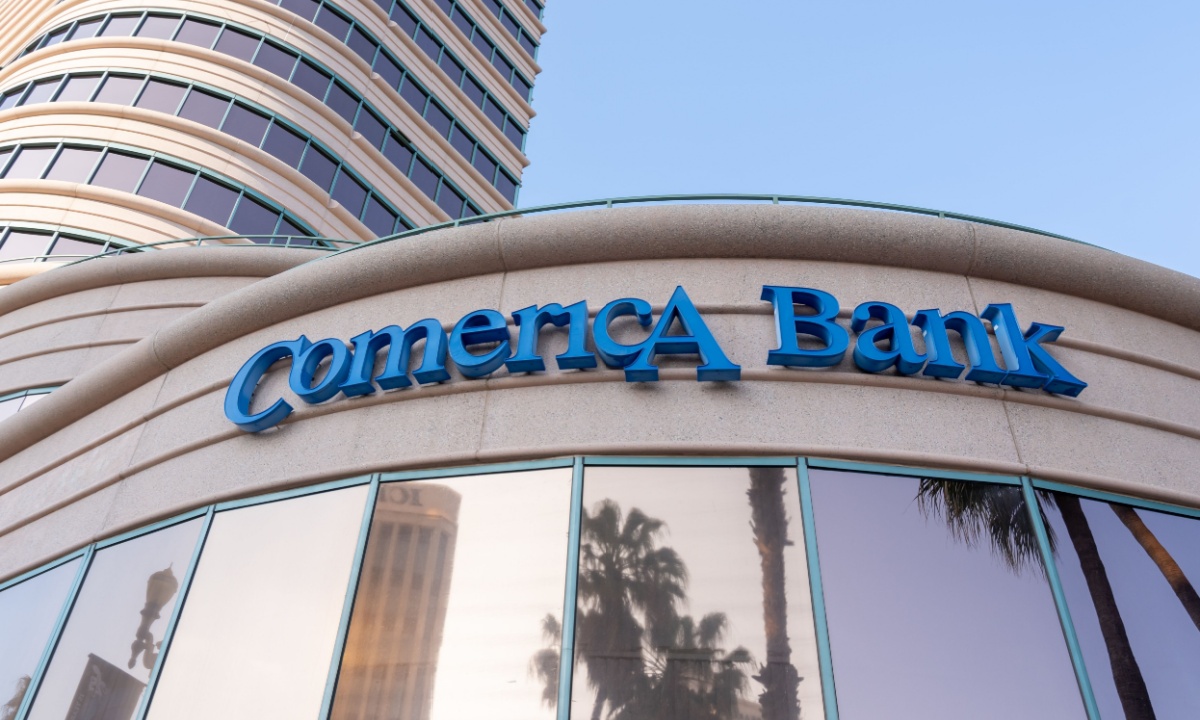
Regional Banks Consolidate Tech as Fifth Third Buys Comerica
PYMNTS.com· 2025-10-06 15:18
Core Insights - The merger between Fifth Third Bancorp and Comerica, valued at $10.9 billion, will create the ninth-largest bank in the U.S. by assets, emphasizing the importance of scale in deposits, technology, and data in regional banking [3][4][5] - The combined entity will have approximately $288 billion in assets, positioning it among the top 10 U.S. banks, with Fifth Third shareholders owning about 73% and Comerica shareholders 27% of the new company [4][5] - The merger is seen as a strategic move to enhance market presence in high-growth areas and improve commercial capabilities, with a focus on integrating digital platforms alongside physical expansion [5][6] Industry Trends - The merger reflects a broader trend of consolidation among regional and super-regional banks, driven by the need for scale and technological integration to compete with larger national banks and FinTechs [3][8][14] - Regional banks, defined as having $10 billion to $100 billion in assets, are increasingly merging to gain the technological and compliance capabilities necessary to remain competitive in a fragmented market [6][13] - The Federal Reserve's indication of lighter oversight for smaller banks may facilitate faster consolidation in the banking sector [11] Technological Integration - The Fifth Third-Comerica merger will focus on integrating technology, consolidating core systems, data analytics, and payments infrastructure, which is crucial for operational efficiency and cost reduction [14] - The emphasis on digital modernization is evident, as seen in other regional banks like Regions Financial, which reported a 10% year-over-year revenue growth driven by tech investments [10]


Tyler Technologies (TYL) FY Conference Transcript
2025-06-03 18:02
Tyler Technologies (TYL) FY Conference Summary Company Overview - Tyler Technologies is an enterprise software company focused exclusively on the public sector vertical market, serving almost all domestic governments in the U.S. with a primary focus on local government [3][4] - The company has a broad portfolio of products and the largest customer base in the public sector software market [5][6] Financial Performance - Tyler has achieved a 20% compound annual growth rate (CAGR) in recurring revenues over the last five years, with 85% of revenues now being recurring [6][8] - SaaS revenue has grown at a 25% CAGR since 2019, marking the seventeenth consecutive quarter of over 20% SaaS growth [7][8] - The company reported a free cash flow margin of just shy of 27% last year, with gross retention rates averaging between 98-99% [8][9] Market Position and Growth Opportunities - The total addressable market (TAM) for public sector software is approximately $32 billion, with Tyler holding about 6% market share, indicating significant growth potential [8][16] - The public sector software market is fragmented, with 88,000 local government entities using hundreds of thousands of systems, many of which are legacy systems that need replacement [21][17] - The shift towards cloud adoption and digital modernization in government operations is expected to drive steady demand for Tyler's solutions [19][20] Product Offerings - Tyler's product categories include ERP and financial systems, courts and justice systems, public safety solutions, K-12 education systems, and civic services [10][12] - The company has a strong focus on mission-critical applications that support government operations, with a significant portion of its employee base having prior public sector experience [22][43] Strategic Initiatives - Tyler is in a new growth era, focusing on cloud transition, expanding its state and federal market presence, and enhancing client experience [14][29] - The company has a history of acquisitions, having completed about 60 since its inception, which has helped expand its product offerings and market reach [23][25] - Key growth pillars include leveraging the existing customer base for cross-selling, expanding into state and federal markets, and growing its transaction-based business following the acquisition of NIC [26][34] Future Outlook - Tyler aims to achieve over 90% recurring revenues by 2030, with a target of $2 billion in total revenues by that year [32][38] - The company anticipates gross margin expansion of 400 to 500 basis points through cloud optimization and product version consolidation [39] - Current guidance for free cash flow margin is set at 24% to 26%, exceeding the initial target of 17% to 19% [40] Unique Selling Proposition - Tyler's unique position in the market stems from its deep vertical focus on public sector needs, extensive product offerings tailored for government, and a workforce with significant public sector experience [42][44]

Tyler Technologies(TYL) - 2025 Q1 - Earnings Call Transcript
2025-04-24 22:05
Financial Data and Key Metrics Changes - Total revenues for Q1 2025 were $565.2 million, up 10.3% year-over-year [24] - Subscription revenue increased by 19.7%, with SaaS revenues growing 21% to $180.1 million [24][25] - Non-GAAP operating margin expanded to 26.8%, up 300 basis points from the previous year [30] - Free cash flow was $48 million, exceeding expectations [11][31] - Total annualized recurring revenue reached $1.95 billion, up 13.3% [30] Business Line Data and Key Metrics Changes - SaaS revenues grew 21%, marking the seventeenth consecutive quarter of over 20% growth [10] - Transaction revenues increased by 18.5% to $194.9 million, driven by higher transaction volumes and new services [26] - Total bookings for Q1 were down 1.9% year-over-year, with SaaS bookings declining due to timing issues [26][27] Market Data and Key Metrics Changes - The public sector market remains active, with stable RFPs and sales demonstration activity at elevated levels [12][13] - Some procurement processes have slowed due to increased consultant-driven processes and macroeconomic uncertainty [13] Company Strategy and Development Direction - The company is focused on completing its cloud transition, leveraging its large client base, growing its payments business, and expanding into new markets [19] - The Cloud First strategy aims to enhance scalability and efficiency in the company's offerings [11] - The company is prioritizing innovation, particularly in AI initiatives, to empower the public sector [41] Management's Comments on Operating Environment and Future Outlook - Management expressed confidence in the resilience of the public sector market despite macroeconomic challenges [15] - The company does not anticipate significant negative impacts from federal funding cuts or efficiency initiatives like DOGE [17][18] - Management noted that the strength of the pipeline reflects the company's competitive position and collaboration across its sales organization [14] Other Important Information - The company has revised its annual guidance for 2025, expecting total revenues between $2.31 billion and $2.35 billion [32] - The company is experiencing leadership transitions, including the retirement of the Chief Technology Officer [44] Q&A Session Summary Question: What leading indicators does the company monitor regarding business health? - Management tracks RFP activity, demo activity, and deals not happening without RFPs, noting that RFP activity has remained elevated [49][53] Question: What is the confidence level regarding consultant-driven deals? - Management believes that the consultant-driven delays are more anecdotal and expects some of the lumpiness in Q1 to return in Q2 [56][58] Question: How does the company view the visibility and execution risk for flips versus new SaaS bookings? - Management feels confident about the flips and sees the softness in new SaaS bookings as a timing issue rather than a market change [62][64] Question: What is the impact of ARPA fund clawbacks on the business? - Management has not heard of any clawbacks affecting their clients and sees minimal impact from federal funding terminations [102][104] Question: How does the company expect transaction fee increases to affect revenue? - Management noted that transaction volumes were above planned levels and that some revenues may extend beyond contract deadlines due to ongoing transitions [110][112]