EV转型

Search documents
EV变局(2)美国政策反转
日经中文网· 2026-03-16 03:06
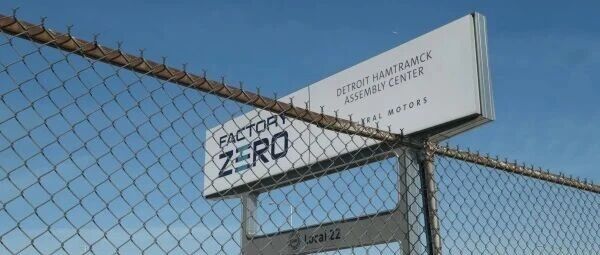
Core Viewpoint - General Motors (GM) is significantly reducing the production capacity of its electric vehicle (EV) dedicated factory "Factory Zero" due to declining EV demand, resulting in substantial layoffs and operational challenges [2][4][11]. Group 1: Production and Employment Changes - In January, GM announced a 50% reduction in the production capacity of "Factory Zero," leading to approximately 1,100 employees leaving their positions [2][4]. - The factory, which was expected to create over 2,200 jobs during its transition to an EV facility, is now facing a stark reality of layoffs and reduced operations [7][11]. - By October 2025, GM plans to lay off a total of 3,300 employees across its EV and battery plants in the U.S., including the 1,100 in Michigan [11]. Group 2: Investment and Financial Performance - GM invested $2.2 billion to convert an old car factory into "Factory Zero," marking it as the largest investment among its production sites [7]. - Despite the initial optimism, GM's EV-related business is projected to incur a loss of $7.6 billion by 2026, exceeding the initial investment amount [13]. - The total losses for the three major U.S. automakers (GM, Ford, Stellantis) in their EV operations have reached 8 trillion yen [13]. Group 3: Market Dynamics and Policy Impact - The EV market in the U.S. is experiencing a downturn, exacerbated by policy shifts under different administrations, which have led to a bleak outlook for EV demand [11][19]. - The U.S. has attracted $188 billion in EV and battery-related investments over the past decade, with 60% of this occurring after the Inflation Reduction Act (IRA) was enacted [16]. - The projected battery production capacity in North America is expected to quadruple by 2030, potentially leading to significant overcapacity if demand does not increase [16]. Group 4: Industry Collaborations and Challenges - Ford has partnered with China's CATL to reduce EV costs, indicating a shift in strategy amidst declining demand [21]. - The initial goal of U.S. EV policies to reduce reliance on Chinese supply chains has paradoxically led to increased collaboration with Chinese companies [21]. - Other international companies, such as Panasonic and Honda, are also delaying or adjusting their EV and battery projects in response to the changing market conditions [21].