
Economic growth slowdown

Search documents
JPM's Michele: See Growth Slowdown, But Not Recession Amid $100 Oil
Youtube· 2026-03-27 14:46
Economic Impact - A higher real yield is starting to impact the American economy, particularly following recent Federal Open Market Committee (FOMC) meetings that indicated potential rate cuts due to concerns about a soft labor market [1] - Rising energy costs are affecting both consumers and businesses, leading to increased input costs for companies [2] Market Reactions - The current economic environment shows no signs of recession despite high oil prices, but growth is expected to slow and inflation may rise slightly [3] - The Federal Reserve has limited options to address these economic pressures, and they are monitoring the labor market and energy prices closely [4] Global Oil Market - The U.S. is a net exporter of oil, but global exposure to rising oil prices is a concern, particularly for other central banks [6] - Oil prices have surged significantly, with expectations of reaching $100 per barrel, which could lead to demand destruction if prices rise further [7] Central Bank Policies - Unlike the Federal Reserve, which has a dual mandate to monitor both the labor market and inflation, the European Central Bank (ECB) and the Bank of England focus solely on inflation [8] - The ECB is expected to raise interest rates in response to rising headline inflation, while the Bank of England is also under pressure to act [9]


Philippine vehicle sales fall 10% in January
Yahoo Finance· 2026-02-26 10:02
Market Overview - New vehicle sales in the Philippines declined by 10% to 33,696 units in January 2026 from 37,504 units in January 2025, indicating a slowdown after three years of strong growth [1] - The decline in January sales followed a sharp slowdown in economic growth to 3.0% year-on-year in Q4 2025, down from 3.9% in Q3 2025, marking the slowest growth rate since 2021 [2] Economic Factors - Consumer spending growth slowed to 3.8% year-on-year in Q4 2025 from 4.1% in Q3 2025, while government spending growth decreased to 3.7% from 5.8% [3] - Fixed investment shrank by 7.2% in Q4 2025, following minimal growth of 0.5% [3] - The central bank has reduced its benchmark interest rate to 4.25% over the last two years from a peak of 6.5% in mid-2024 to stimulate domestic consumption [3] Vehicle Sales Breakdown - Sales of passenger cars fell by 20% to 6,178 units, while commercial vehicle sales declined by 8% to 27,518 units, with light commercial vehicle sales down by 9% to 20,392 units and Asian utility vehicle sales down by 7% to 6,253 units [4] - Truck and bus sales amounted to 873 units [4] Electrified Vehicle Sales - Sales of electrified vehicles surged by 63% to 2,610 units in January, with hybrid-electric vehicle (HEV) sales rising by 43% to 2,072 units [5] - Sales of plug-in hybrids and battery electric vehicles (BEVs) were 277 and 261 units respectively [5] Market Forecast - GlobalData expects the Philippine light vehicle market to increase by 2% to 499,000 units in 2026, following a growth of almost 4% to 489,000 units in 2025, with a further forecasted increase of 4% to 521,000 units in 2027 [6]

Silver tops gold as investors' go-to hedge against trade tensions
MarketWatch· 2026-02-25 20:00
Core Viewpoint - Trade escalation can lead to a slowdown in economic growth and weaken silver demand, but silver's dual nature as both an investment and industrial metal provides resilience in its market [1] Group 1: Economic Impact - Trade tensions may contribute to a deceleration in overall economic growth, which could negatively affect silver demand [1] - The potential slowdown in economic activity is a significant concern for industries reliant on silver [1] Group 2: Silver's Dual Nature - Silver is characterized as a "dual-natured metal," benefiting from both investment and industrial applications [1] - This duality is a crucial factor in maintaining silver's market strength despite economic challenges [1]
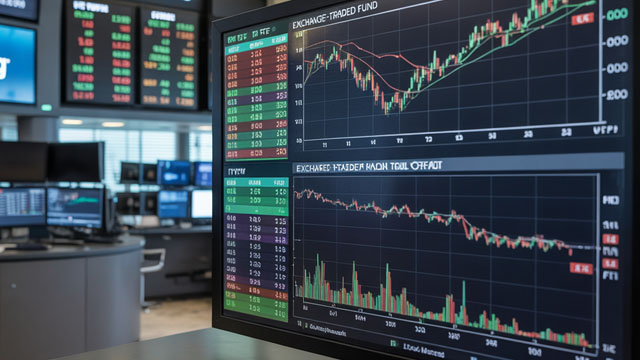
Growth is slowing, and inflation is easing. More Fed rate cuts are the right response.
MarketWatch· 2025-10-30 12:54
Core Viewpoint - The weakening economy is leading to a clearer decision for the central bank regarding interest rates in December [1] Economic Context - Economic indicators suggest a slowdown, prompting the central bank to reassess its monetary policy [1] - The central bank's focus is shifting towards stabilizing the economy amid signs of weakening growth [1] Interest Rate Implications - The anticipated interest rate decision in December is expected to reflect the current economic conditions [1] - Analysts predict that the central bank may opt for a more cautious approach in light of the economic slowdown [1]
Analysis-China caught in policy dilemma as Fed rate cut looms
Yahoo Finance· 2025-09-12 04:36
Core Viewpoint - The U.S. Federal Reserve is expected to cut interest rates, while China's central bank is likely to resist immediate policy easing due to concerns about a weak economy and a hot stock market [1][2]. Group 1: Economic Conditions - Policymakers in China are under pressure to prevent a sharp economic slowdown that could threaten jobs and social stability, while also avoiding past mistakes that led to a market crash [2]. - The People's Bank of China (PBOC) may wait for clearer economic signals before adjusting its policy, despite potential room for easing following a Fed rate cut [2][3]. Group 2: Monetary Policy Actions - The PBOC has already cut its key policy rate by 10 basis points and reduced banks' reserve requirement ratio by 50 basis points as part of broader stimulus measures [5]. - Analysts suggest that the PBOC may avoid immediate rate cuts if the stock market rally continues, to prevent inflating a bubble, but a modest 10-basis-point cut could occur if markets correct [4][6]. Group 3: Market Dynamics - The current stock market rally in China is primarily driven by institutional investors, with retail investors beginning to participate, while households hold a record 160 trillion yuan ($22.45 trillion) in savings [6].
Take the Zacks Approach to Beat the Markets: PhenixFIN, Palomar, Monster Beverage in Focus
ZACKS· 2025-04-07 13:36
Market Overview - The three major U.S. indexes, Nasdaq Composite, S&P 500, and Dow Jones Industrial Average, experienced significant declines of 9.89%, 9.58%, and 8.78% respectively last week due to President Trump's reciprocal tariff policies implemented on April 2, 2025, raising fears of a near-term recession [1] - Analysts predict a slowdown in economic growth and a rise in short-term inflation, with the core personal consumption expenditure (PCE) inflation marking a monthly gain of 0.4% in February 2025, the largest since January 2024 [2] Economic Indicators - The Institute of Supply Management (ISM) reported that manufacturing PMI contracted to 49% and services PMI to 50.8% in March, indicating a contraction in manufacturing activities [3] - Job openings fell by 194,000 to 7.568 million in February, marking the lowest level since September 2024, with the employment index declining to 46.2% in March from 53.9% in February [3] Investment Performance - PhenixFIN Corporation (PFX) shares gained 6.2% since being upgraded to Zacks Rank 1 on February 12, while United Fire Group, Inc. (UFCS) returned 5.2% since its upgrade on February 13, both outperforming the S&P 500's significant declines [4][5] - A hypothetical portfolio of Zacks Rank 1 stocks returned -3.48% in January 2025, compared to -0.60% for the S&P 500, but had a strong performance in 2024 with a return of +22.3% [5][6] Zacks Recommendations - EZCORP, Inc. (EZPW) and Palomar Holdings, Inc. (PLMR) saw share increases of 13.4% and 5% respectively since their Zacks Recommendation upgrades to Outperform [8] - The Zacks Focus List portfolio, which includes HCA Healthcare, Inc. (HCA) and Palantir Technologies Inc. (PLTR), returned +0.87% this year through February 2025, outperforming the S&P 500's -14.2% decline over the same period [11][12] Long-term Performance - The Zacks Top 10 portfolio has produced a cumulative return of +1948.35% since 2012, significantly outperforming the S&P 500's +469.98% return in the same timeframe [24]






美国展望:不确定性是唯一的确定性
2025-03-12 07:55
Summary of Key Points from the Conference Call Industry Overview - The conference call primarily discusses the **US economic outlook** and the impact of recent **tariff announcements** on various sectors, particularly focusing on employment and inflation metrics. Core Insights and Arguments 1. **Tariff Implementation and Economic Impact** - The Trump administration briefly implemented 25% tariffs on Mexico and Canada, which were later narrowed in scope, delaying full implementation until April 2 [2][19] - The uncertainty surrounding tariffs is expected to weigh on economic growth, with potential GDP growth reduction estimated at 0.25-0.50 percentage points if full tariffs are enacted [20][26] 2. **Employment Data Analysis** - February's nonfarm payroll employment rose by 151,000, indicating resilience in job demand despite a revision down of January's figures [3][4] - The unemployment rate increased to 4.1%, with a notable rise in the underemployment rate (U6) to 8.0%, the highest since late 2021 [6][7] 3. **Mixed Economic Indicators** - Various economic indicators present a mixed picture, with initial jobless claims normalizing and ISM manufacturing and services indices remaining resilient [12][13] - Light vehicle sales increased from 15.6 million to 16.0 million units, suggesting a potential boost to household spending [14] 4. **Concerns Over Consumer Spending** - There are indications of a potential downshift in consumer spending due to tariff policy uncertainty and deceleration in labor payroll income [15][28] - Aggregate payroll income growth slowed to 2.9% in February, down from 5.6% in the previous three-month period, raising concerns about consumer purchasing power [8][23] 5. **Layoff Announcements and Labor Market Dynamics** - A significant increase in layoff announcements was noted, with the Challenger indicator rising from about 50,000 to 172,000 in February, the largest one-month increase since April 2020 [9][12] - The potential for up to 500,000 job cuts from federal workforce downsizing due to DOGE initiatives was highlighted, although these cuts may not trigger macroeconomic distress [24][25] 6. **Federal Reserve's Stance** - The Federal Open Market Committee (FOMC) shows no immediate signs of changing course, with officials emphasizing the need for greater clarity before making policy adjustments [27] - The FOMC is currently more focused on upside inflation risks than market expectations, indicating a cautious approach to potential rate cuts [27] Other Important Insights - The upcoming inflation data is anticipated to provide further clarity on consumer behavior and economic conditions, with forecasts suggesting a 0.3% increase in headline CPI [40] - The administration's tariff strategies and their implications for various sectors, including agriculture and energy, remain uncertain, with further announcements expected [19][21] - The overall economic outlook remains cautious, with potential risks stemming from policy uncertainty and external economic pressures [26][22]
