Family history

Search documents
NBC News' Morgan Radford reveals inspiration behind debut novel
NBC News· 2025-09-22 19:30
Book Overview - The book is a novel inspired by the author's experiences growing up in North Carolina with a family history rooted in Jamaica and Cuba [3][5] - The story centers on a black Cuban girl from North Carolina who attends Harvard and her relationship with a British Indian student, intertwined with her mother's experiences during the Cuban Revolution [5] - The novel explores themes of identity, home, and connection, questioning societal categories and encouraging exploration of personal history and potential [4][10] Author's Inspiration and Process - The author drew inspiration from her family history, including her great-grandmother's migration from Jamaica to Cuba and eventually to the United States [6] - The author wrote the book over a period of time, dedicating 3 hours each night and writing during travel and work assignments [8] - The author emphasizes the use of fiction to explore truth, history, and understanding [9] Publication Details - The debut novel is scheduled for release on May 12th of the following year [11] - The book will be available in both English and Spanish [11] - The book will be available for purchase wherever books are sold [12]


X @The Economist
The Economist· 2025-08-25 00:40
Content Summary - The article discusses Rosie Blau's search for her father's family history in wartime Poland [1] - The article is related to a story on "The Weekend Intelligence" [1] - The story involves the fate of the family during wartime [1]
A Century-Old Letter: Will You Break the Seal? | Ivy | TEDxYuehai St Studio
TEDx Talks· 2025-07-25 16:50
Overview of "Telpi" - "Telpi" refers to letters carrying money and messages from Chinese immigrants to their families in the 19th to early 20th centuries [2][3] - These letters served as a crucial lifeline for families separated by oceans, especially in the absence of reliable postal services [4] - Private carriers ("cers") specialized in safely transporting money and messages across borders, highlighting the entrepreneurial spirit of the time [5] Cultural and Historical Significance - "Telpi" reveals family mysteries, such as coded messages warning about local bandits, showcasing the resourcefulness of migrants [6] - The letters often feature artistic elements like ink paintings, reflecting the sender's care and cultural expression [7] - During World War II, "Telpi" documented the struggles of Chinese migrants facing shortages and danger, providing insights into their daily lives [8] - "Telpi" emerged due to massive Chinese migration in the 19th century, driven by poverty and political instability in regions like Chaos [9] - The letters preserved culture through local dialects, poems, and secret codes like "sujoama," passing down values and traditions [10][11] Preservation and Future Opportunities - Digitizing and sharing "Telpi" can preserve these stories and inspire future generations [15] - Modern technology like AI and virtual exhibits can bring "Telpi" to life, decoding hidden messages and connecting them to broader migration stories [15]

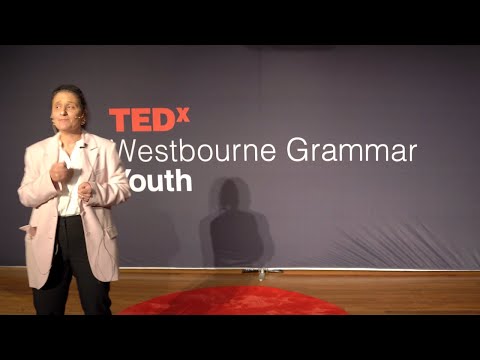
All the Ways We Move | Dr Christine Lambrianidis | TEDxWestbourne Grammar Youth
TEDx Talks· 2025-07-16 16:01
Family History and Migration - The speaker's family migrated from Greece, transitioning from factory workers to factory owners [1] - The speaker's generation experienced upward social mobility, disconnecting from their working-class roots [1] - The speaker reflects on the meaning of progress and social mobility in the context of their family's journey [1] - A trip to Greece with the speaker's father prompted reflection on the reasons for their migration to Bunarong land (Australia) [5] - Family stories illustrate movement using various modes of transportation, including horse carts, bicycles, and trains [6][7] Cultural Identity and Connection - The speaker's daughter's declaration of being Japanese highlights questions of cultural identity and heritage [1] - The speaker's reaction to her daughter's statement reveals a desire to maintain a connection to their Greek heritage [3][4] - The speaker emphasizes the importance of understanding family history and how they have moved [9] Generational Differences and Values - The speaker contrasts their generation's experiences of struggle and hard work with their children's lives of privilege [1] - The speaker observes differences in cultural norms and expectations between Greece and Australia [8] - The speaker acknowledges the constant movement and change in places, both physically and in perception [4]