Fed Funds Rate

Search documents
Chair Powell Is Not Leaving And Other Observations
Seeking Alpha· 2026-03-20 18:05
Core Viewpoint - The Federal Reserve has decided to maintain the Fed Funds Rate at 3.50%-3.75%, marking the second consecutive meeting with no change in rates, with a voting outcome of 11-1 in favor of this decision [1]. Group 1 - The Fed's decision reflects a cautious approach to monetary policy amid current economic conditions [1]. - One member of the Federal Open Market Committee (FOMC) advocated for a 25 basis point increase, indicating some division in opinions among committee members [1].

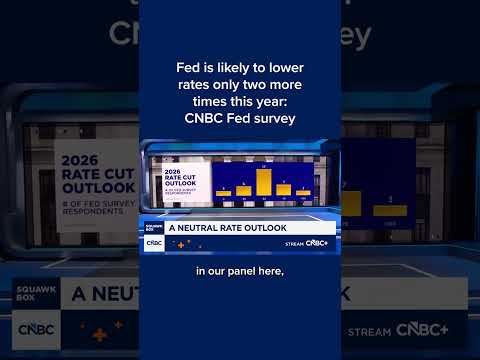
Fed is likely to lower rates only two more times this year: CNBC Fed survey
CNBC Television· 2026-01-27 16:35
Despite the expected arrival of a new Trump-appointed Federal Reserve chair in coming months, respondents to the CNBC survey are only forecasting modest changes to the funds rate over the next two years. The results, which mirror pricing in the fed funds futures market, show that neither Wall Street nor economic forecasters believe that the next Fed chair will drive down overnight rates toward the low levels demanded by the president. ...
The Fed's Silent Dissenters
Etftrends· 2025-12-27 13:55
Core Insights - The Federal Reserve's monetary policy outlook for 2026 is under significant scrutiny, especially with a new Chair expected and ongoing debates about the decision-making process [2] - The concept of "silent dissenters" has emerged, indicating that while only two dissenters publicly opposed a rate cut, six members, including four silent dissenters, indicated they would not support a cut in the dot-plot projections [4][7] - The composition of the FOMC in 2026 will include regional bank presidents who have expressed caution regarding further rate cuts, suggesting a more conservative approach to monetary policy [6][7] Summary by Sections - **Monetary Policy Outlook**: The Fed's monetary policy is gaining attention as it approaches 2026, with discussions about the decision-making process and the implications of having a new Chair [2] - **Silent Dissenters**: The term "silent dissenters" refers to Fed members who privately oppose rate cuts. In the recent dot-plot, six members indicated they would not support a cut, highlighting a division within the Fed [4][7] - **FOMC Composition for 2026**: The FOMC will see a rotation of regional bank presidents, including those from Cleveland, Philadelphia, Dallas, and Minneapolis, who have publicly stated their opposition to further rate cuts [5][6] - **Data-Dependent Policy**: Future monetary policy decisions are now entirely data-dependent, with Powell's term ending in May 2026, indicating potential volatility in rate expectations [7][8]

CPI inflation report sparks data backlash
Yahoo Finance· 2025-12-18 23:51
Economic Indicators - The November CPI inflation data showed a year-over-year increase of only 2.7%, significantly lower than the 3.1% expected by Wall Street, marking the first slowdown since April [2][4] - The U.S. unemployment rate rose to 4.6% in November, the highest level since 2021, which initially raised concerns about the economy [1] Market Response - The cooler-than-expected inflation data led to a rally in the stock market, which has been resilient despite rising unemployment and inflation since spring [6][4] - The stock market has experienced a nearly 30% rally since April, with a year-to-date return of 15.5%, outperforming the average 10% return since 1950 [6][8] Federal Reserve Actions - The Federal Reserve has cut the Fed Funds Rate by a quarter percentage point at three consecutive FOMC meetings since September, responding to rising unemployment [9] - The Fed's actions are seen as supportive for the jobs market, providing opportunities for revenue and profit growth for publicly traded companies [4][9] Corporate Profit Outlook - Despite higher import taxes, corporate profits are expected to climb, indicating a positive outlook for publicly traded companies [8]
Where is the Dollar Index Heading in 2026?
Yahoo Finance· 2025-12-16 20:00
Core Viewpoint - The dollar index is currently in a neutral trend, consolidating near the lower end of its recent trading range, with a bearish outlook expected to continue into 2026 [1][2]. Group 1: Dollar Index Trends - The dollar index has been trading around the 100 pivot point since mid-April 2025, primarily remaining below this level since late May [4]. - As of mid-December 2025, the dollar index was trading just below the 98.30 level, indicating it is within the established trading range [4]. - The index is expected to continue its sideways pattern into late 2025 [3]. Group 2: Federal Reserve Interest Rate Outlook - The U.S. Federal Reserve reduced the short-term Fed Funds Rate by 25 basis points for the third time in 2025, bringing it to a midpoint of 3.625% going into 2026 [5]. - Factors likely to lead to further rate cuts in 2026 include stable inflation around 3% and increasing unemployment data, which may favor lower interest rates [7]. - A potential replacement for current Chairman Jerome Powell, who is expected to favor a dovish monetary policy, could further lower the Fed Funds Rate in 2026 [7]. Group 3: Interest Rate Differentials - Interest rate differentials play a significant role in influencing the dollar index against other world reserve currencies, with the euro comprising 57.6% of the index [6]. - The current short-term euro rate is 1.93%, and a decline in U.S. dollar interest rates is likely to favor a lower dollar index due to a narrowing rate differential [6].
History Shows Us Where Bond Yields Go Next
Seeking Alpha· 2025-12-15 21:06
Core Viewpoint - The Federal Reserve's recent decision to lower the Fed Funds Rate has significantly impacted treasury rates, particularly on the long end of the yield curve, which has been a focal point in financial news [1]. Group 1: Treasury Rates and Yield Curve - The yield curve is exhibiting unusual characteristics, with the 3-month U.S. Treasury (UST) still yielding at notable levels [1]. Group 2: Investment Strategy - The investment approach emphasizes the importance of connecting macroeconomic trends and data to identify investment opportunities that may not be apparent to the broader market [1]. - The strategy involves maintaining concentrated, asymmetrical, and high-conviction positions while managing risk through disciplined position sizing [1].
DoubleLine's Jeffrey Gundlach: I don't feel like that was a hawkish cut
Youtube· 2025-12-10 21:34
Group 1 - The meeting was characterized by a focus on being "well positioned," suggesting a cautious but stable outlook from the Fed [1][2][5] - The Fed Chair expressed skepticism about the accuracy of monthly job gains, indicating a potential overstatement of 60,000 jobs, which could imply a more negative job report [2][6] - Inflationary risks were deemphasized, with the Fed Chair framing inflation as less of a concern and highlighting progress made in controlling it [3][4][5] Group 2 - The Fed has cut rates by 175 basis points since September, yet the 2-year Treasury yield remains unchanged, indicating a disconnect between Fed actions and market responses [6][8] - Despite the rate cuts, long-term interest rates, such as the 30-year Treasury, have increased by approximately 75 basis points, suggesting that lower Fed rates may not be beneficial for long-term rates [8][9] - The yield curve steepened following the Fed's cut, with the difference between 2-year and 30-year rates reaching about 124 basis points, indicating potential future increases in long-term interest rates [10]
BlackRock's Rieder Says Fed Funds Rate Should Be at 3%
Youtube· 2025-11-07 15:58
Group 1 - The Federal Reserve is perceived to have room for changes that could enhance the velocity of the financial system [1][2] - Current borrowing practices indicate that the overnight funds rate is less relevant, suggesting a need for stability in the back end of the yield curve to support mortgage rates and existing home sales [2][3] - A proposed adjustment to the funds rate is to set it at 3%, which could align with market expectations and inflation break-even rates [3][4] Group 2 - The discussion emphasizes the importance of addressing mispricing in the markets to achieve a more favorable rate environment [4] - There is a belief that after adjusting the rate, further evaluations should be made to determine if additional changes are necessary [4]

Jones Expects Nasdaq to Climb Higher, Lower Rates
Youtube· 2025-10-14 15:43
Core Viewpoint - The current equity market may resemble the conditions of October 1999, with potential for significant gains ahead, but also carries risks of a market peak [1][3]. Market Sentiment - 54% of fund managers believe the market is in a bubble, though it is characterized as a small one compared to historical bubbles which saw gains of 400% to 600% [2]. Interest Rates and Economic Outlook - The expectation is that the Federal Reserve will aim for a funds rate around 2.5% to 2.75%, which could support higher equity prices [3][4]. Investment Strategy - There is a cautious approach to current stock positions, with a belief that the market could be substantially higher by the end of the year, particularly favoring the Nasdaq [5][6][7]. Market Dynamics - The final phase of a bull market typically sees a doubling of annual gains, indicating that while the best part of the market may be ahead, it also poses the highest risk of a peak [7].
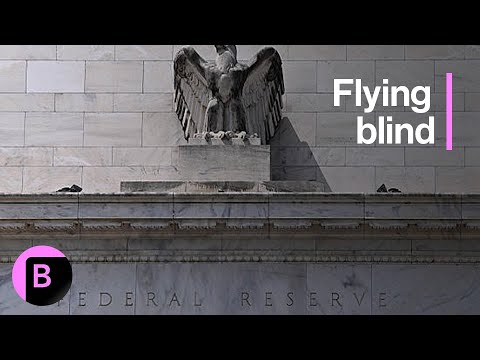
Fed Is Flying Blind Due to Shutdown, Slok Says
Bloomberg Television· 2025-10-08 21:39
I do want to get the government shutdown into this conversation because markets so far don't look that concerned. We're not getting the economic data that we love to dig into. But I am curious what this means for the Federal Reserve.We have a policy meeting coming up on the 29th. It looks like we're not going to get the CPI release that we were or the inflation release we're expecting next week. We know the jobs market has been delayed when it comes to that official NFP release.When it comes to making polic ...