
Federal Open Market Committee (FOMC)

Search documents
Fed Communications and Inflation Expectations
Federal Reserve Bank Of San Francisco· 2026-04-01 00:00
Core Insights - The article discusses the impact of Federal Reserve communications on market-based inflation expectations, highlighting the significance of monetary policy surprises during FOMC meetings and press conferences [4][31]. Group 1: Monetary Policy Communication - Central banks primarily use short-term interest rate changes as their monetary policy tool, but effective transmission also relies on influencing broader financial conditions, including long-term rates and market prices [2]. - The Federal Reserve's communication methods, particularly post-FOMC meeting statements and press conferences, are crucial for assessing the effectiveness of its monetary policy [3][31]. - The SF Fed's US Monetary Policy Event-Study Database (USMPD) provides high-frequency changes in interest rates and asset prices around FOMC events, aiding in the analysis of monetary policy effects [6][7]. Group 2: Market Reactions to Policy Surprises - High-frequency monetary policy surprises are measured by changes in interest rates for short-maturity financial instruments around policy announcements, capturing new information about the Fed's policy path [5]. - The analysis shows that hawkish surprises lower market-based inflation expectations, while dovish surprises raise them, consistent with conventional monetary transmission [23][31]. - The largest market reactions to FOMC surprises occur at longer horizons, indicating a significant expected delay in the transmission of policy changes to inflation [24]. Group 3: Breakeven Inflation Rates - Breakeven inflation (BEI) rates, calculated as the difference between nominal and real Treasury yields, are used to measure market-based inflation expectations [13]. - Recent trends in BEI rates indicate fluctuations in inflation expectations, with the five-year BEI rate showing a range between 2.4% and 2.6% during periods of rising inflation concerns [17]. Group 4: Effects of FOMC Communications - The analysis of market reactions to FOMC communications reveals that both statements and press conferences lead to meaningful unexpected changes in the policy path [31]. - Press conference surprises have a stronger effect on inflation expectations compared to statement surprises, with a maximum impact of -0.6, indicating a significant decline in market expectations for inflation [29][30]. - The findings suggest that the Chair's remarks during press conferences serve as a powerful channel for communicating monetary policy, influencing market perceptions and expectations [30][31].

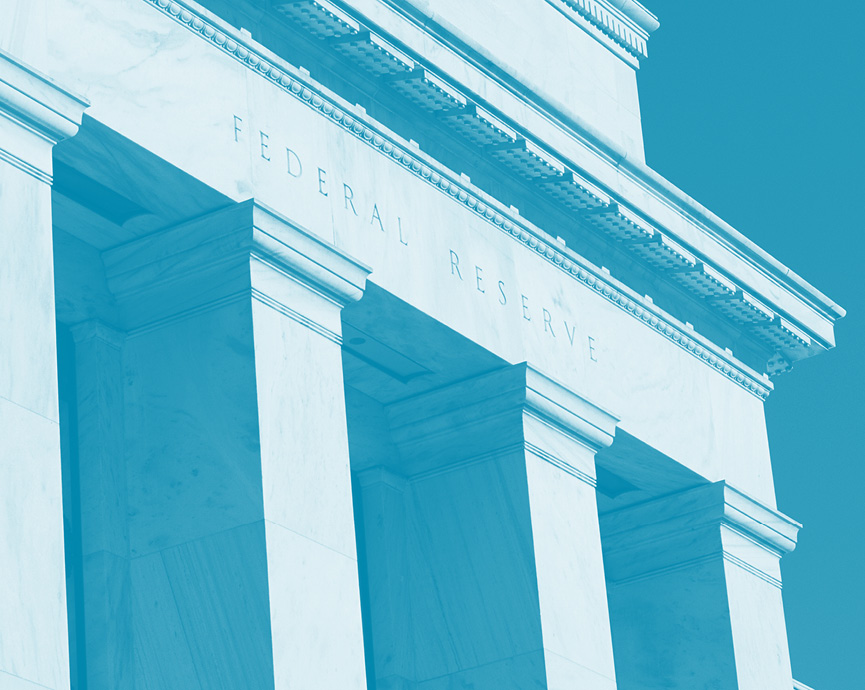
December Fed Meeting: FOMC Lowers Rates, Overcomes The Divide
Seeking Alpha· 2025-12-10 21:16
Core Viewpoint - The December Federal Open Market Committee (FOMC) meeting was significant due to the rare division among voting members leading up to the meeting, placing the responsibility on Chairman Jerome Powell as his term is nearing its end [1] Group 1 - The FOMC meeting is noted as one of the more consequential meetings in recent memory, highlighting the importance of the decisions made during this period [1] - There was a notable division among voting members, indicating differing perspectives on monetary policy and economic conditions [1] - Chairman Jerome Powell's leadership is emphasized as critical during this divided environment, especially as his term is set to expire [1]

PCE Numbers In-Line, Pre-Market Fighting Off Lows
ZACKS· 2025-08-29 15:31
Economic Overview - Pre-market futures are improving following the release of major economic numbers, despite a drawback in EU markets due to rising unemployment and inflation in Germany [1] - U.S. indexes are experiencing volatility, with the small-cap Russell 2000 showing gains while other major indexes remain in the red [1] PCE and Inflation Metrics - July Personal Consumption Expenditures (PCE) figures were in-line with expectations, indicating no hindrance to the anticipated 25 basis point rate cut for the September Fed meeting [2] - Personal Income for July increased by 0.4%, the strongest since April, while Personal Spending rose by 0.5%, marking the highest increase since March [3] - The headline PCE Index showed a month-over-month increase of 0.2%, the lowest since May, with a year-over-year increase of 2.6%, consistent with the previous month [4] - Core PCE, excluding food and energy, increased by 0.3% month-over-month and 2.9% year-over-year, indicating stability in inflation metrics [5] Employment and Economic Indicators - Fed Chair Jerome Powell's focus has shifted from inflation to employment concerns, with July's non-farm payrolls showing an increase of 73K, which is below the previous four-month average of 54K [8] - A significant upward revision in PCE would be necessary to alter the current outlook, as weakening employment is influencing the decision for a rate cut [9] Trade and Inventory Data - Advanced Trade in Goods for July reported a deficit of $103 billion, which was more than $10 billion lower than anticipated [10] - Advanced Retail Inventories and Wholesale Inventories both reported a month-over-month increase of 0.2%, indicating stable inventory levels [11] Market Expectations - The upcoming week will feature new jobs reports, including July JOLTS numbers and private-sector payrolls from ADP, leading up to the significant BLS non-farm payrolls report [12]


What is the Federal Open Market Committee (FOMC)?
Yahoo Finance· 2024-09-05 14:00
Overview of the Federal Open Market Committee (FOMC) - The FOMC is a crucial part of the Federal Reserve System, which is the central bank of the United States [2] - The committee is responsible for setting monetary policy to ensure economic stability, including maximum employment and stable prices [3] Monetary Policy Tools - The FOMC controls open market operations (OMOs), which involve the buying and selling of government securities to regulate the money supply [4] - The federal funds rate, influenced by the FOMC, is a key interest rate that affects borrowing costs and overall economic activity [5][6] FOMC Membership and Meetings - The FOMC consists of 12 members, including seven members from the Board of Governors and the president of the Federal Reserve Bank of New York, along with four rotating Reserve Bank presidents [7][8] - The committee meets eight times a year to discuss economic conditions and decide on monetary policy actions [13] Impact on the Economy - Changes in the federal funds rate directly affect interest rates on loans and credit cards, influencing borrowing costs for consumers and businesses [10] - The FOMC's decisions also impact inflation management, job stability, stock market performance, and home prices [11][12]