
Financial security

Search documents
Elon Musk offers to pay TSA salaries — warns disruption hurts ‘so many Americans.’ Do this now if you get 1 paycheck
Yahoo Finance· 2026-03-24 11:53
While Musk’s offer has grabbed headlines, the situation also underscores a more common risk: When income depends on forces outside your control — including political gridlock — financial uncertainty can follow.Last October, President Donald Trump said a private donor provided $130 million to help cover potential shortfalls in military salaries during a previous government shutdown (5). The donor was later identified by The New York Times as billionaire Timothy Mellon (6).It’s also unclear whether such a mov ...
Dave Ramsey’s advice could cost you hundreds of thousands, Tori Dunlap says — the biggest thing she thinks he gets wrong
Yahoo Finance· 2026-03-14 10:15
Core Perspective - The article discusses the contrasting views of financial educators Dave Ramsey and Tori Dunlap regarding debt management and financial planning, highlighting the potential pitfalls of Ramsey's Baby Steps plan [1][2]. Group 1: Ramsey's Baby Steps Plan - Ramsey's Baby Step No. 2 emphasizes paying off all debt except for the mortgage before investing, which is not until step No. 4 [1]. - The simplicity and structured approach of Ramsey's program appeal to many, especially given that many Americans struggle to cover unexpected expenses [3]. - High-interest credit card debt, with average rates above 23%, can be effectively eliminated to achieve a guaranteed return equivalent to that interest rate, which is a significant advantage of Ramsey's approach [4]. Group 2: Dunlap's Critique - Dunlap argues that focusing solely on debt repayment can hinder individuals, particularly those nearing retirement, from adequately preparing for their financial future [2]. - She emphasizes that not all debt is inherently bad, challenging the moral implications of labeling debt as "bad" and its psychological impact on individuals [5]. - Dunlap's podcast critiques Ramsey's advice, suggesting that a more nuanced understanding of debt could lead to better financial outcomes [5].
Survival to Strategy: The Game-Changing Shift | Ashok Devanampriya | TEDxBVRIT Hyderabad
TEDx Talks· 2026-03-02 16:52
25 years from today, India is going to be the second largest economy in the world. It's going to grow a minimum of 10 times. However, there is a high possibility of Indians still remaining poor. Imagine a rich country with poor citizens. Let's take a quick test. Raise your hand if your salary has doubled in the last 5 to 6 years. And second, if in the last 6 years your fear about future has reduced by 50%. Or has it remained the same? If your fear has increased from the past till today, there is a serious p ...


Woman regrets 'loyalty' after leaving PR firm with debt and no 401(k). How to protect your pay, benefits and future
Yahoo Finance· 2026-02-27 14:00
For generations, sticking with one employer was considered the safe bet: a steady climb, predictable raises and a retirement waiting at the end. But for one communications professional, that script didn’t play out. After seven years of loyalty, Andie Mercer says she walked away with debt, no 401(k) and hard lessons about how today’s workplace really works. Must Read “I used to believe success was about checking all the right boxes: degree, promotion, title, loyalty,” Mercer wrote in an essay for Busine ...
12 Key Rules To Live a Frugal Life in 2026, According to This Ramsey Expert
Yahoo Finance· 2026-02-24 12:41
Core Insights - A significant 75% of U.S. adults are adopting a more cautious approach to spending in 2025, emphasizing the importance of frugality for financial security as costs rise [1] Group 1: Frugal Living Principles - Avoid trendy financing options like credit cards and buy now, pay later plans, as they can lead to unmanageable debt and overspending [2] - Invest in quality items rather than the cheapest options to reduce long-term costs, even if it requires waiting [3] - Make sacrifices by selling unnecessary items and reconsidering unaffordable housing and transportation expenses [4] Group 2: Financial Management Strategies - Focus on earning interest rather than paying it on debts to enhance wealth accumulation [5] - Implement a budget to spend money purposefully, viewing budgeting as a permission to spend rather than a restriction [6] - Conduct thorough research on purchases to find the best prices and deals, leading to significant savings [6] Group 3: Spending Habits - Prefer using cash over credit to avoid costly debt, and consider setting aside funds for major purchases [7] - Avoid unnecessary spending driven by sales and promotions, sticking to planned purchases instead [8][9] - Maintain a balance in frugality to ensure it does not lead to dissatisfaction, allowing for enjoyment in life [10]
The Salary Myth | Nirmal Nath | TEDxPSNACET
TEDx Talks· 2026-02-13 17:05
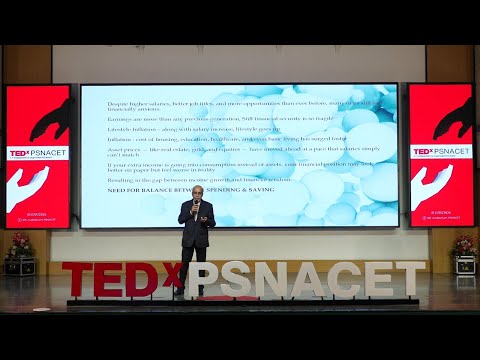
Good afternoon everyone. So um I'm here to talk about uh why earning more doesn't really translate into financial security. When I heard the topic, I thought uh I may not be the right person to talk about it for the simple reason that I myself made a lot of mistakes in my investing and savings portfolios and lot lost a lot of money.But I have learned a lot of lessons from the mistakes that I've made and I I am wiser for it and I have been able to be financially secure now. So I have been advising companies ...
The Dave Ramsey Rule Most Americans Break, And Why It’s Costing Them
Yahoo Finance· 2026-02-12 13:56
Core Insights - The personal savings rate in the U.S. has significantly decreased by 32%, dropping from 6.2% in early 2024 to 4.2% by late 2025 [2][4] - Consumption has surged by 8.6%, while disposable income has only increased by 6.3% year-over-year, indicating a concerning trend where spending outpaces income growth [3][5] - Absolute savings dollars have fallen by 28.3% from their peak, undermining long-term financial stability [4][6] Spending Patterns - Discretionary spending has increased, particularly in recreational goods, which saw a 5.7% rise, indicating a shift towards non-essential purchases despite rising borrowing costs [5][6] - The Federal Funds Rate is currently at 3.75%, leading to credit card rates between 15% and 25%, which could turn discretionary purchases into long-term debt burdens [5][6] Financial Implications - A household earning $75,000 saving at the current rate of 4.2% would only save $3,150 annually, compared to $7,500 if following a 10% savings guideline, highlighting the long-term wealth-building potential lost [6][7] - The current financial behavior suggests that many Americans are prioritizing consumption over savings, which could lead to diminished financial security and fewer options in the future [7]
‘Your life will start to change’: Could this 1 piece of advice from Suze Orman improve your finances today?
Yahoo Finance· 2026-02-10 20:00
Core Insights - The article emphasizes the importance of financial restraint and making informed spending decisions to improve financial stability and security [1][3][7]. Group 1: Financial Tools and Strategies - The Acorns app allows users to invest spare change by rounding up transactions, promoting a habit of saving and investing [5][6]. - Advisor.com connects individuals with fiduciary financial advisors to help create personalized budgets and financial plans [9][10]. - Rocket Money app helps users track subscriptions and manage recurring expenses, aiding in better financial oversight [19][21]. Group 2: Consumer Debt and Spending Habits - Household debt in the U.S. reached a record $18.59 trillion in Q3 2025, highlighting the financial strain on American families [8]. - Many Americans struggle with overspending, often purchasing wants instead of needs, which exacerbates financial difficulties [7][12]. - Suze Orman advises consumers to focus on buying only what they need for six months to regain control over their finances [8][12]. Group 3: Cost-Saving Measures - Comparing home insurance rates can save homeowners an average of $482 per year [15]. - Car insurance premiums have increased by over 60% from December 2020 to 2025, suggesting the need for consumers to shop for better rates [17][18]. - Small financial habits, such as tracking subscriptions and redirecting savings into retirement funds, can lead to significant long-term benefits [20][21].
X @The Motley Fool
The Motley Fool· 2026-02-08 10:00
Looking rich is loud. Being financially secure is quiet. ...
Are You Richer Than You Feel? Nearly 70% Of Millionaires Don't Consider Themselves Wealthy
Yahoo Finance· 2026-01-27 21:31
Core Insights - The perception of wealth among millionaires has shifted, with only 36% of U.S. adults with at least $1 million in investable assets considering themselves "wealthy" [2] - Many millionaires express concerns about financial security, with nearly half indicating that their financial planning needs improvement [2][3] Group 1: Financial Concerns - Major concerns for millionaires include outliving their savings, retirement taxes, and long-term care needs [4] - Only 12% of millionaires prioritize leaving a legacy for their heirs, with just 53% planning to do so [3] Group 2: Financial Behavior - A significant 88% of millionaires understand their spending capabilities versus savings needs for the future [5] - About 77% know the amount required for a comfortable retirement, and 76% consider themselves disciplined financial planners [5] Group 3: Seeking Guidance - Approximately 74% of millionaires work with a financial advisor, which is more than double the 34% rate among the general population [6] - Among those receiving financial advice, 60% of millionaires trust their advisors more than any other source [6] Group 4: Advisor Impact - Millionaires who collaborate with financial advisors report greater confidence in their finances, health, and personal relationships [7]