Financials

Search documents
Potential for a recession is less than 30%, says Morgan Stanley’s Lisa Shalett
CNBC Television· 2026-03-20 17:13
for more on the market. In the meantime, let's bring in Morgan Stanley Wealth Management Chief Investment Officer, Lisa Shallot. Lisa, what a pleasure.It's good to have you back again. >> Always nice to see you, Carl. >> We were talking about sort of the some argue moderate levels that we've come off the highs.You argue that this sort of FOMO, buy the dip, every crisis is an opportunity is dangerous thinking. Well, ultimately we know at some point uh one of these drawdowns is is going to result in a bare ma ...

If the Fed is on your side, small caps and financials should work: Ritholtz's Josh Brown
CNBC Television· 2025-09-18 17:06
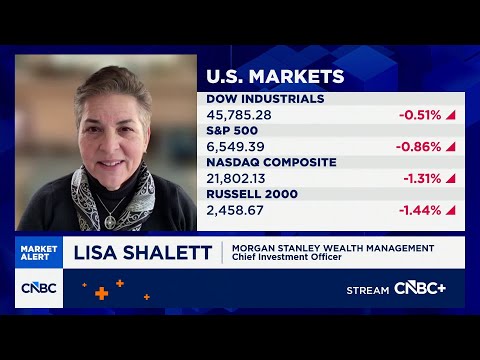
Market Trend & Strategy - The market suggests the Federal Reserve (Fed) will implement approximately 1 and 3/4 more rate cuts before the end of the year, making it difficult to bet against the Fed's actions [1] - The old investment playbook of aligning with the Fed's actions remains effective [2] - Small caps and financials are identified as key sectors to watch, with potential opportunities in home builders [3] - The Russell 2000 is potentially reaching its first all-time high close since November 8th, 2021, marking a significant consolidation period [3][4] - A possible chase for performance is setting up, with a pivot towards sectors that have underperformed relatively [9] Financial Sector Analysis - Financials are trading without multiple expansion, presenting an opportunity as the sector's PE multiple remains at January levels [6] - The financial sector benefits from investor engagement, increased M&A activity, and regulatory relief [12] - Major banks like Citigroup, Goldman Sachs, Morgan Stanley, Bank of America, and JP Morgan are at 52-week or record highs [13] - Rate cuts without a recession are expected to drive a continued rally in bank stocks, influencing price target increases [14] Investment Considerations & Risks - Some argue against investing in banks outside the top six, citing the private credit market's encroachment on commercial lending and its sensitivity to net interest margin [15] - The big three (JP Morgan, Goldman Sachs, and Morgan Stanley) are favored due to their revenue streams from deal premiums, M&A transactions, and wealth management, making them less sensitive to interest rate moves [15][16] - Fintech companies, like SoFi, are seen as having significant upside potential due to their banking-as-a-service technology, which is less interest rate sensitive [19][20]
Policy has gone from an acute to chronic issue for market indices, says JPMorgan's Gabriela Santos
CNBC Television· 2025-06-27 12:24
Market Overview & Strategy - JP Morgan's mid-year check suggests a less bullish outlook than the market's rapid recovery might imply [1][4] - The firm believes it's difficult to have a wholesale bullish overweight view across the board in the US, but opportunities exist in specific asset classes [5] - JP Morgan suggests focusing on asset classes that haven't rallied as much or where performance hasn't translated into flows and positioning [5] Policy & Economic Factors - Policy has transitioned from an acute to a chronic issue for markets, influencing specific stock or asset class performance rather than driving daily headlines [3][6] - Recession risk has decreased since early April, with a macro environment conducive to high single-digit earnings growth [4] - The market has largely priced in the current trade environment, with average tariff rates at 15%, five times higher than before the trade issue began [11] Investment Opportunities - JP Morgan maintains interest in international performance, particularly in Asia (Japan, India), despite Europe's recent dominance [6] - Financials in the US present an opportunity due to the potential for a steepening yield curve and business-friendly regulation [6][8] - Lowering the supplementary leverage ratio for financials could free up lending and decrease the burden of holding treasuries [9] Risk Assessment - A significant escalation of the trade war, deviating from the base case, could raise recession risk and necessitate repricing [10] - While policy issues are viewed as chronic, there's a possibility that positive policy tailwinds are being underestimated [7]