Fixed mindset

Search documents
Don't Be Yourself... | Santhosh Sundaresan | TEDxTIPS Salem Youth
TEDx Talks· 2025-12-02 17:55
Core Argument - The traditional advice of "being yourself" may be limiting and can hinder personal growth [1][2] - The speaker advocates for actively "leading yourself," which emphasizes change, stepping out of one's comfort zone, and rectifying mistakes to become a better version [10][11] Supporting Evidence & Examples - The speaker's personal experience of missing opportunities due to procrastination and self-doubt when trying to "be themselves" [3][4][5] - A survey indicated that over half (more than 7 out of 13) of teenagers surveyed lacked self-confidence, and 11 overthink about the future, highlighting a common issue [6] - Basketball legend Kobe Bryant's transformation into his "Black Mamba" alter ego as an example of changing oneself to overcome challenges and achieve success [7][8] Psychological Concepts - "Being yourself" can induce a fixed mindset, hindering the ability to embrace change and acknowledge mistakes [8][9] - Leading yourself allows a person to take full control and rectify mistakes [11] Alternative Advice - The speaker suggests "Lead yourself" as an alternative to "Be yourself," emphasizing change and personal growth [10][11] - A quote from Roomie, an ancient Persian poet, "Yesterday I was clever, so I wanted to change the world Today I'm wise, so I am changing myself," reinforces the idea of self-improvement [12]


Extra or Ordinary - why not both ? | Saurya Shrestha | TEDxPremier Intl School
TEDx Talks· 2025-12-02 17:05
Personal Growth & Mindset - The speech emphasizes the shift from a fixed mindset, believing skills are innate [9][10], to a growth mindset, understanding continuous learning and change [15] - It highlights that perceived weaknesses or lack of "superpowers" can lead to the development of endurance, resilience, patience, and empathy [13][14] - The speech suggests that true strength lies not in innate abilities but in the effort of being human and learning from mistakes [14][15] Overcoming Insecurities & Redefining Extraordinary - The speaker initially felt insecure due to comparing their ordinary abilities to others' perceived extraordinary talents [3][4] - The speech challenges the notion of "extraordinary," suggesting that everyone is simply their own version of "extra and ordinary" [3][17] - It encourages individuals to focus on self-improvement and becoming better rather than striving for an unattainable ideal of perfection [12] The Power of Effort & Learning - The speech underscores that abilities are not solely based on natural gifts but are developed through effort, learning, and perseverance [16] - It illustrates how overcoming obstacles and failures leads to personal growth and the development of valuable qualities [11][12][13]

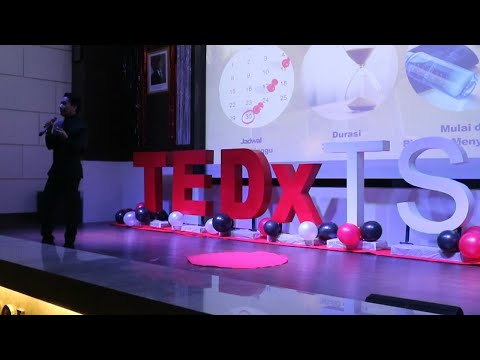
Half-Charged Living: Surviving on Low Battery | dr. Nicho Saputra Nugraha | TEDxTSM
TEDx Talks· 2025-10-13 16:53
Work-Life Balance - Emphasizes the importance of a balanced lifestyle, including sleep, nutrition, exercise, and prioritization, as foundational for success [1][13] - Recommends 6-8 hours of optimal sleep, highlighting the different phases (REM and non-REM) and the importance of nighttime sleep for melatonin production [1] - Suggests a balanced diet using a hand-based portioning method for carbohydrates, proteins, fibers, and fats, moving away from the "four healthy five perfect" concept to balanced nutrition [2] - Advocates for consistent exercise (3-5 times per week for 30-60 minutes) for mental well-being and physical health [2] - Introduces a matrix for prioritizing tasks based on urgency and importance to achieve goals effectively [4][5][6] Growth Mindset - Contrasts fixed and growth mindsets, promoting the latter as essential for personal and professional development [8][9][10][12][13] - Defines a growth mindset as the belief that abilities can be developed through effort and learning, viewing failures as learning opportunities [13][14] - Highlights the synergy between lifestyle balance and a growth mindset, leading to improved energy, focus, motivation, and resilience [15][16] Practical Strategies - Suggests establishing a consistent sleep schedule (aiming for 10 PM or 11 PM), regular workouts (at least three times a week), and a simple weekly meal plan [21][22] - Recommends using the SMART (Specific, Measurable, Achievable, Relevant, Time-bound) method for goal setting [22][23] - Encourages celebrating small achievements to reinforce positive habits and maintain motivation [24]