Fuel cost hedging

Search documents
Cruise lines face fuel cost surge as oil prices jump on Iran tensions
Fox Business· 2026-03-16 22:41
Core Viewpoint - The cruise industry is facing challenges due to rising oil prices, with analysts predicting that Carnival Corp. may experience the most significant impact on its 2026 profits as a result of the ongoing conflict in Iran [1]. Group 1: Oil Price Impact - Oil prices have surged over 35% since the onset of the Iran war, with West Texas Intermediate crude exceeding $90 per barrel and Brent crude just above $100 per barrel, compared to $60-$70 per barrel a month prior [2]. - A 10% increase in fuel costs per metric ton could lead to a reduction of $156 million in Carnival's 2026 net income, while Royal Caribbean would see a decrease of $57 million [5]. - In 2022, Carnival's fuel costs accounted for 17.7% of its total revenue, significantly higher than Royal Caribbean's 12.1% and Norwegian's 14.2% [6]. Group 2: Company Strategies - Carnival Corp. does not typically hedge against fuel price volatility, unlike its competitors, and focuses on reducing fuel consumption as a primary strategy [7]. - Since 2011, Carnival has reduced its fuel usage by 18% while increasing its capacity by nearly 38% [7]. - The cruise industry is currently in its peak booking season, known as "wave season," which runs from January to March, and the volatility in oil prices may affect consumer bookings, particularly for higher-priced transatlantic trips to Europe [10][11].



'Airfares are likely to rise': Rising jet fuel costs send airline stocks reeling
Yahoo Finance· 2026-03-09 16:19
Core Viewpoint - Airline stocks experienced a significant sell-off due to concerns over shrinking profits from rising jet fuel costs, exacerbated by grounded flights and increasing crude oil prices [1][2]. Group 1: Impact of Oil Prices - Oil prices surpassed $110 per barrel for the first time since 2022, leading investors to anticipate the impact of $100-per-barrel oil on jet fuel costs, which constitute 20% to 25% of airlines' overall expenses [2]. - The cost of jet fuel has increased by as much as $1.75 per gallon recently, potentially resulting in major US airlines facing around $1.5 billion or more in quarterly fuel costs [3]. Group 2: Financial Implications for Airlines - Across the three largest US airlines, the increase in fuel costs could translate to nearly $5 billion in additional expenses [3]. - Airfares are expected to rise in the coming months, even if oil prices stabilize soon, as indicated by industry analysts [3]. Group 3: Operational Challenges - The ongoing conflict in the Middle East has grounded over 20,000 flights, leaving thousands of passengers stranded [4]. - US airlines have faced additional challenges this year, including major storms that have canceled thousands of flights [5]. Group 4: Stock Performance - Major US carriers, including Delta, American, and United, have seen their stock prices decline by 20% to 30% year-to-date, with Southwest, JetBlue, and Alaska airlines also down approximately 30% over the past month [6].


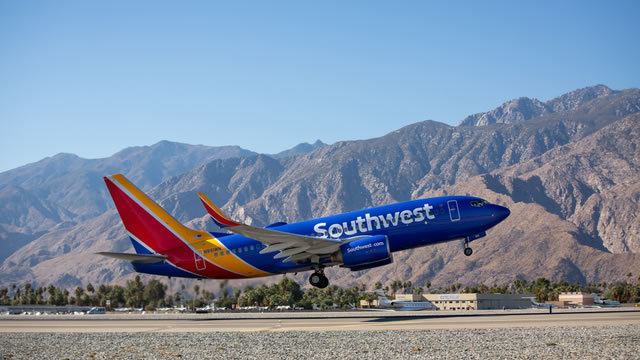
Southwest Airlines: Short Interest Plunges—Should You Buy?
MarketBeat· 2025-06-17 13:56
Core Viewpoint - New geopolitical conflicts in the Middle East have led to increased uncertainty and volatility in global markets, particularly affecting the energy sector and oil prices, which have risen from around $60 to nearly $80 per barrel [1][2]. Group 1: Impact of Oil Prices on Airlines - The closure of the Strait of Hormuz by Iran has significant implications for oil supply, suggesting that oil prices will continue to rise, which poses challenges for the transportation sector, especially airlines [2]. - Despite rising oil prices, short interest in Southwest Airlines has decreased by up to 8.5%, indicating a shift in sentiment among investors [3][4]. - Southwest Airlines has historically excelled in fuel cost hedging, but stable oil prices have diminished this advantage, leading to a potential shift in investor perception [5][6]. Group 2: Earnings Forecast and Market Sentiment - Analysts had previously forecasted Southwest Airlines to report earnings per share (EPS) of up to 60 cents by Q4 2025, a significant improvement from a current net loss of 13 cents per share [7][8]. - Deutsche Bank upgraded its rating for Southwest Airlines from Hold to Buy, with a valuation target of up to $40 per share, indicating a potential upside of 27% from current levels [9][10]. - The airline's current price-to-earnings (P/E) ratio is approximately 43.9, significantly higher than the peer group's average of 8.3, reflecting a premium valuation that suggests market confidence in the airline's future performance [12][13]. Group 3: Market Dynamics and Future Outlook - The market appears to be anticipating a supply shock that could drive oil prices higher, which would positively impact Southwest Airlines' prospects [14]. - While Southwest Airlines currently holds a Hold rating among analysts, there are indications that it may not be the top choice for investors compared to other stocks recommended by analysts [15].