General Robot

Search documents
李飞飞的反共识判断
虎嗅APP· 2026-02-08 09:42
Core Insights - The article presents a counter-consensus viewpoint from Fei-Fei Li, emphasizing that large language models alone cannot lead to Artificial General Intelligence (AGI), and that spatial intelligence is a more foundational path [4][5][6]. Group 1: AGI Route Debate - Language is not the entirety of intelligence and is not its foundation; spatial intelligence, which has evolved over 500 million years, is crucial for AI development [5][6]. - If AI only possesses language capabilities, it will remain confined to the digital realm; true AGI requires understanding and interaction with the three-dimensional physical world [6]. Group 2: Redefining World Models - The newly introduced spatial intelligence model, Marble, can process multimodal inputs and create a navigable, interactive 3D world with physical consistency, differing from traditional video models [7][8]. - Marble has applications in various fields, including game development, visual effects, and even therapeutic settings for conditions like OCD [8]. Group 3: Scaling Law and Data Challenges - The slower development of physical world AI compared to language models is attributed to the noise in physical data and the difficulty in large-scale data acquisition [8][9]. - World Labs employs a hybrid data strategy, combining existing internet data with synthetic and real-world data to overcome these challenges [8][9]. Group 4: General Robotics vs. Autonomous Driving - General robotics is viewed as a higher-dimensional challenge compared to autonomous driving, which operates primarily in a 2D space [10][11]. - The core task of general robots involves interaction in 3D space, which presents significant technical challenges [10][11]. Group 5: AI as a Fundamental Infrastructure - AI is likened to electricity, with its success not measured by model size but by its ability to empower civilization and improve individual lives [11][12]. - The goal of World Labs is to integrate spatial intelligence into various industries, aiming for significant advancements by 2026 [12].


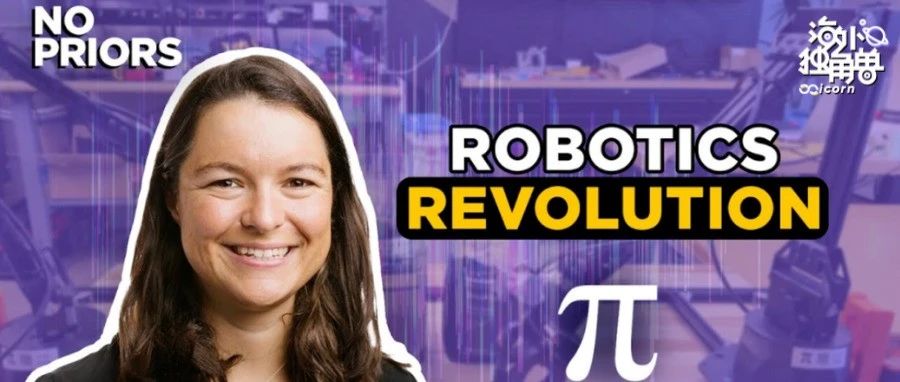
Physical Intelligence 创始人:人形机器人被高估了
海外独角兽· 2025-03-28 11:51
Core Insights - The article emphasizes the importance of Physical Intelligence (PI) in the robotics field, positioning it as a leading entity akin to OpenAI in AI research, focusing on developing a foundation model for general-purpose robots [3][4]. - Chelsea Finn, the core founder of PI, highlights the necessity of diverse robot data for achieving generalization in robotics, stressing that the quantity and variety of real-world data are crucial for training effective models [3][10]. Group 1: Chelsea Finn's Entry into Robotics - Chelsea Finn was initially attracted to robotics due to its potential impact and the intriguing mathematical challenges it presents, leading her to pursue research in this field over a decade ago [6][7]. - The focus of her early research was on training neural networks to control robotic arms, which has since gained recognition and progress in the robotics domain [6][7]. Group 2: PI's Research Progress and Development - PI aims to create a large neural network model capable of controlling any robot in various scenarios, differing from traditional robotics that often focuses on specific applications [10][12]. - The company emphasizes the importance of utilizing diverse data from various robot platforms to maximize the value of the data collected [10][12]. Group 3: Achieving AGI in Robotics - PI is focused on long-term challenges in robotics rather than specific applications, recognizing the need for new methods that allow for human-robot collaboration and error tolerance [21][22]. - The company believes that physical intelligence is central to achieving AGI in robotics, with a vision of a diverse ecosystem of robot forms emerging in the future [22][37]. Group 4: Hi Robot - The recently launched Hi Robot by PI aims to enhance task execution efficiency by incorporating reasoning and planning into robotic actions, allowing for more interactive human-robot communication [25][26]. - This system enables robots to respond to user prompts and adjust actions in real-time, showcasing a significant advancement in robotic capabilities [26][28]. Group 5: Sensory Requirements for Robots - Current robotic sensors primarily rely on visual data, with ongoing challenges in integrating tactile sensors due to durability and cost issues [29][30]. - The focus is on improving data processing and architecture rather than adding new sensors, with a priority on developing memory capabilities in robots [30]. Group 6: Comparison with Autonomous Driving - The development timelines for robotics and autonomous driving differ, with robotics facing higher dimensional challenges and requiring greater precision [31][33]. - The article notes that while large companies have capital advantages, startups can act more swiftly to collect diverse data and iterate on robotic technologies [34]. Group 7: Perspectives on Training Data and Hardware - The value of human observation data for training robots is acknowledged, but it is emphasized that robots need to learn from their own physical experiences to achieve significant progress [35][36]. - The future of robotics is expected to feature a variety of hardware platforms optimized for specific tasks, leading to a "Cambrian explosion" of robotic forms [36][37].