
Global oil supply disruption

Search documents
Stocks Pressured as Crude Oil Prices and Bond Yields Climb
Yahoo Finance· 2026-03-24 14:07
Market Overview - The S&P 500 Index is down -0.80%, the Dow Jones Industrial Average is down -0.83%, and the Nasdaq 100 Index is down -0.98% [1] - June E-mini S&P futures are down -0.84%, and June E-mini Nasdaq futures are down -0.98% [1] Geopolitical Tensions - The ongoing war in Iran has entered its twenty-fifth day, contributing to market declines [2] - WTI crude oil prices have increased by more than +4% today due to renewed tensions [2] - Iran has launched missile and drone strikes on several cities in Israel and US bases in the Middle East, escalating regional conflicts [2][3] Economic Indicators - Q4 nonfarm productivity remains unchanged at +1.8%, while Q4 unit labor costs have been revised upward to +4.4% from +2.8%, exceeding expectations of +3.6% [4] - The March S&P manufacturing PMI unexpectedly rose by +0.8 to 52.4, surpassing expectations of a decline to 51.5 [4] Oil Supply Disruptions - The International Energy Agency (IEA) reported that the war against Iran is disrupting 7.5% of global oil supply, with an expected cut of 8 million barrels per day this month [6] - The closure of the Strait of Hormuz is significantly affecting oil and gas flows, as it is a critical passage for about a fifth of the world's oil and natural gas [6] - Goldman Sachs warns that crude prices could exceed the 2008 record high of nearly $150 per barrel if flows through the Strait of Hormuz remain depressed through March [6]
Traffic starts trickling through Strait of Hormuz: Who's moving through and who's still stranded or diverting
CNBC· 2026-03-18 04:55
Core Viewpoint - Iran's blockade of the Strait of Hormuz has led to significant disruptions in global oil supply, with shipping traffic drastically reduced since the onset of the conflict on February 28, 2026 [1][2]. Shipping Traffic and Operations - Only 21 tankers have transited the Strait of Hormuz since the conflict began, compared to over 100 ships daily prior to the war [2]. - A backlog of approximately 400 vessels is reported in the Gulf of Oman, with many ships waiting near the chokepoint [3]. - Some vessels are attempting to navigate alternative routes or ports due to the blockade [2][22]. Country-Specific Developments - **China**: Iran has not targeted vessels linked to China, with many Chinese-owned ships successfully navigating the strait under an informal access filter [5]. China continues to import millions of barrels of crude oil from Iran [6]. - **Greece**: Greek shipowners have begun testing the route, with vessels like the Shenlong successfully transiting the strait carrying Saudi crude oil [11]. - **India**: Direct talks between India and Iran have yielded results, allowing Indian vessels carrying liquefied petroleum gas to transit the strait [13][14]. - **Pakistan and Turkey**: A Pakistan-flagged tanker has successfully transited the strait, indicating that some shipments may be receiving negotiated safe passage [15]. Turkish authorities confirmed that one Turkish-owned vessel was allowed to transit after visiting an Iranian port [16]. Attacks and Security Concerns - The Strait of Hormuz remains largely closed to global energy flow due to sporadic attacks on vessels, which appear random and lack a clear targeting pattern [17][20]. - At least 16 vessels have been struck in various locations, including near the UAE and Iraq, with many affected vessels linked to Western or Gulf-state connections [18][19]. - The unpredictable nature of these attacks complicates planning for shipping companies [20]. Rerouting and Alternative Strategies - Following the conflict's onset, 43 out of 81 container vessels originally bound for ports along the Strait of Hormuz have rerouted to other Gulf ports [22]. - Cargoes are being redirected to ports outside the strait, such as Fujairah and Khor Fakkan in the UAE, and Sohar in Oman, with subsequent transportation by truck to their final destinations [23].



Kuwait Reportedly Cuts Oil Output As Storage Fills Amid Strait of Hormuz Disruptions - JPMorgan Chase (NYSE:JPM)
Benzinga· 2026-03-07 02:48
Core Viewpoint - Kuwait, a significant OPEC member, is reducing oil production due to insufficient storage capacity for crude oil [1][2] Group 1: Production Adjustments - Kuwait has begun scaling back production at certain oil fields and is considering further cuts to its production and refining capacity, focusing solely on domestic consumption [2] - Data from Kpler indicates that Kuwait will need to further reduce output in the next 12 days to avoid reaching full storage capacity [2] Group 2: Regional Context - The storage issues in Kuwait are linked to the ongoing conflict in the Middle East, which has led to instability in the global oil market [4] - Iraq has already cut its oil production by over half, including a reduction of 700,000 barrels per day from the Rumaila field, indicating a broader trend of production cuts in the region [3] Group 3: Market Implications - The escalating conflict, including oil tanker attacks and potential blockades, poses risks to global oil supply, potentially leading to price increases and supply disruptions [4]

How the Iran Conflict Could Trigger a Wider Economic Shock
Yahoo Finance· 2026-03-02 11:54
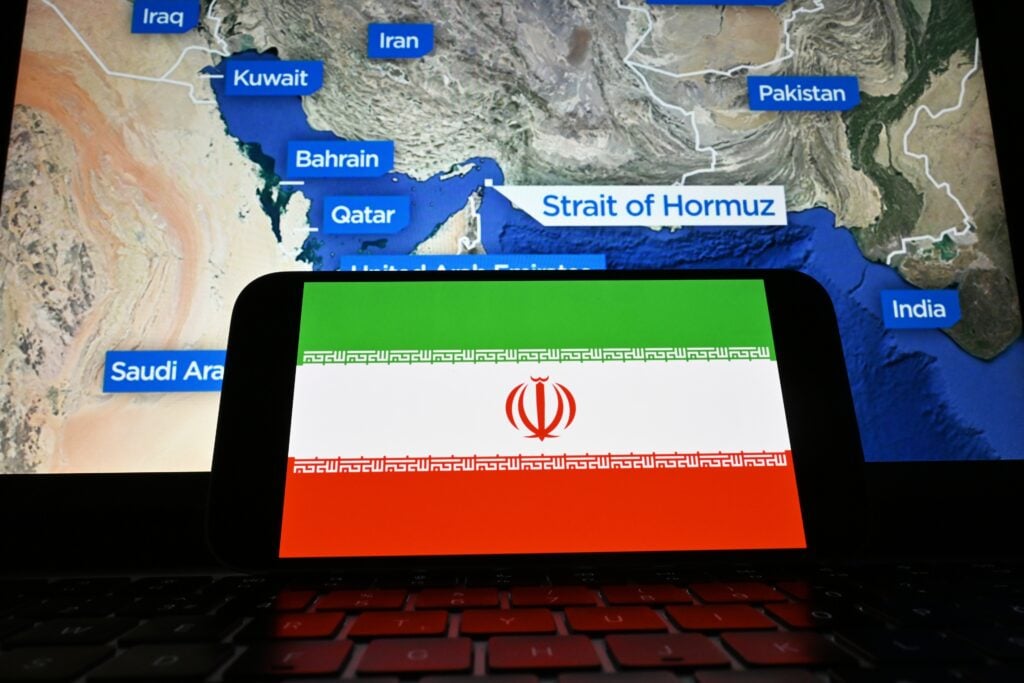
Core Viewpoint - The ongoing conflict involving the US and Israel with Iran has raised significant concerns about potential disruptions to global oil supplies, particularly in the vital Strait of Hormuz, where recent incidents have led to increased shipping risks and rising oil prices [1][4]. Group 1: Incident Overview - A ship named Skylight, a 7,600-ton oil and chemical tanker, was reported to be on fire in the Strait of Hormuz, highlighting the region's vulnerability [1]. - On March 1, three civilian ships were reportedly hit in the area, coinciding with US Central Command's engagement with an Iranian Navy corvette [2]. - At least 150 ships, including oil and gas tankers, have dropped anchor in the region, indicating a slowdown in shipping activity due to safety concerns [2]. Group 2: Market Reactions - Insurance costs for vessels navigating the Strait of Hormuz have surged, leading many international oil companies to advise against using the route [3][4]. - The price of global benchmark Brent crude rose by as much as 10 percent on March 1, with expectations of further increases if the situation persists [4]. - Analysts predict that oil prices could reach around $100 per barrel if the strait experiences prolonged disruptions, with estimates ranging between $85 to $90 per barrel in the current climate [5][6].